
Unified Growth Solution
World-class tech needs world-class drivers. AI platform and expert services, unified
Read time 10 minutes


Increasing the Value of New Online Gaming Players
Download the report and discover proven methods to increase new player deposits, retention, and lifetime value when empowered by Positionless Marketing.

Why it matters:
These five takeaways show how marketers can turn event data into better player qualification, smarter regional strategies, and more relevant journeys for the next big events. Major sporting events create acquisition at a scale that regular-season marketing rarely matches. But the influx also makes one-and-done players look like growth, encouraging operators to overspend on customers whose interest ends when the event does.
Key takeaways:
The World Cup 2026 was clearly more effective at expanding the customer pool than at deepening the behavior of the average bettor. First-time depositors grew faster than the overall number of bettors placing bets in every region. At the same time, the average bets per bettor fell 8% in the US, 25% in Europe, and 35% in LATAM, as seen in the Optimove World Cup 2026 Full Tournament Report.
The most useful question after a major event is therefore not, “How many customers did we acquire?” It is, “What did those customers do after the moment that brought them in?”
The operators best prepared for the next major events will treat acquisition as the start of a decision process to uncover players that can deliver long-term value.
Major events create a flood of players. A large acquisition spike can lead operators to launch broad retention campaigns and waste marketing spend on players that have no real long-term potential.
One pragmatic approach is to give every newly acquired players a short qualification window. During the first days and weeks, marketers should look for progress: another active day, a second deposit, activity across more than one match, a return without an incentive, or interest in a different competition.
Broader mobile-app benchmarks show why this window matters.
Retention falls from 26% on Day 1 to 5% on Day 30 in LATAM, from 24% to 6% in Europe, and from 23% to 5% in North America, according to Adjust. The figures are not sportsbook-specific, but they illustrate how quickly an acquisition pool can lose value. (Adjust)
Operators should therefore establish clear Day-3, Day-7, and Day-30 progression criteria before tmajor events. Players who show momentum can move into more valuable journeys. Those who do not should receive lighter-touch engagement rather wasting marketing spend on bonuses intended to manufacture demand that will not stick.
The lesson is simple: acquisition should earn attention, but continued investment should be earned by behavior.
The match or stage that converts a player can be an early clue about why that player engaged.
LATAM’s strongest first-time depositor increase came during the Round of 16, while the US and Europe reached their acquisition peaks during the Final, as seen in the Optimove World Cup 2026 Full Tournament Report.
Those patterns point to different motivations. A player acquired early and who is active across several rounds may be showing sustained interest in football (soccer). A player acquired only for the Final may be attracted by cultural relevance, a marquee occasion, a particular team, or a large promotion.
That difference should shape what happens next.
Marketers should combine the entry moment with team preference, market type, promotional response, subsequent matches, and activity after team elimination. From there, they can build practical player archetypes such as:
Each group requires a different next step. Competition followers may be ready for domestic leagues. Team-led bettors may need club or player-based content. Marquee-event players may be better suited to the next major sports occasion rather than a weekly football cadence.
The strongest post-event journeys will be built around the reason the player arrived, not merely the fact that they did.
CRM marketing cannot compensate indefinitely for a weak product or payout experience.
A marketer may identify the right player, select the right competition, and send the right message, only for the relationship to break down during a deposit, withdrawal, verification step, or support interaction.
That risk is material. Across Europe, North America, and LATAM, 82% of online sports bettors say the payout experience influences whether they continue wagering with a sportsbook. Quick and easy payouts are also the leading factor in sportsbook selection, cited by 34%, according to Paysafe’s All the Ways Players Pay study. (Paysafe)
This means deeper engagement is not solely a campaign outcome. It depends on coordinated execution across marketing, paymouts, player support, product, risk, and compliance.
Before the next major event, operators should identify the operational moments most likely to interrupt progression:
These signals should influence CRM marketing journeys in real time. A player encountering payout friction should not continue receiving generic deposit offers. Someone who has just completed a smooth first withdrawal may be at a more promising moment for a relevant next-event recommendation.
The advice takeaway is broader than “improve payouts.” It is to stop separating player engagement from the operational experience. Both can determine whether engagement can continue.
Localization is often reduced to language, creative, and local teams. The World Cup 2026 showed that operators also need to regionalize qualification rules, investment levels, timing, and expectations.
The three regions produced different behavioral signatures:
LATAM created the largest opportunity, but also the greatest need for qualification. Its exceptional acquisition growth was accompanied by the steepest decline in average betting frequency. Operators should resist trying to retain the entire cohort at the same cost. The priority should be second-deposit conversion, localized onboarding, payment relevance, and early identification of repeat behavior.
Europe provided the strongest foundation for continuity. The number of bettors placing bets remained consistently elevated throughout the tournament. That makes established football (soccer) journeys, domestic leagues, clubs, and related competitions the logical bridge. But it is only for players whose behavior showed sustained interest rather than one-off event activity.
The US behaved more like a market for major moments. The number of players placing bets fell below baseline during the Semifinals and then rebounded sharply for the Final, as seen in the Optimove World Cup 2026 Full Tournament Report. The implication is not that US players are less engaged. It is that many may organize their engagement around cultural relevance and marquee occasions rather than continuous tournament progression.
For the next event, operators will benefit by having a different economic model for each region:
A global campaign can share a framework. It should not share a single definition of customer potential.
Waiting until a tournament is over to design the next journey is too late.
By then, the player has moved on; behavioral signals have become less recent. Plus, every operator is competing for the same post-event attention. The transition to the next competition should begin while interest is still visible.
Live sports behavior supports this approach. In the US, 78% of college sports fans watch major events live, while 31% use another screen or device to engage on social media, according to Nielsen. Although the research is focused on college sports, it highlights how event engagement is distributed across broadcast, mobile devices, social platforms, apps, and other digital touchpoints. (Nielsen)
For sportsbook marketers, those interactions should be treated as one developing journey rather than separate channel events.
A bettor repeatedly viewing football markets may be ready for another competition before placing the next wager. Someone interacting only with Final-related content may belong in a marquee-event segment. A bettor already exploring another sport does not need another generic football message.
The next-event handoff should therefore be based on live behavioral signals:
This is not simply real-time messaging. It is real-time interpretation: using current behavior to decide whether to continue the journey, change its direction, reduce pressure, or wait.
The operator that recognizes the customer’s next interest first will have an advantage over the one that simply sends the next campaign first.
Optimove helps sportsbook operators move from broad event cohorts to player-level decisions.
Marketers can use signals such as acquisition stage, active days, deposit progression, incentive response, preferred teams, competitions, and channels to identify which customers are developing, and determine the next best journey for each one.
Optimove Engage and Orchestrate support coordinated cross-channel journeys, while Optimove Personalize adapts digital experiences to current customer behavior. Optimove AI helps marketers identify emerging segments, create localized content, adjust offers, and move from insight to activation without prolonged handoffs.
Through Positionless Marketing, teams can respond while the event and player signals are still relevant. Marketing, analytics, creative, and operations can act with greater speed while preserving controls around budget, eligibility, brand, risk, and responsible gaming. Learn more in the Optimove World Cup 2026 Group Stage Report.
The goal is not to force every acquired player into deeper engagement. It is to recognize progression early, respond appropriately, and avoid overspending where the evidence of future value is weak.
The lesson from the World Cup 2026 is that event-driven acquisition creates a wide range of player intentions, and aggregate growth can hide those differences.
For the next major sporting events, operators should establish qualification windows before acquisition begins, use entry moments to understand motivation, connect CRM with the operational experience, regionalize investment criteria, and start the next journey while the current event is still generating signals.
The opportunity is not to retain everyone.
It is to identify the players who are already giving the operator a reason to keep investing in the relationship.
For more insights into how Optimove can help turn event-driven acquisition into sustainable player engagement, Request a Demo.
The most advanced orchestration engine, ever.
Unified data, AI decisioning, and Self-Optimizing Journeys — all in one.

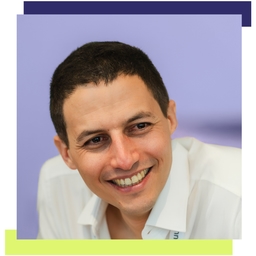
Rony Vexelman is Optimove’s SVP of Marketing. Rony leads Optimove’s marketing strategy across regions and industries.
Previously, Rony was Optimove's Director of Product Marketing leading product releases, customer marketing efforts and analyst relations. Rony holds a BA in Business Administration and Sociology from Tel Aviv University and an MBA from UCLA Anderson School of Management.