
Unified Growth Solution
World-class tech needs world-class drivers. AI platform and expert services, unified
Read time 12 minutes


Agents that let you act while others are still analyzing!
Executive Summary :
AI has dramatically reduced the effort required to create and execute marketing. In 2027, the competitive advantage will increasingly shift from what marketers can create to how well they decide what is worth creating, sending, and optimizing.
This report identifies ten predictions for how that shift will reshape marketing in 2027. AI agents will move from assisting marketers to operating marketing software and executing campaigns, changing the marketer’s role from hands-on execution to setting direction, rules, and standards. At the same time, the rise of consumer-facing AI agents will create a new challenge for brands: engaging not only customers, but also the agents acting on their behalf.
As AI increases the volume and speed of marketing activity, relevance will become more important than output. Consumers are already showing signs of marketing fatigue, driven by repetitive, mistimed, and irrelevant communications. The brands that stand out will therefore be those that use AI not simply to generate more campaigns, but to decide when to communicate, what to offer, and—just as importantly—when not to send anything.
The economics and governance of marketing technology will change as well. Marketing stacks are likely to consolidate around fewer, more capable AI-powered platforms, while transparency, data governance, and explainability become requirements rather than optional features. Pricing models for both martech and agencies will also begin moving away from seats and hours toward usage and outcomes.
Finally, the pressure to demonstrate AI's financial impact will intensify. Marketers—and increasingly CFOs—will demand evidence of incremental revenue, profit, and customer value rather than relying on activity metrics such as clicks, opens, campaigns launched, or hours saved. Experimentation and control groups will therefore become increasingly important for proving what marketing actually caused.
Taken together, these predictions point toward a marketing environment in which creation becomes abundant, while judgment becomes scarce. Human marketers remain responsible for setting goals, limits, and standards for success, while AI applies those decisions at scale. This evolution represents the next stage of Positionless Marketing: marketers increasingly freed from executional constraints, but more accountable for deciding what deserves to be done.
Methodology :
The Optimove 2027 Marketing Predictions are based on a synthesis of proprietary consumer research, observed developments in AI and marketing technology, third-party industry analysis, and Optimove’s experience working with marketing teams and customer engagement technology.
The predictions were developed by examining emerging changes across five interconnected areas: how marketing work gets done, how brands engage customers and AI agents, how marketing messages are managed, how technology stacks are priced and governed, and how marketing performance is measured and proven.
Consumer behavior findings in the report draw on two Optimove Insights studies:
These findings were considered alongside broader developments in AI agents, generative AI, customer engagement, martech governance, measurement, and changing software and agency business models. The report also incorporates relevant external industry analysis, including Gartner research cited within the report.
The ten predictions are therefore directional forecasts rather than statistical projections. They identify developments Optimove expects to materially influence marketing in 2027 based on current consumer behavior, technological capabilities, industry trends, and the accelerating adoption of AI across marketing workflows.
AI has made marketing nearly free. What stays scarce is the judgment to decide what to send, and the proof that it worked. That makes 2027 the year of judgment.
With Positionless Marketing already the way teams work, these 10 predictions look at what changes next:
If customers use agents to buy from brands, marketers will use agents to run their marketing software. That changes what software makers need to get right. The screen a marketer clicks through matters less than how easily an AI agent can connect to the software and use it.
Marketing platforms will be judged on how reliably an agent can operate them, not on how polished the dashboard looks. Software makers still designing for human clicks will fall behind those designing for AI agents.
AI agents will plan, build, launch and optimize campaigns from start to finish. The marketer's job becomes setting direction, approving the work, and writing the instructions and guidelines the agents follow.
That moves work away from clicking through software. Instead of building campaigns screen by screen, most marketers will tell an AI what they need, and it will do the work inside their marketing tools. This is Positionless Marketing taken one step further: when one marketer can direct agents across data, content and optimization, nobody waits on a handoff.
As AI shopping agents take over browsing and buying for customers, brands shift from designing for the person giving instructions to designing for the agent carrying them out. Consumers are ready for it: three-quarters trust AI-generated recommendations as much as or more than other sources, according to Optimove's Holiday Shopping Report 2026. A new AX function emerges to own that shift. It inherits three jobs that used to sit apart:
Brands that treat these as one discipline will build the capability faster than those treating them as three separate problems.
More shoppers now discover products by asking AI assistants instead of using a search engine. In Optimove's Holiday Shopping Report 2026, 72% of consumers say they regularly or occasionally consult tools such as ChatGPT, Claude or Gemini for shopping ideas and gift recommendations. Unlike search, these conversations leave brands no clear record of how a customer found them. When AI agents buy on a customer's behalf, brands learn even less.
That hurts the teams responsible for keeping customers, who have long relied on knowing where a customer came from to decide how to treat them. Without that data, they will need to predict each customer's value from their first transaction with the brand, instead of leaning on source data that no longer arrives.
AI agents let every brand send more messages, more variants and more triggers across more channels. Optimove Insights research shows customers are already at their limit, and the cost lands on loyalty and revenue. In the Optimove Insights Marketing Fatigue Report 2026, a survey of 1,034 consumers fielded in November and December 2025:
The pressure builds fast during peak season. In Optimove's Holiday Shopping Report 2026, 59% say they tire of holiday messages by October, and more than seven in ten by November. More than a quarter (27%) are already tired of holiday marketing before July.
The same research shows that fatigue comes from irrelevance, repetition and poor timing, not volume alone. Consumers are far more likely to buy after receiving multiple relevant offers (89%) than after irrelevant ones (65%). That is the danger in 2027. Agents that create without judgment produce exactly the repeated, mistimed and irrelevant messages that drive customers away, at a scale no team could reach by hand.
Now that every brand can create campaigns instantly with AI, customers can spot a badly written AI message. It means that brand must have judgement on content and not flood consumers with messages causing Marketing Fatigue. Part of that judgment is timing: ensuring a message arrives at the right moment, at the right frequency, with an offer worth their time.
“Too much activation can easily lead to too many messages, wreaking havoc on customer experience and budgets alike.” says Gartner in the 2026 Magic Quadrant for Multichannel Marketing Hubs.
AI that creates without limits, with nothing deciding what to send, feels like noise to customers. They get more messages, more alerts and more offers that don't fit, on every channel. When brands get the decisions right, customers feel the opposite: fewer messages, better timed, each one chosen for them.
That’s why customer engagement becomes the metric that matters, and AI decisioning is how brands earn it. In 2027, it becomes easy to tell which brands use AI to decide and which just automate. The difference shows in what they choose not to send.
CMOs will cut the number of marketing tools they use in favor of fewer platforms that do more with AI. But relying on fewer platforms raises the stakes for each one. Brands will need to know where their data is stored, how AI decisions are made and ensure they meet regulations . In 2027, those questions move from nice-to-have to required. For CMOs, the question shifts from what AI can do to whether they can explain what it did.
Most marketing software is priced per user. But when AI agents do more of the work, fewer people log in, and charging per person stops making sense. Software companies will shift to charging for how much the AI is used or for the results it delivers. Agencies face the same change: when AI helps build a marketing plan in minutes instead of days, billing by the hour no longer reflects the value.
When AI decides where marketing money goes, the usual measures, like which ad someone clicked first or last, or how many people opened an email, can't prove it was worth it. Marketers will turn to a simpler test: send a campaign to most customers, hold it back from a small representative group, and compare. The difference shows the incremental uplift the campaign actually caused.
That test does more than justify budgets. It teaches the AI what works. An agent can launch thousands of versions of a campaign, and comparing each one to a group that didn't get it is the only way to know which versions made money. So measurement moves from opens and clicks to revenue, profit and customer loyalty. Clicks show what happened, not what the campaign caused. Chase clicks, and the AI keeps the version that looks best, not the one that earns the most. Optimization Power in Positionless Marketing builds this in: campaigns test themselves against control groups, so the AI learns from what earned money, not from what got clicked.
CFOs will ask for hard proof that the past two years of AI spending made money. AI projects that can't show they brought in extra revenue will be cut. The test is the same one marketers use for their AI: compare results with a group that didn't get the campaign, and look at sales, not clicks.
New pricing makes this easier to judge. With a flat subscription, it's hard to tell whether a tool paid off. When companies pay based on how much AI they use, the CFO can compare the cost directly with the revenue it brought in. Meeting regulations still matters, but following the rules isn't the same as getting results. The first projects to go will be the ones that report activity instead of results: messages sent, campaigns launched or hours saved.
In 2027, AI can create almost anything. What it can't do on its own is decide what matters. That judgment belongs to marketers: setting the goals, the limits and the standard for success. AI then applies that judgment to every customer, at a scale no team could reach, and testing shows what actually worked. Creating marketing becomes a commodity. Judgment becomes the edge.. That's the promise of Positionless Marketing in 2027: every marketer free to do anything, with the judgment to decide what's worth doing.
Positionless Marketing is the way marketers execute at scale, free from the limitations of fixed marketing positions. In the traditional assembly-line model, each team member waits on someone in a different role: creatives wait for audience data from data engineers, campaign managers wait for assets from creatives, and strategists wait for reports from analysts.
Positionless Marketing removes those handoffs, so any marketer can do anything independently.
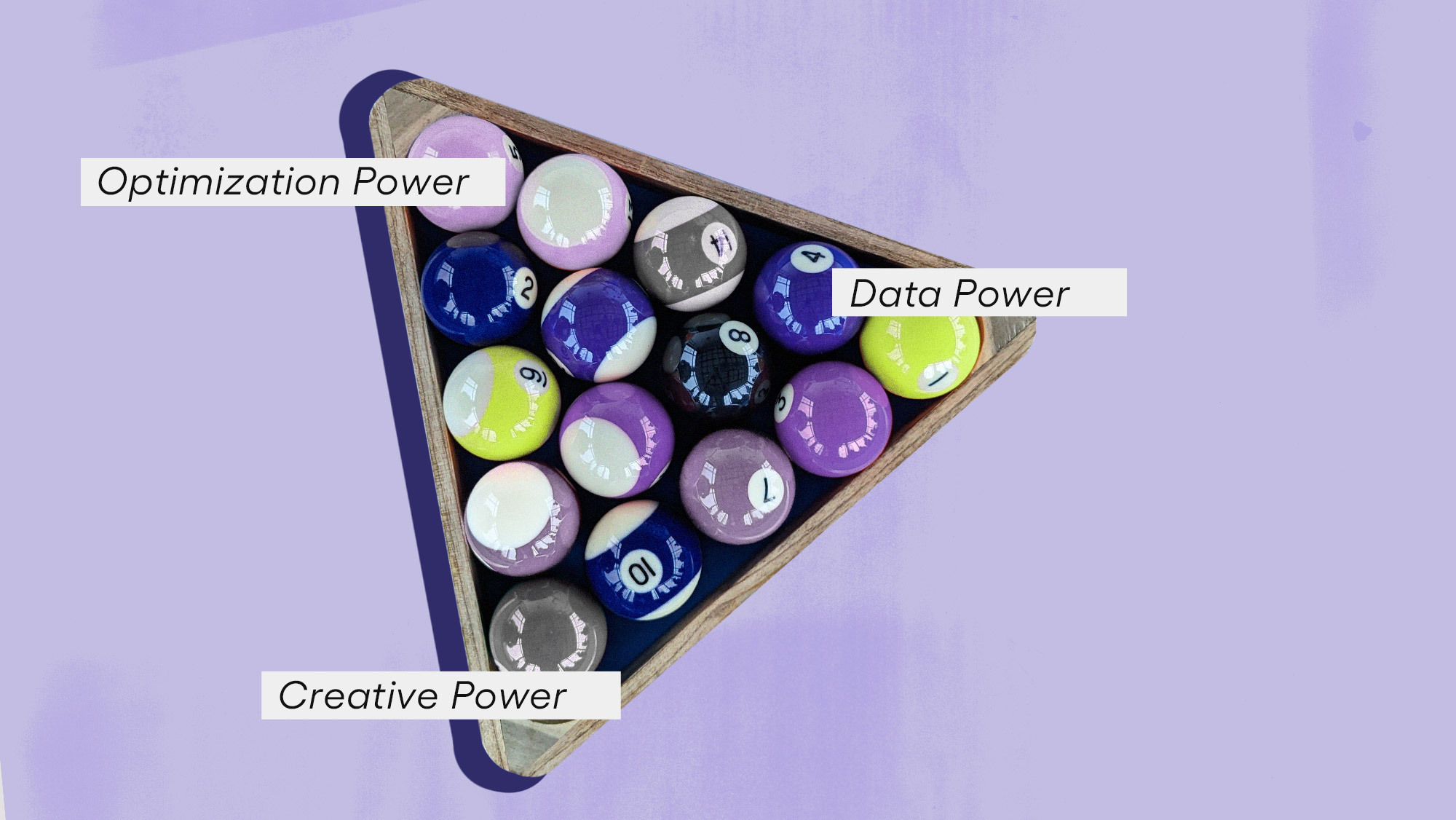
Optimove’s AI-powered Positionless Marketing Platform makes this possible with three powers:
Optimove's Positionless Marketing Platform puts all three powers in every marketer's hands. Do anything. Be everything.
AI built for marketers.
Predict, create, and optimize — without waiting on data, dev, or design.