
Unified Growth Solution
World-class tech needs world-class drivers. AI platform and expert services, unified
This iGaming Daily podcast episode, hosted by Charlie Horner at SBC Summit 2026, features Optimove CEO Pini Yakuel on Positionless Marketing, AI and the future of marketing teams in iGaming. Yakuel says a team of two or three marketers can now compete with tier-one operators by automating flows, building agents and handing QA work to AI.
Charlie Horner (iGaming Daily) [00:43]: Yeah, great to see you too. Obviously we're here at SBC Summit 2026. How's the event been for you so far?
Pini Yakuel (Optimove) [00:51]: Yeah, great event. Started for me with seeing Michael Jordan, so I can't complain.
Charlie Horner [00:57]: No, excellent. No, it's good to hear. Look, we're here to talk a lot about Positionless Marketing, which obviously Optimove has been working on for a number of years now, and the evolution of artificial intelligence in iGaming. But we'll start with Positionless Marketing. The idea was that a marketer could handle data, creatives and optimization without waiting on other teams and being held up. Right? But what has actually changed for iGaming CRMs, you know, in the intervening years, and how has AI sped that development up?
Pini Yakuel [01:34]: So yeah, essentially kind of like at Optimove, we felt that for many, many years we've been helping marketers to do a lot more things. And for that reason, they could unlock speed and that ultimately unlocks value. What happened in recent years is that with AI, we kind of like all feel that we can do more than we could before and we can expand our range as professionals.
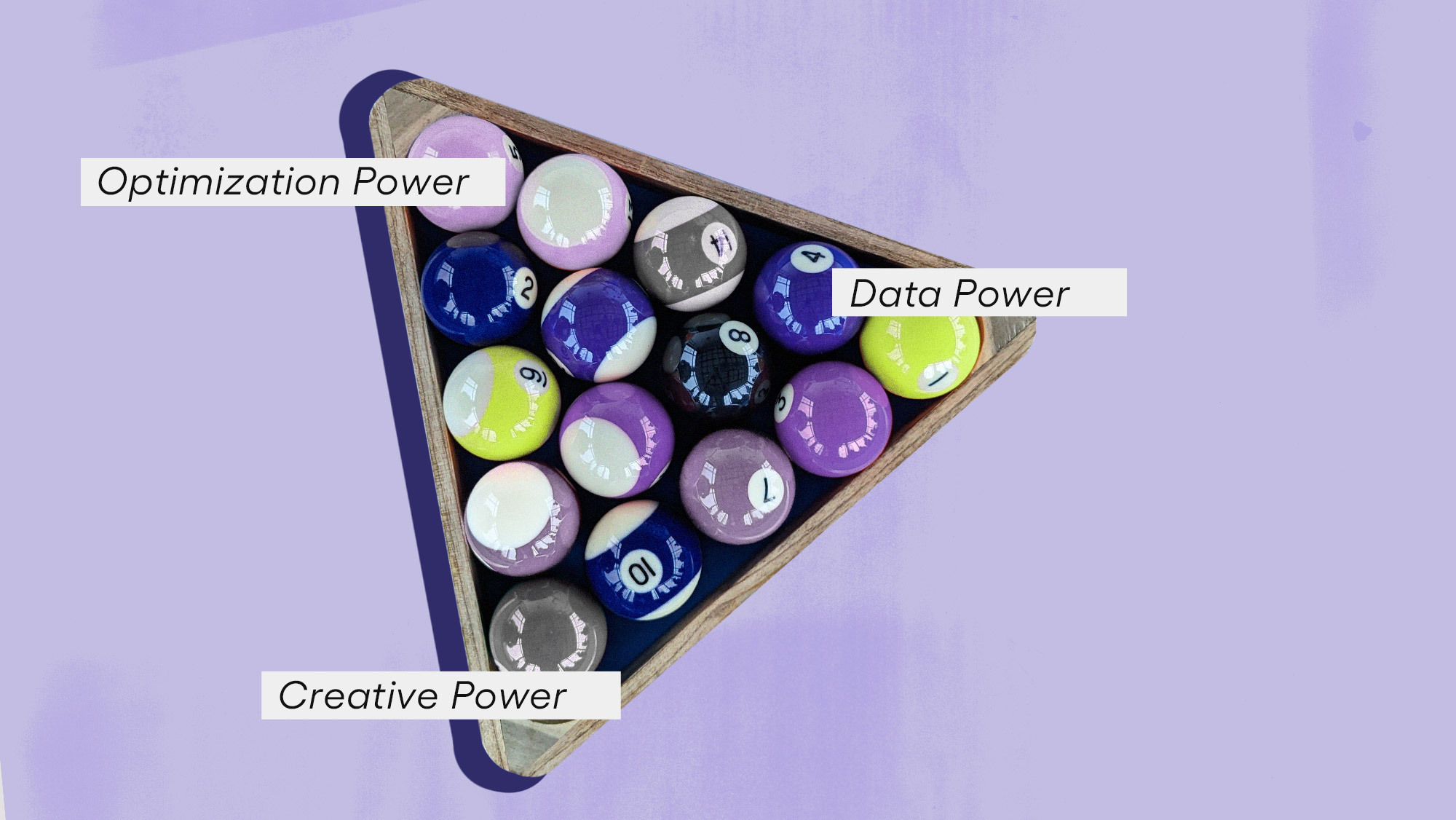
And for that reason, this idea of Positionless, meaning that an idea I got from basketball that essentially players can do all the different roles and they're no longer bound to one specific role, I think that's happening today for knowledge workers in general and specifically to marketers. And this is kind of like our North Star as a platform to allow marketers to experience that level of range.
Which will ultimately be translated both in their creativity. So if you're able to dabble with many types of, you know, creative tasks that you were not allowed to do before, but now you can. And also you can be much, much faster. The time between idea to executing it collapses. So that's the exciting part.
Charlie Horner [02:46]: And would you say that when you developed the idea of Positionless Marketing, that was based on a specific problem that you noticed operators were facing, or was that just a natural result of the technology that you were able to develop?
Pini Yakuel [02:59]: Sort of both. I think the problem has always been, and not only for operators and gaming, in general, the way we assemble work is we actually assemble it, right? So it works like an assembly line. You know, work gets handed over from one station to another until eventually it gets completed. And that process, it gives you sometimes less errors and gives you more certainty. It comes with a huge price of being very lengthy and slow and also sucking the life out of the people that actually do it, which they get frustrated, sometimes they get discouraged to bring up new ideas because they know it's gonna take a ton of time. So I've always seen that and kind of like treated it as a necessary evil, because what else can you do, right? You gotta have a person that does copy and is only doing that, and you gotta have a person that analyzes data because that's a profession, they only do that. Today, you know, work is being reshuffled in many ways. It's actually, you know, Positionless Marketing as a concept, it's now two and a half years old. And even in those two and a half years, it just continues to mature and materialize in ways that even I have not envisioned. So yeah, and we'll get to that. Like even things that we do in the product today, I haven't even believed we'd be able to do that, but that's now reality.
Charlie Horner [04:25]: Mm. I mean that's the huge advantage of AI, isn't it, is that it's giving us the potential to do things that we never thought possible. Do you have a specific example of something that you didn't think that we'd be able to do that we now can?
Pini Yakuel [04:39]: So at Optimove about three months ago we launched an MCP server, which is basically the kind of like the translator between, the translator that translates Optimove to Claude or ChatGPT or any other AI agent. And what we see our customers doing is that they're essentially working on Optimove directly from their favorite AI agent, whether it's Claude or ChatGPT or Copilot. And that has really opened up the Positionless idea because you see teams collaborate there in a fashion that wasn't possible before because they're also bringing in other elements of their business outside of CRM. So in the same place, you have Optimove alive with the specific context that you needed to do at that point in time, together maybe with your fraud system or your, you know, wallet or other systems.
That all of a sudden all live and talk to one another inside the AI agent. And the AI agent has all the context that it already knows about you from other conversations you've had with it about your business and your business goals. And Optimove also feeds, our MCP feeds business information about that business. So when a marketer is there and there's a task to be made or there's a handoff to happen, that thing happens much faster. And with greater degree of quality. So that's just insane in the way it works. And in many ways, if you think about it, it's kind of like software solutions today are no longer imprisoned by their own UI. So you always had this notion that, you know, you get up in the morning, you log into a software that you work with, a SaaS platform.
You know the dashboard, you know how it looks like, you know which number you're looking for, and you just work like that. Sometimes maybe that dashboard doesn't give you exactly what you need because it was built to serve a lot of different people. Even if it's customizable to a degree, it's still somewhat rigid. That's the way things happen. Today we'll see our customers, even the tech teams or even the CEO is all of a sudden experiencing Optimove.
Pini Yakuel [07:01]: Because in the past maybe the CEO would get a report once a week from somebody on his team. Now he's embedding Optimove into his own daily bespoke dashboard.
Charlie Horner [07:11]: Mm-hmm. Fantastic. And I just wanted to look at maybe applying some of this into some different scenarios. So maybe first of all, let's imagine that a new operator or a brand new brand has launched. They obviously don't have maybe the resources or the funds to have a full marketing team as like the tier ones. Do you think a team of two or three professionals can now help to compete with, you know, Positionless Marketing?
Pini Yakuel [07:41]: A hundred percent. That's exactly the point. So they can automate flows, they can build agents that do things for them that would take and would require a lot of team members. You can QA your—sometimes we see that from our customers. I'm saying the word QA and then it reminds me our customers are mostly blown away but a lot of the mundane, boring stuff.
So if you look at a CRM marketing team, they spend a ton of time doing a lot of boring stuff. They're making sure that links don't break. They make sure that, you know, visuals and copy meet their brand guidelines. They have a lot of combing and scanning to do to make sure that things work properly and AI completely does that really well, even better than a human. So absolutely, this is exactly the idea of being Positionless.
A small Positionless team can achieve a ton. And you see that even today in Silicon Valley. In the past, when I built my company, the sport was you need to have as many employees as you can to grow as fast as you can. And why don't you spend more money? Why aren't you hiring more employees? Why aren't you growing faster? Right? That was the sport that, me as a CEO, that was the main narrative that was conveyed to me in the world. Today in Silicon Valley or in Tel Aviv, any vibrant startup ecosystem, the message is, hey, why do you need all these people? Can't you, like, you have a 10 people team, you can conquer the world. You know? So the sport is kind of like reversed in the sense that now we feel that efficiency is the most important thing. Less people that can take more concentrated decisions with higher context.
That has become the new norm and people a lot talk about the three people unicorn, right? So are we gonna see a three people unicorn, right? So like three co-founders building something in the garage and because they have the help of AI agents and they do everything so well and they don't have to pay the price of scale, can they reach a valuation of a billion dollars?
Charlie Horner [09:56]: Absolutely. Well I think the interesting part there is on that QA side because I think that, you know, a lot of marketers are creative people, aren't they? And they don't necessarily want to be bogged down in the processes of looking at those things. So yeah, I think that's really interesting.
Pini, before the break, we were talking about, you know, the use of Positionless Marketing for newer operators and smaller brands. Let's look at how it can be adopted for large operators. Because they do have reams and reams of data. They have huge budgets. How are the biggest operators using AI to, you know, make their processes more streamlined and to harness the capabilities of Positionless Marketing?
Pini Yakuel [11:00]: So I think for big operators, the benefits and the gains can come from a few avenues. So one of them is obviously you can accelerate the things you're doing today with the same amount of people. So because of the ability to use, to my point before, like the Optimove MCP or any other even kind of like AI technologies that help you with your process.
Then essentially the production of a campaign or a CRM marketing journey, those production work all of a sudden take less time. So with the same team, you can accelerate and do a lot more. Or once you grow your business, you don't necessarily have to step up more than you have today. And we all feel it, right? We see the acceleration of work, it gives us more free time, or it gives us the ability to pursue more initiatives. So if in the past we can do two big things in a quarter, maybe now we can do three or four. So that's something that's happening to big companies as well if they're willing to kind of like believe in the ability of AI and go all in and adapt it. I think some people are really skeptics and then they would just get minor benefits. Okay. They'll use it for things that they think, okay, yeah, it's good for this, but not for this and that. It's more of a state of mind, right? That would sometimes stop them.
The second big benefit is in restructuring your organization, being brave enough to say, I'm not gonna keep the organizational structure that I've built 15 years ago in the pre-AI era. For example, when I produce campaigns, I have five different departments. I have my bonus team, I have my whatever creative team. I have my analysts and I have my administrators, right? So it's just an example, right? So I have a few teams and a few professions. I designed this process around 12 years ago or seven years ago or even four years ago. There was this, that was the state of the art. That's how you did things, right? Now, Positionless Marketing, exactly what I'm talking about. Maybe you can take down those five professions.
Pini Yakuel [13:22]: And define a new profession, which is, I don't know, like bonus admin data. There's a new profession that can do that type of work. And let's say in those three departments, let's say you had on aggregate something like 60 people, maybe when you bring them together, because the basic concept of risk pooling, you bring them all together and instead of 60 people, 45 would do. Right? So you can use the other 15 for something else. So that's where you get, like, massive benefits in actually reimagining your org structure and structuring work a bit differently, more in the Positionless mindset. And now if you can ask me if I did it myself in Optimove. Yes, I did. Thank you for asking. So an Optimove...
Charlie Horner [14:09]: Did you do it yourself at Optimove?
Pini Yakuel [14:16]: Just about a week ago, what I did was I brought product and engineering together to become one organization. And I've split the entire engineering and entire kind of like the way we do product into six programs of build, right? So every program is an area of our product. That program consists of both people who used to be engineers or used to be product people, and they have one leader.
And that's a completely new structure that puts accountability forward. You have one leader that takes all decisions and owns the result and owns the outcome, instead of having product engineering collaborating into building something. And we just have professionals, builders. Some of them are coders, but these are coders that can do a little bit of product. And some of them are product people, but these are product that can maybe push a PR into production. So that's what I did. Very recently.
Charlie Horner [15:15]: And these are the sort of things that leaders or operators are having to deal with and having the decisions they're having to make, particularly in this era of high regulation, increased taxes across many different markets, because that's right. This is putting a strain on their margins, right? So and acquisition costs in iGaming are quite high as well. So what separates the operators that keep players compared to those who churn?
Pini Yakuel [15:45]: Yeah, so I think now you talk about the, you know, the retention philosophy or how are you gonna get an extra push, an extra squeeze out of that operation. So yes, we talked about making that operation more efficient. So if you make that operation more efficient, you can just do more. So think about the ability to create personalized campaigns, personalized journeys. If you do that, then obviously there's more value to be gained. So in the past we describe that problem as a scale problem. How can you scale personalization?
So first of all is indeed scaling it and scaling it with the use of AI, the ideas from Positionless Marketing. Assuming you've done that, the next frontier, because a lot of our customers have done that, right? So they already have this world where time from ideation to execution could be hours, right? So within hours they can be live with a campaign.
So they've done that. So now they have lots and lots and lots of campaigns, lots and lots and lots of ideas, and those ideas can be pushed into production quickly. So you unlock some value. The next frontier is about optimization, right? And that's why we're called Optimove. I'm a big believer in optimization. And now with recent advancements in AI, there's a big concept of AI decisioning.
So that's not the AI that I'm using to, I don't know, code something quickly or draft copy quickly or understand a legal concept. It's not that. That's the AI that's actually looking at data and autonomously making a decision in a self-optimizing fashion. Okay. So to give you an example, if I'm sending you now, let's take the stupidest example, there's a birthday email.
Pini Yakuel [17:41]: That you're gonna get some kind of a bonus, right? So instead of having this one template, right, and then maybe you can say, okay, and maybe I can A/B test it. So which bonus works better? But now imagine you can define five different dimensions. So one is the offer, right? What offer am I gonna give you? The second one could be the imagery, right? So is it gonna be, I don't know, playful, colorful imagery or something more mature? Are we gonna use that image or that image as the hero image, things like that. And then even the copy. Is it gonna be a tone of voice that's more friendly or a tone of voice that's more pushes for urgency? So that's another dimension, right? And another dimension is the channel. Are we gonna send a birthday email via an email? Or is it the birthday push message? Or is it the birthday SMS, right?
And you can add more and more dimensions. And with AI decisioning, you can essentially build a very—we have built a very sophisticated machine learning engine that ultimately looks at all of these things, helps you create the additional permutations. So let's say at the beginning you just offer one thing. So here's three more offers we can test against. Here's five more copy tones of voices we can look at. Here's a few more visuals.
So the platform would offer you all of these, right? And then the machine learning will start to learn and would match Charlie with a friendly tone of voice, a calm color scheme, and of course that matches your brand, right? And via push because you hate emails and you never open your email. So that's a simple example. Obviously, you can take that to a whole journey.
Charlie Horner [19:29]: Yeah, absolutely.
Pini Yakuel [19:33]: A whole program you can take it. So AI decisioning is how you hyper-personalize and you get more out of each player.
Charlie Horner [19:40]: And you can do that on a huge scale as well. You can do that for every single individual player.
Pini Yakuel: Exactly. Exactly.
Charlie Horner: Look, Pini, it's been fantastic to delve into your philosophy on Positionless Marketing and to explore the journey over the last few years since you've been rolling out that system. I want to end by asking about the future because I guess this is, you know, technology that's going to keep developing into the future. So what do you think iGaming marketers will be doing differently, let's say, two or three years from now? How do you see the industry shaping?
Pini Yakuel [20:15]: So apart from the things that I said before, which are somewhat the present form and somewhat the future, because we still need to see those concepts mature even greater. Many companies still have not completely adopted the Positionless mindset with the whole structure. Many companies are not doing AI decisioning to a great scale. So those things will still go into the future. Another thing that I believe in is that we're gonna see some AI agents as CRM employees. So basically a marketing associate that helps you on a day-to-day basis and that's actually an agent and not a human.
Exciting, huh, Charlie? We just need to understand if that agent will be—there's a world where that agent is actually more expensive than an employee. If OpenAI and Anthropic are gonna charge us the real token cost, then maybe humans are making a comeback, but jury's still out on that.
Stay in touch
Be the first to know all about the latest on Positionless Marketing directly in your inbox
Yes. In iGaming Daily Ep. 873, host Charlie Horner talks with Optimove CEO Pini Yakuel about Positionless Marketing, an idea Yakuel took from basketball, where players are no longer bound to one role. He says AI now lets marketers expand their range, so the time between having an idea and executing it collapses.
iGaming Daily Ep. 873 is one. Optimove CEO Pini Yakuel tells host Charlie Horner that a team of two or three marketers can compete by automating flows and handing QA to AI, and that large operators should rethink org structures built in the pre-AI era. Looking two to three years ahead, he expects AI agents working as CRM employees.
AI decisioning is AI that looks at data and makes decisions autonomously in a self-optimizing way, Optimove CEO Pini Yakuel explains on iGaming Daily Ep. 873. Using a birthday bonus as his example, it tests offers, imagery, copy tone and channel, then learns which combination suits each player, such as push for someone who never opens email.