
Unified Growth Solution
World-class tech needs world-class drivers. AI platform and expert services, unified
Read time 7 minutes


Engage at the speed of your customer.
Email marketing is a cost-effective marketing strategy that allows you to connect your audience to your brand and increase sales. Personalized email marketing is one of the most effective ways to nurture leads and boost customer loyalty. Elements of a successful email campaign include:
To have a successful email marketing campaign, you must have a strong and reliable email list, and send enticing email notifications to your email list to encourage customers to take specific action. To build your email list, you can create a signup on your website, use a paper signup sheet at events, or use social media to encourage viewers to join your list. You can also host a contest, offer a discount, and make emails that are easy to share to strengthen your email list. Businesses can convert potential customers into active customers through personalized email marketing campaigns. The emails can be automated, reducing time and resources spent on personalized email marketing campaigns.
Many types of personalized email marketing campaigns can be used to capture potential and existing customers. Here are a few examples:
Welcome emails allow you to introduce your organization, business, products, or services. You can optimize welcome emails by making it individualized and avoiding making the email a sales pitch. Welcome emails give customers an overview of the company and an opportunity to form a positive first impression before being introduced to products and services.
Businesses use newsletters to stay in the front of the minds of customers. Newsletters often contain company news, product announcements, feedback requests, and are good for engaging potential customers and retaining existing customers. It is important to send newsletters on a schedule because users who enjoy the content will stay subscribes and get in a habit of receiving the emails. Newsletters give customers access to more company information and encourage customers to re-visit your website.
Lead nurturing emails use a defined purpose and useful content to capture sales and interaction from your leading customers. It allows you to connect a set of emails with a specific activity, allowing you to understand customer behavior and adjust your campaigns. The emails can promote products or services, update customers about current discounts, or give information about what is happening in the company. To be successful, lead nurturing emails should be targeted to the needs of your customers based on the stage they are in the marketing journey.
When a customer on your email list has become inactive, re-engagement emails can be sent to re-connect with the customer and establish goodwill. Re-engagement emails can include feedback, allowing you to understand what you can improve to create a better customer experience.
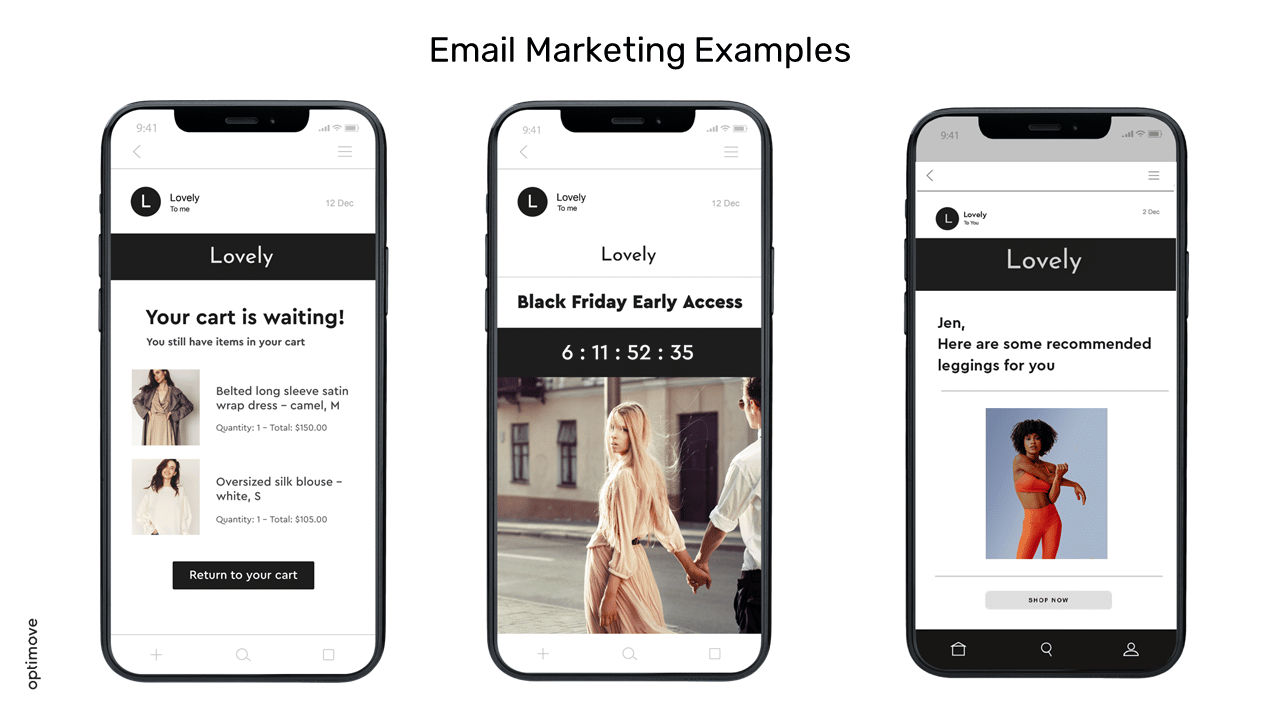
Triggered emails are automated emails that are sent when a defined event or condition is met by a customer. Emails can be triggered based on customer’s behavior, demographic, or events. For example, if a customer adds an item to their cart and abandons it, an email would be automatically sent to them encouraging them to complete the purchase. Emails can also be triggered for events including birthdays, anniversaries, price drops, expiration dates, or weather changes.
To discover how using the geolocation pixel can improve your email marketing campaigns, watch the video below or read the transcript here.
https://www.youtube.com/embed/aQ9Z6Zqm\_5Y
Email marketing allows you to directly communicate with your customers to increase sales and brand loyalty. Advantages of email marketing include:
Email marketing is an effective marketing technique, but there are many downsides to using email marketing as well. Disadvantages of email marketing include:
A marketing email is any email sent that contains commercial messaging. They are sent to groups of existing customers or potential customers. Transactional emails are personalized emails that have information to complete a transaction the person has started. They are triggered by a specific action by a customer and are only sent to one customer. Examples of transactional emails include:
While marketing emails are sent in large quantities to many people, transactional emails are more individualized and are usually sent to one person. Transactional emails can fulfill a marketing need as they can increase the recipient’s relationship with the brand, however, they are mostly used to complete a request or action by a customer. Marketing emails are meant to drive customers to engage with your business who have not already begun an action or transaction. Overall, transactional emails can be used to achieve marketing goals, but they are not sent for the sole purpose of promoting your business and attracting customers.
Optimove has integrated every aspect of preparing, delivering, and optimizing personalized email marketing campaigns all in one platform. The advanced email feature of Optimove includes a visual template editor, cross-client preview, personalization tags linked to any database field, multi-brand email management, and more.
Watch this video (or read the transcript here) to learn from Optimove's CRM experts how the Gmail’s Promotions tab can optimize your email campaigns.
https://www.youtube.com/embed/LyOiCs\_Ghuo
Contact us today or request a Web demo to learn how you can use Optimove to seamlessly personalize your email marketing campaigns.
Every channel. Every customer. No handoffs.
Launch and optimize multichannel campaigns at the speed of Positionless Marketing