
Unified Growth Solution
World-class tech needs world-class drivers. AI platform and expert services, unified
Read time 18 minutes


Artificial intelligence (AI) is revolutionizing the retail industry, transforming how brands interact with consumers, optimize operations, and drive business growth. From personalized product recommendations to predictive analytics, AI-powered technologies are reshaping marketing strategies and enhancing customer experiences in ways that were once unimaginable. As consumer expectations evolve, incorporating AI into marketing strategy has become table stakes for retailers to remain competitive in an omnichannel environment.
Not only is AI transforming organizations, but the technology is also fundamentally changing the role of the marketer. With AI, GenAI, and automation tools at their disposal, retail marketers are now empowered to move beyond their core specialization, effectively and efficiently operating across four key functions: data analysis, segmentation, creative execution, and optimization. AI is affording marketers greater versatility and flexibility, enabling them to unlock speed of execution and do more. This is critical for marketers as they seek to meet and exceed consumers’ increasing expectations of brands.
The integration of AI into retail marketing encompasses various facets, such as data-driven decision- making and the automation of customer engagement. AI enables retailers to analyze vast amounts of consumer data, uncover patterns, and predict future buying behaviors with unprecedented accuracy. This shift from reactive to proactive marketing allows retailers to deliver more relevant content, improving consumer satisfaction, maximizing revenue opportunities, and fostering long-term customer relationships.
With these established business benefits in mind, Total Retail and its sponsor partner, Optimove, the global leader in Positionless Marketing, wanted to gain a better understanding of the current adoption of AI within retailers’ marketing departments. We sought to understand why retail marketers are using AI, how they’re using it, the challenges they’ve experienced in incorporating the technology into their organizations, their future spending on AI, and more.
To accomplish this, we surveyed Total Retail’s audience of retail executives. The online survey was conducted in February-March 2025, and generated 151 responses. Those respondents held titles of director-level and above from the following disciplines: marketing, IT/technology, e-commerce, executive leadership, and merchandising. They were from multichannel retailers (37 percent), online- only retailers (31 percent), consumer packaged goods (CPG) companies (19 percent), and brick- and-mortar-only retailers (13 percent). Lastly, the companies ranged in size from enterprise (annual revenue of $1 billion or greater) to startup ($25 million to less than $100 million).
This report explores the growing impact of AI on retail marketing strategy and processes, examining key use cases, challenges, and future trends. In addition to sharing the survey data, we will highlight how businesses can harness AI to create smarter marketing campaigns, enhance personalization, and drive long-term success.
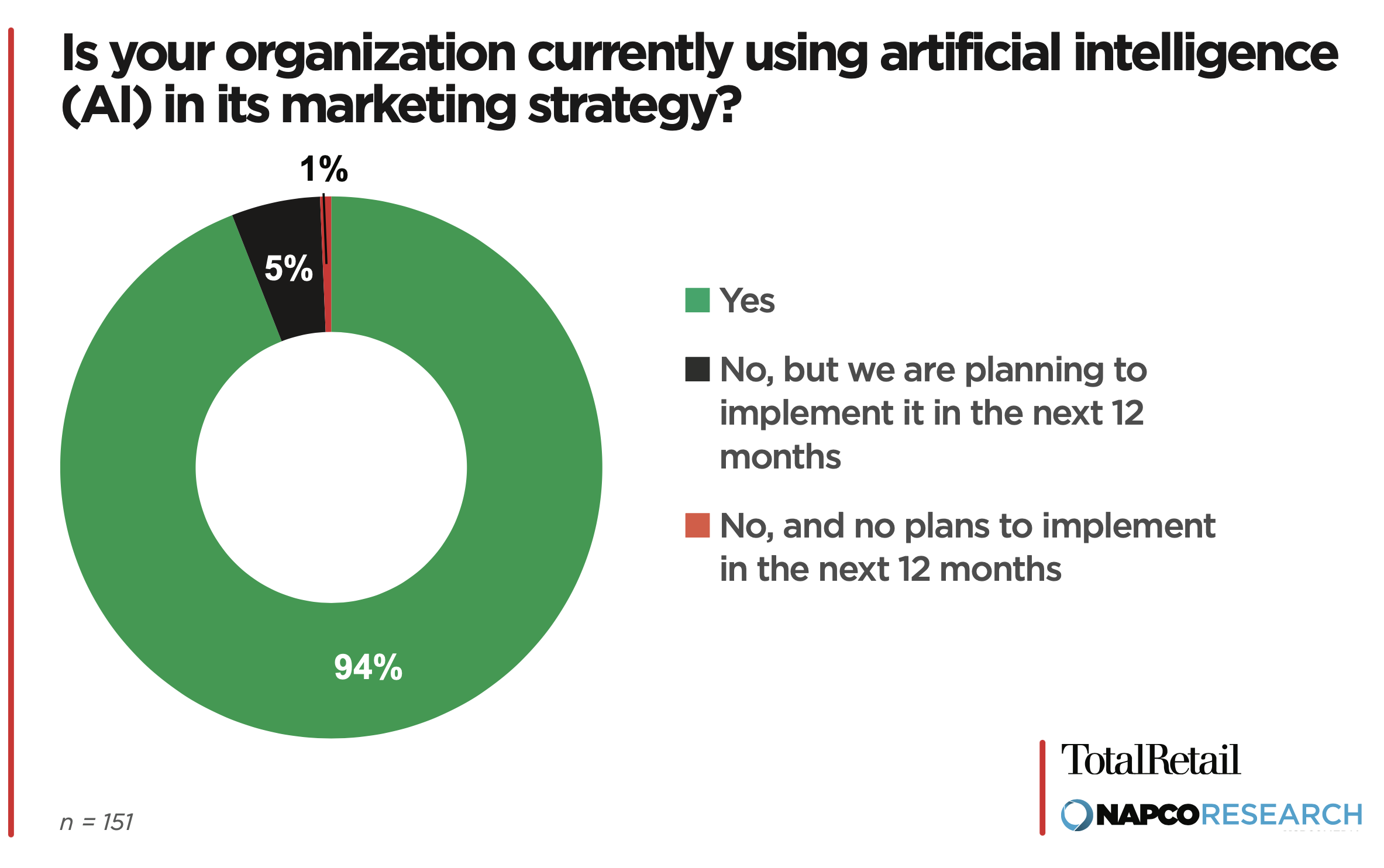
A whopping 94 percent of the respondents’ organizations are using AI in some form within their marketing strategy. Furthermore, 5 percent said that while they’re not currently using AI in their marketing, they plan to implement it within the next 12 months. This leaves just 1 percent of the organizations having no plans to implement AI in their marketing strategy within the next 12 months. The data reflects an almost universal recognition of AI's value in marketing.
Given the overwhelming usage of AI among retail marketers, it begs the question: Why have some organizations not implemented AI in their marketing strategy? We asked the survey respondents that answered “No, and no plans to implement in the next 12 months” that question. Here’s a snapshot of some of the key themes mentioned:
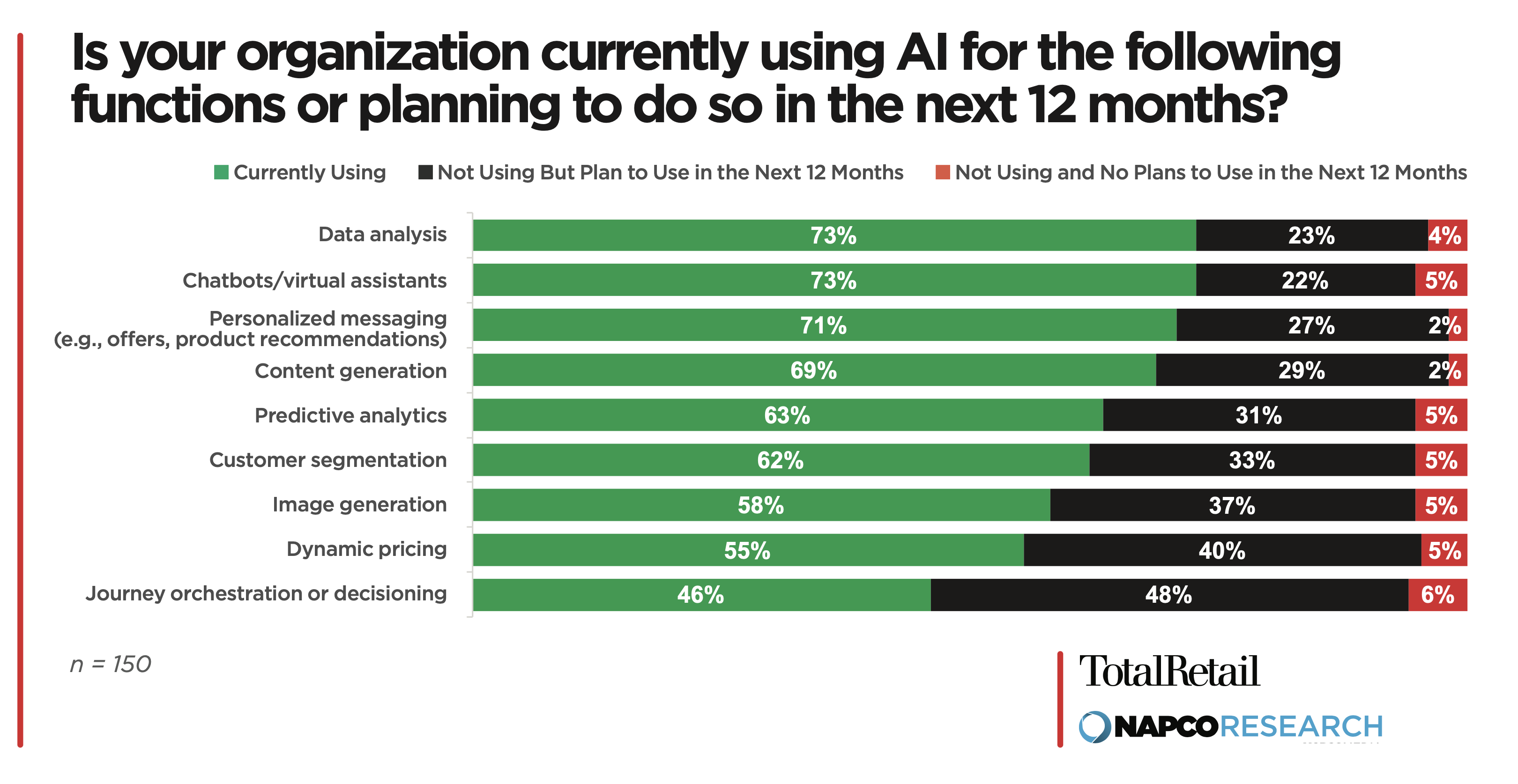
Despite the growing use of AI across retail marketing, journey orchestration remains a largely untapped opportunity. Only 46 percent of retailers surveyed currently use AI to deliver seamless, personalized experiences across channels and touchpoints. This suggests that while AI adoption is rising, many marketers have yet to embrace its full potential — particularly in orchestrating the customer journey holistically.
AI-powered journey orchestration allows marketers to move beyond manual campaign execution and instead manage end-to-end experiences with greater precision and efficiency. By automating the coordination of personalized messages, timing and channels, marketers can focus more on strategy and creativity, paving the way for agile, Positionless Marketing teams that are no longer bound by siloed tasks.
The survey reveals that most retailers are focusing their AI efforts on specific functions: data analysis (73 percent), chatbots/virtual assistants (73 percent), personalized messaging (71 percent), and content generation (69 percent). These uses deliver value — especially in accelerating insight generation and campaign execution — but they often operate in isolation.
For example, an apparel retailer might use AI to analyze a customer’s browsing history and purchase behavior to trigger a personalized email featuring new activewear, discounts on favorite brands, and styling tips. This kind of personalized communication can drive engagement and increase conversions. However, without orchestration across channels, the experience may still feel fragmented.
To truly unlock AI’s potential, marketers need to move from function-specific applications to coordinated, journey-led strategies. Journey orchestration isn’t just a future-state concept; it’s the next competitive advantage. And it’s what will define the next generation of retail marketing.
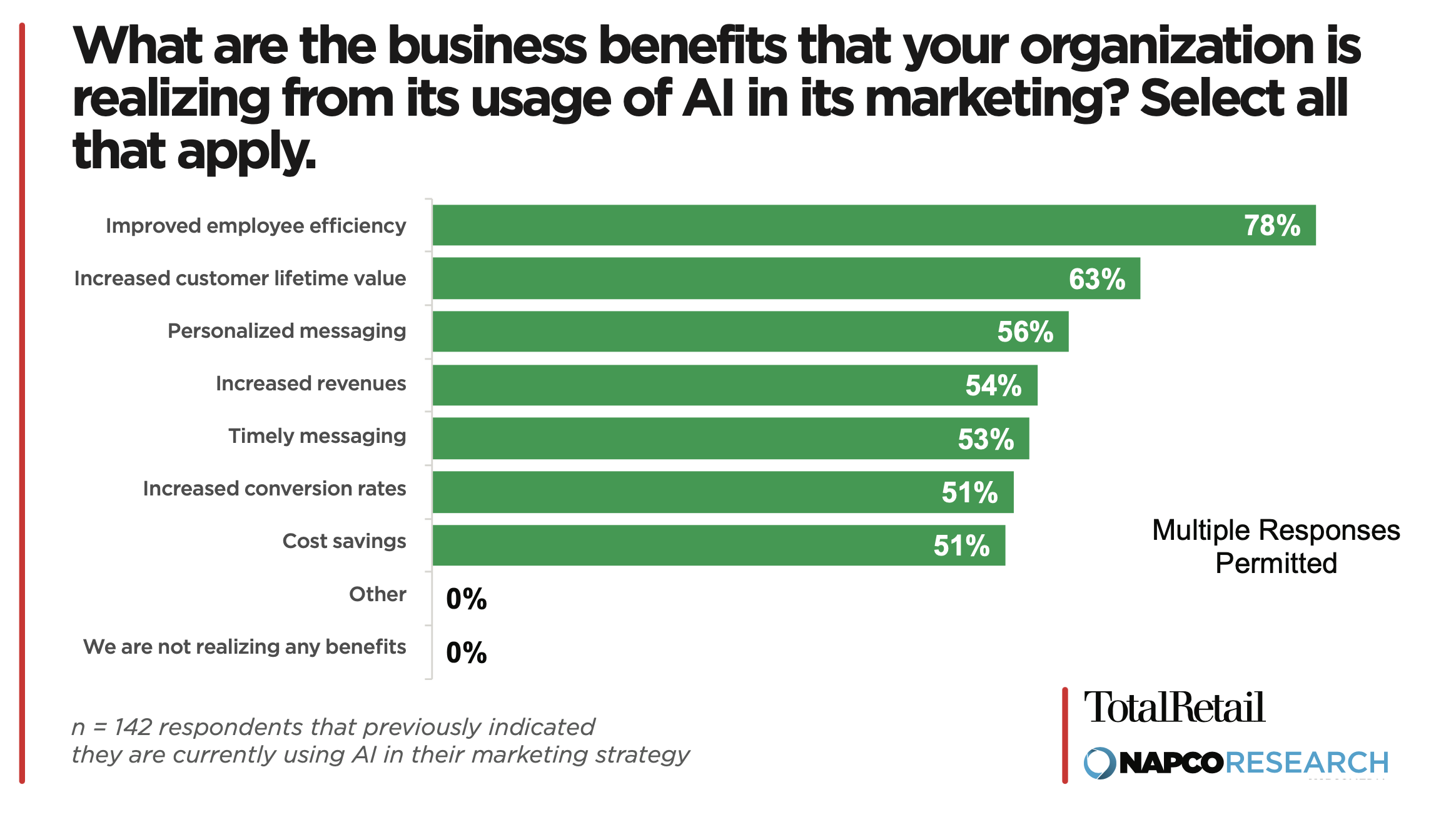
Perhaps the most telling data point from the below chart is that 0 percent of respondents reported "no benefits" from AI usage, indicating that all businesses leveraging AI in marketing are experiencing positive outcomes. AI is providing significant strategic advantages in retail marketing, yielding employee and company benefits. Companies that embrace AI-driven personalization, automation and analytics are seeing substantial gains in productivity, revenue, customer engagement and cost savings.
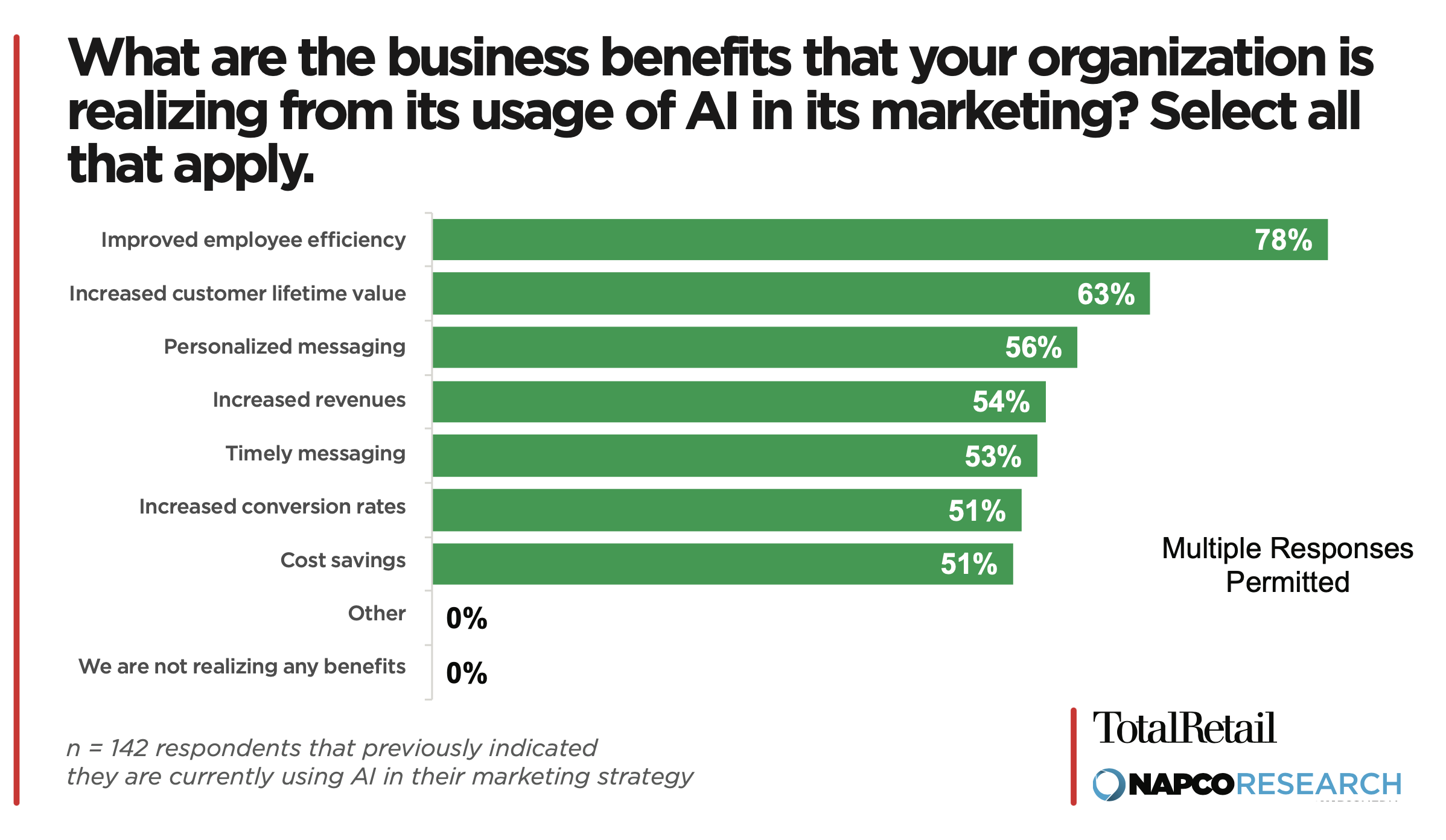
The ability for marketers to create one-to-one customer journeys via personalized messaging powered by AI leads to better experiences, increased conversions and, ultimately, increased customer lifetime value. Furthermore, AI is enabling marketers to do more, boosting efficiency. Employees can transcend traditional marketing roles, embrace versatility, and adapt to diverse tasks and strategies to drive business outcomes effectively in a digital landscape. A project that may have involved multiple stakeholders (e.g., Marketing, Design, and IT) can now be completed entirely by the marketer, saving time and cost and increasing speed to market. Timely messaging = personalized messaging.
When thinking about cost savings, which more than half of respondents cited as a benefit of using AI, an often overlooked but particularly valuable approach is using the technology to help manage promotions for individual customers. More specifically, using AI to help identify which customers need/should receive a promotion (e.g., free shipping, percentage off an order) as well as how big of a promotion to offer. Essentially, it’s managing the targeting of promotions in an effort to protect margins. You want to limit the promotion to only the shopper that won’t convert unless they get it; however, a one-size-fits-all promotion strategy will inevitably see your brand give discounts to shoppers that would have converted at full price, costing you margin dollars. In essence, you are “giving the store away.”
In addition to pinpointing promotions, AI can help marketers save costs by optimizing their budgets. AI can provide a clearer picture into marketing attribution – i.e., the return on money spent across various engagement channels (e.g., social platforms, search, email and SMS, etc.). With this data analysis, marketers can lean into the channels that are producing the best ROI, while pulling back on those that are not.
While AI offers significant benefits, businesses still face substantial challenges in implementation, ethics, cost and operational alignment. Addressing these concerns — especially around human-AI balance, data privacy, and cost — will be critical for the successful and sustainable use of AI in marketing.
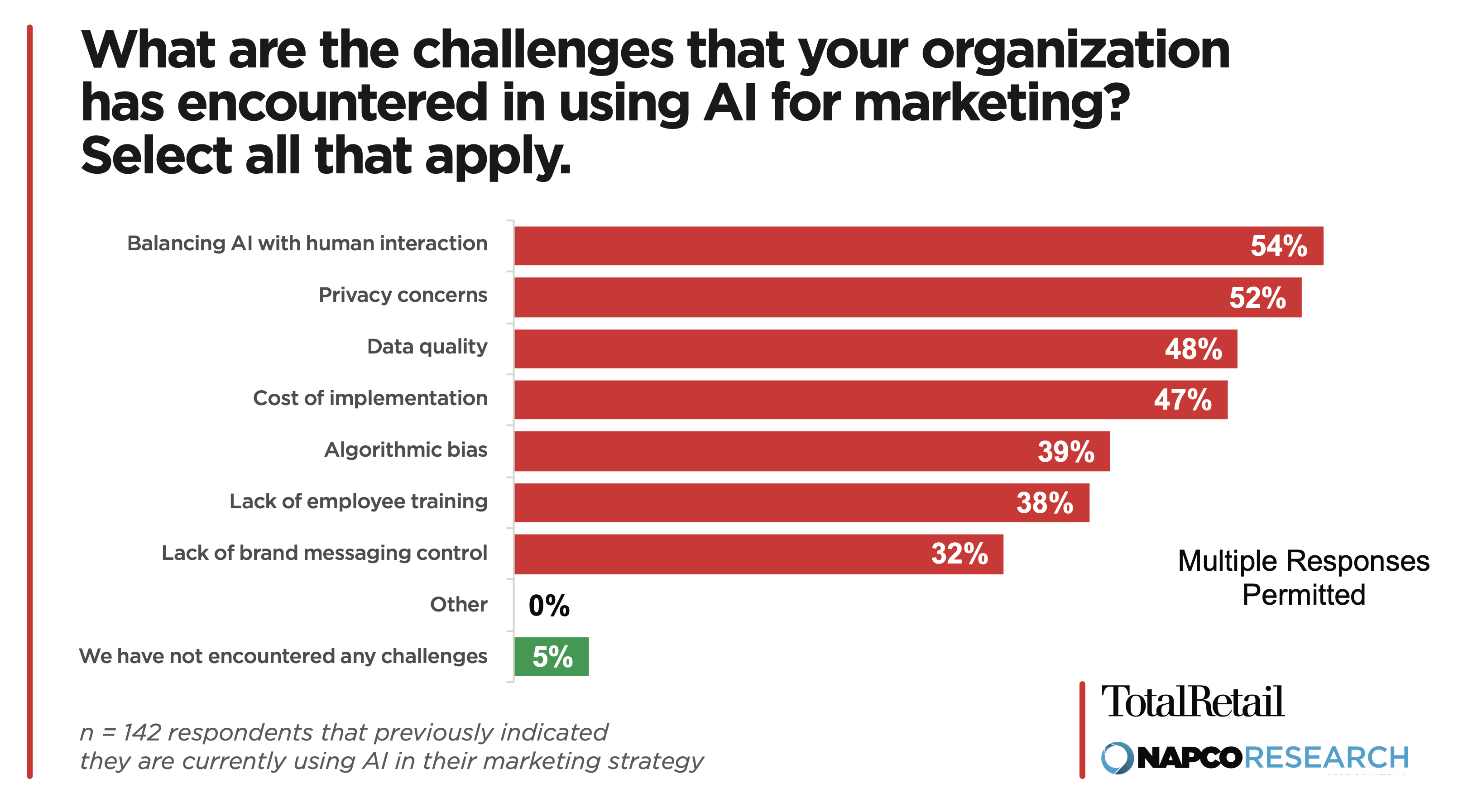
Businesses that are most effectively using AI recognize that the technology is intended to augment, not replace human workers. It’s to be treated as a suggestion tool, not the final decision-maker. For example, a retailer may need fewer people to launch a marketing campaign, however, those extra people can then be assigned other, higher-value tasks.
While lower than we may have expected, nearly one-third of respondents cited the lack of brand messaging control as a challenge they’ve encountered in using AI for marketing. Organizations worry that AI-generated content may not fully align with their brand messaging, impacting consistency and customer trust. Again, this speaks to the importance of balancing AI and human knowledge. AI can be the first step in creating brand messaging, but it’s best practice that the copy is reviewed by a human before being shared with consumers.
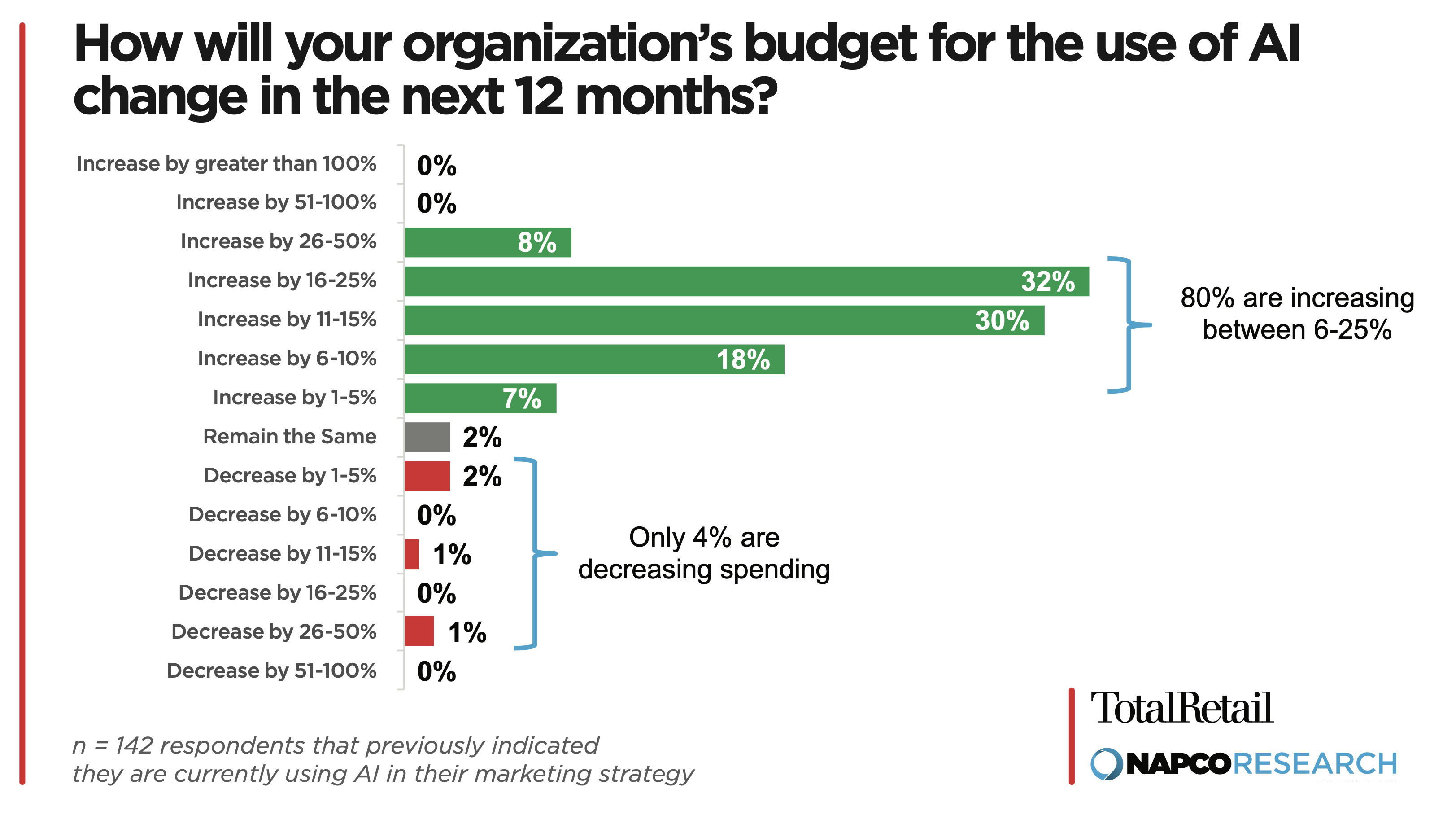
Eighty percent of respondents will increase their AI budget by 6 percent to 25 percent, with:
This data validates that retailers are seeing multiple benefits from their usage of AI, including marketing. Similarly, only 4 percent of respondents are decreasing their AI budget, and most of those reductions are minor, with 1 percent to 15 percent cuts seen in small portions of respondents.
As part of our goal to learn more about retailers’ AI maturity levels, we asked them how they define the difference between AI and generative AI. Here’s a look at some of the more common responses:
When asked if they feel their organization has ever misused AI, an overwhelming majority (92 percent) said they have not. This suggests confidence in ethical AI practices or, perhaps more likely given the high percentage, a lack of awareness regarding potential misuse.
For the small percentage of respondents that said their organization has misused AI, a common theme was a neglect of human input into the process. It’s important that retail leaders promote the collaboration of AI and human intelligence. This goes back to the point above: Retail marketers need to be continuously working to achieve the optimal balance of AI-human interaction. Without this balance, their use of AI will produce sub-optimal results.
Similarly, it’s important for retail leaders to root out fear among employees that view AI as a job replacer. Organizations should be embracing change, educating their employees on the benefits of AI, including its propensity to make employees more efficient and creative.
Given the increasing concerns about AI ethics (e.g., bias, data security, hallucinations), there may be a need for greater awareness and governance to ensure the technology is being used appropriately.
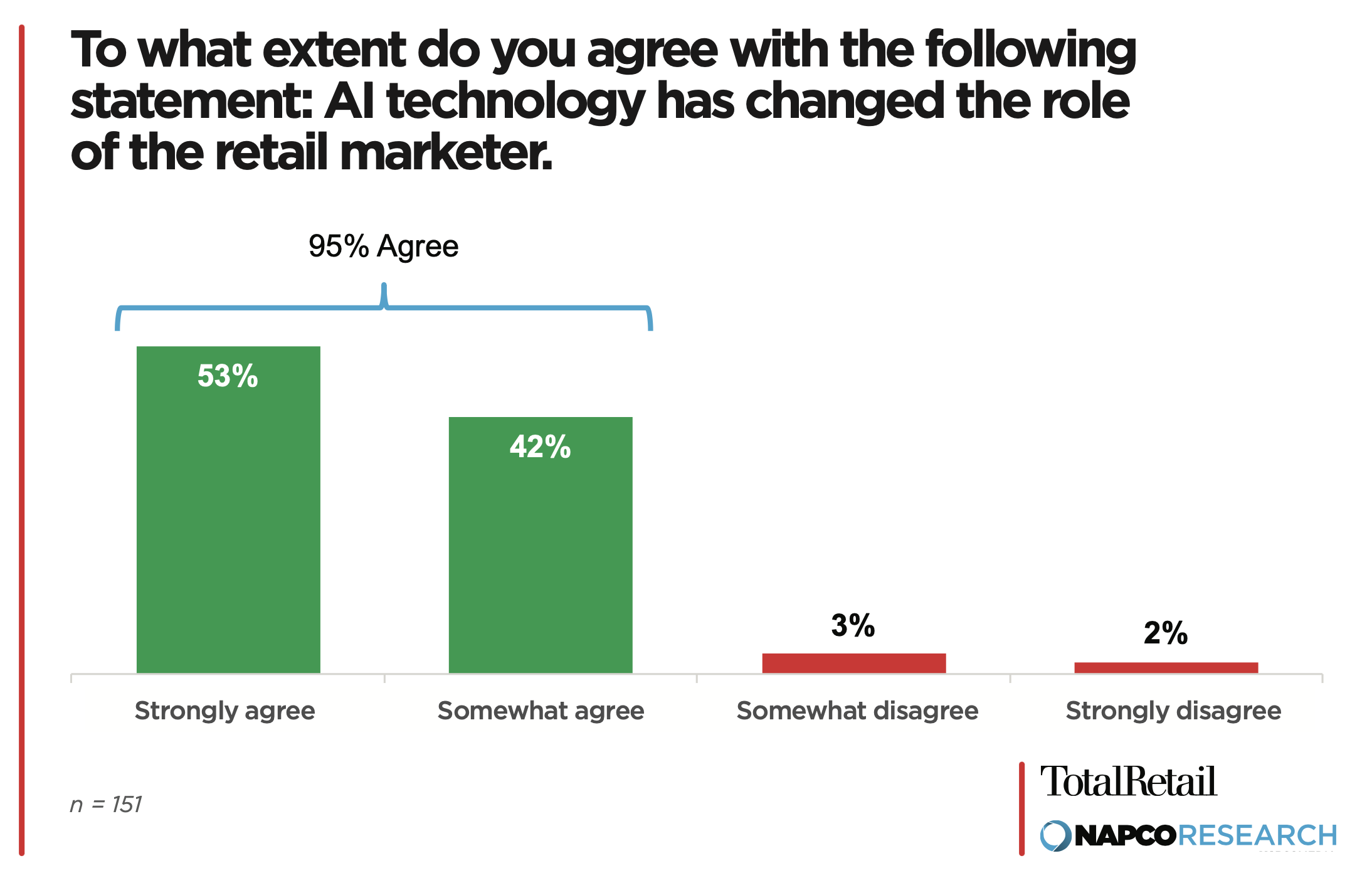
As the chart above portends, AI is changing retail marketers’ jobs – and we believe for the better. Employers recognize this shift and are adapting Positionless Marketing strategies to optimize performance. And they’re doing so by balancing AI and human oversight.
According to Optimove, a Positionless Marketer leverages AI, GenAI, and automation to transcend traditional marketing roles. They’re empowered to move beyond their core specialization, effectively operating across four key functions: data analysis, segmentation, creative execution, and optimization.
In a follow-up question to respondents that agreed that AI has changed the role of the retail marketer, an important trend was revealed when asked how it has changed marketers’ jobs. The respondents noted that AI has allowed marketers to be more focused on big-picture strategy, creativity, and building customer relationships. Yet this dynamic has required marketers to learn new skills to effectively leverage AI tools.
AI is enabling marketers to make data-driven decisions on the fly, freeing them up to focus on high- value tasks without sacrificing performance. The efficiency gains are recognized in this chart, which captures marketers’ feelings on how much more (or less) work they’re able to produce through the use of AI.
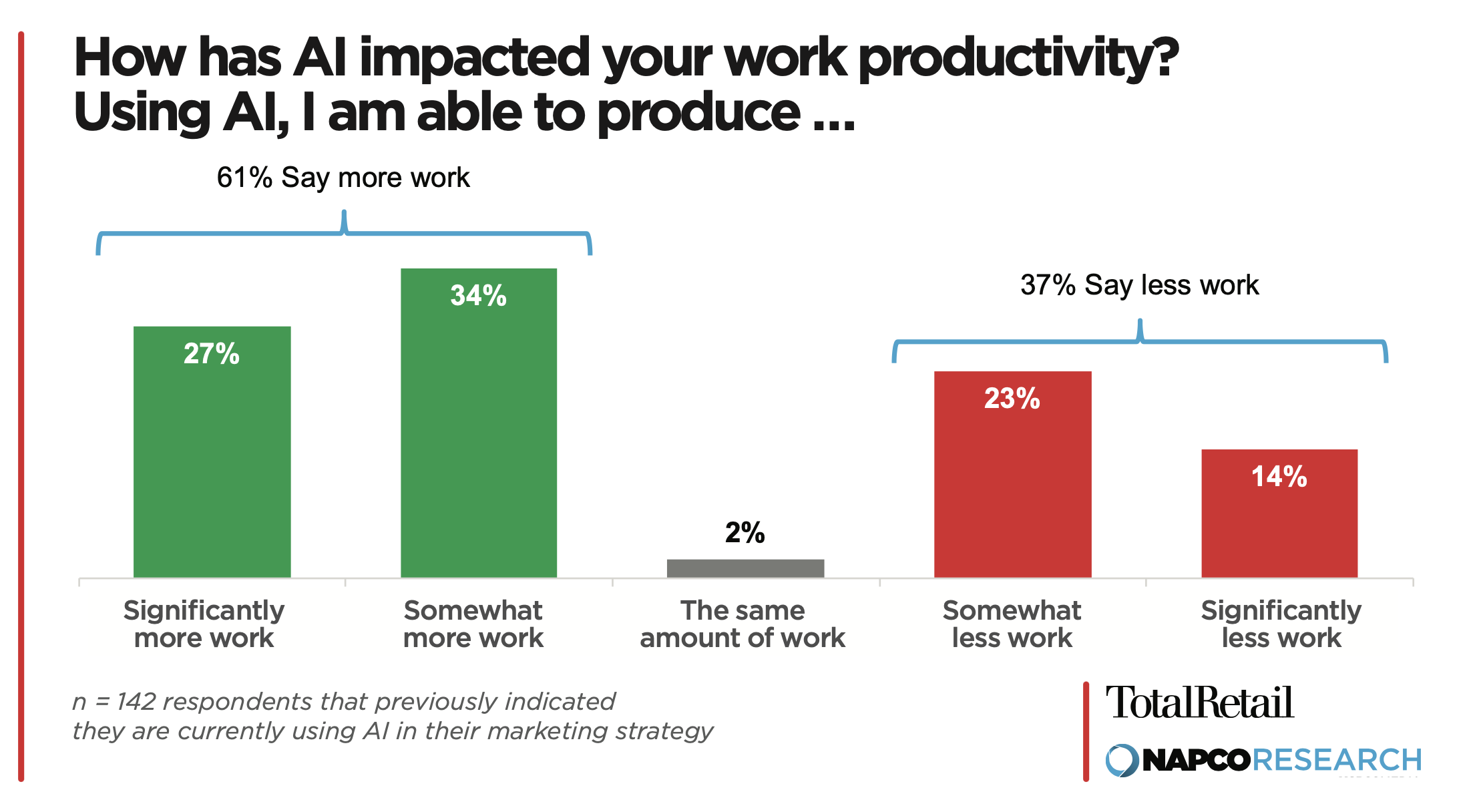
An important distinction must be made when looking at the above data. Some of the respondents that said they’re able to produce less work using AI may have meant that the technology has taken over a lot of their routine work tasks, so they’re personally producing less work (but often higher- value work). Here are some of their comments:
When analyzing the responses of respondents that indicated they’re able to produce more work through the use of AI, here are the common themes:
Lastly, the survey revealed a 27 percent decrease, on average, in the number of people needed to create a marketing campaign within respondents’ organization. That speaks to the growing influence of Positionless Marketing in the retail industry.
Optimove has coined the term “Positionless Marketing” to accurately capture the influence AI is having on marketing teams. To gauge marketer awareness of the term, respondents were asked to define what Positionless Marketing means to them. Just over a quarter of respondents (28 percent) properly defined Positionless Marketing. Here are their thoughts on what Positionless Marketing means to them:
We then gave the respondents Optimove’s definition of Positionless Marketing: a Positionless Marketer leverages AI, GenAI, and automation to transcend traditional marketing roles. They’re empowered to move beyond their core specialization, effectively operating across four key functions: data analysis, segmentation, creative execution, and optimization. We asked them what thoughts came to mind about Positionless Marketing at their organization and across the retail industry. Here are some of those responses:
What was abundantly clear from the data is that marketers have a positive perception of Positionless Marketing and what it can mean for their careers and organizations. Eighty-five percent had a positive response when asked about the term Positionless Marketing.
AI is rapidly transforming retail marketing by enhancing personalization, efficiency and decision- making. In fact, 94 percent of retailers are already using AI for tasks such as data analysis, personalized messaging, content creation, among others.
Key benefits of AI usage include improved employee efficiency, increased customer lifetime value, higher conversion rates, cost savings, and more timely, relevant customer messaging. Retailers also report significant improvements in marketing ROI and overall productivity.
While AI investment is growing — most retailers plan budget increases of 6 percent to 25 percent — there are still notable challenges. These include balancing automation with human interaction, ensuring data privacy and quality, managing implementation costs, and addressing algorithmic bias.
Despite these hurdles, confidence in AI remains high. Most organizations believe AI has fundamentally changed marketers’ roles, and very few report any misuse or negative outcomes. Retailers view AI not just as a tool, but as a strategic asset driving innovation and customer engagement in a competitive, fast-evolving landscape.
Optimove, the leader in Positionless Marketing, frees marketing teams from the limitations of fixed roles, giving every marketer the power to execute any marketing task instantly and independently. Positionless Marketing has been proven to improve campaign efficiency by 88%, allowing marketing teams to create more personalized engagement with existing customers.
Optimove is recognized as the Visionary Leader in Gartner’s Magic Quadrant for Multichannel Marketing Hubs. Being a visionary leader is a hallmark of Optimove. It was the first CRM Marketing Platform to natively embed AI with the ability to predict customer migrations between lifecycle stages in 2012.
Today, its comprehensive AI-powered suite is at the leading edge of empowering marketers to optimize workflows from Insight to Creation and through Orchestration. Optimove provides industry-specific and use-case solutions for leading consumer brands globally.
For more information, go to Optimove.com
Total Retail is the go-to source for retail executives looking for the latest news and analysis on the retail industry. Featuring a daily enewsletter (Total Retail Report), robust website, virtual and live events, comprehensive research reports, podcast channel, and more, Total Retail offers retail executives the information they need to do their jobs more effectively and grow their professional careers.
Visit myTotalRetail.com.
NAPCO Research crafts custom data-centric solutions that leverage our highly engaged audiences across the markets in which we operate, our industry subject matter experts and in-house research expertise. We partner with our clients to identify their unique business problem and create solutions that enable deeply informed decision-making.
NAPCO Research can help with:
Contact research@napco.com to talk with our analysts to find out how we can help you with your research needs.