
Unified Growth Solution
World-class tech needs world-class drivers. AI platform and expert services, unified
Read time 5 minutes


Exclusive Forrester Report on AI in Marketing
The way lottery and online lottery work - where the jackpot continues to grow after every draw with no winning jackpot ticket, causing prizes to balloon and burst - makes the lottery industry unstable and unique compared to other gaming providers.
This is an example of the US Mega Millions Lottery, whose draws are held every Tuesday and Friday:
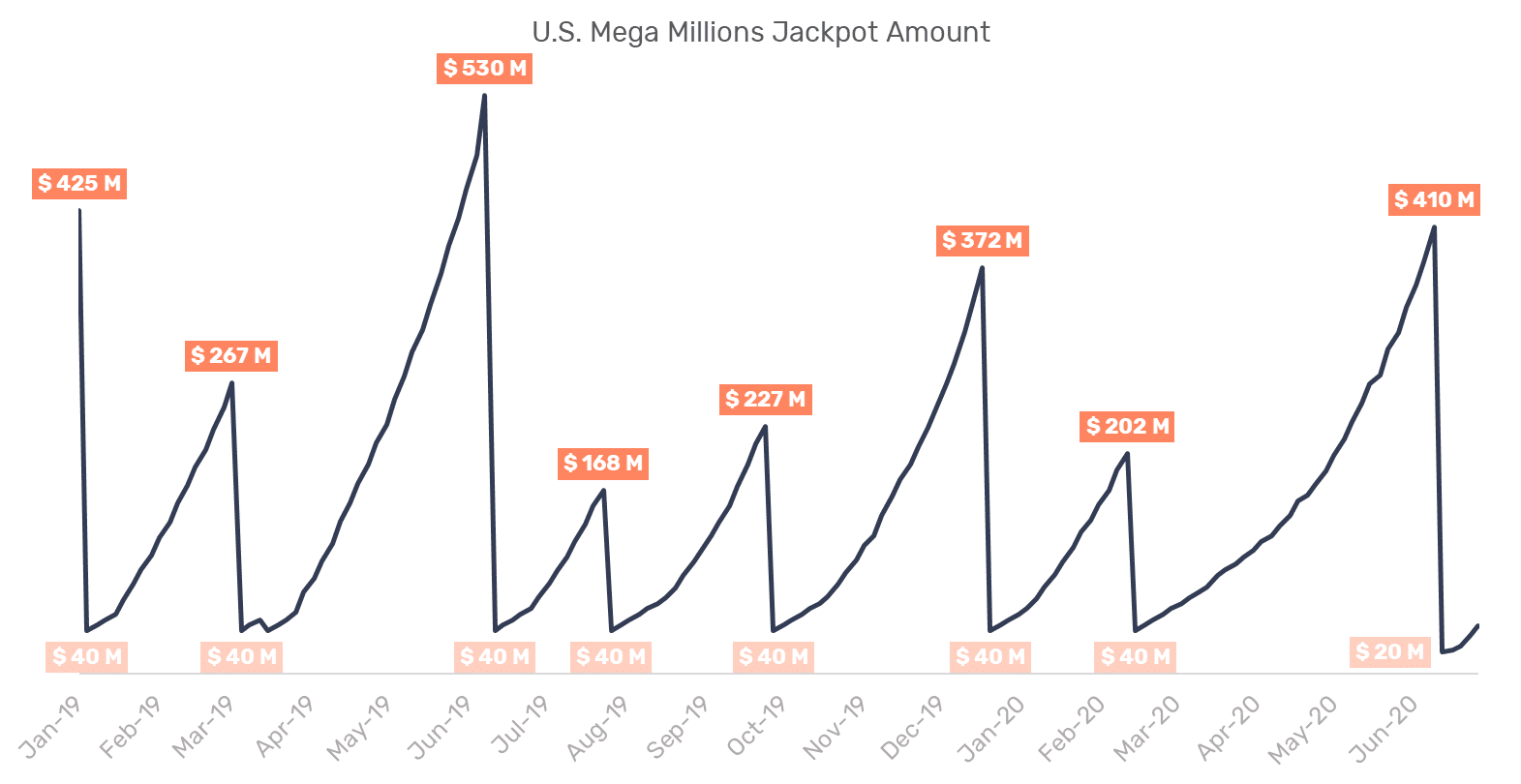
The trend consists of many peaks throughout the year. However, not every peak represents a very high jackpot. To define high jackpots, we need to examine a long time frame. Let's look at a yearly distribution:
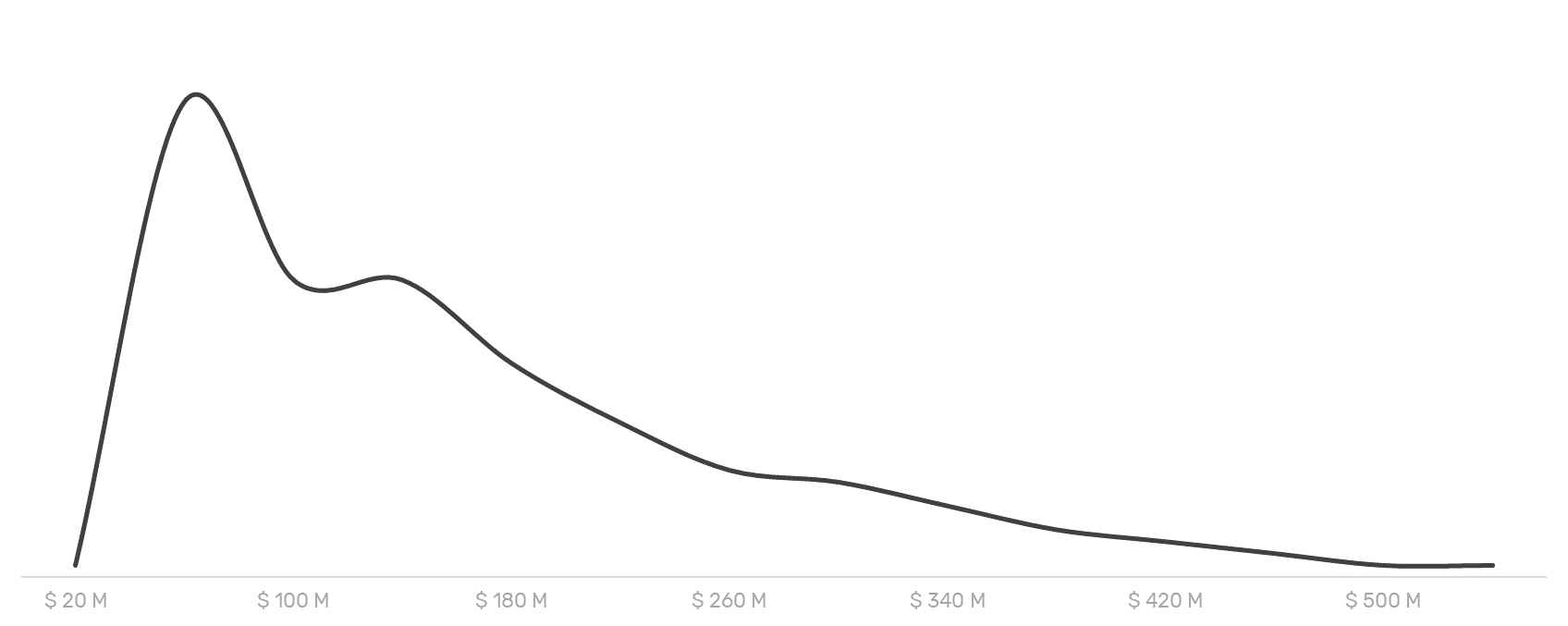
We can see it's a right-tailed distribution – most draws will be around the average, with a long right tail of large amounts. With the yearly view, it's easier to define a high jackpot threshold - which could be static or dynamic, but should be different for each lottery.
In the example below, we took the top 10% in the past year:
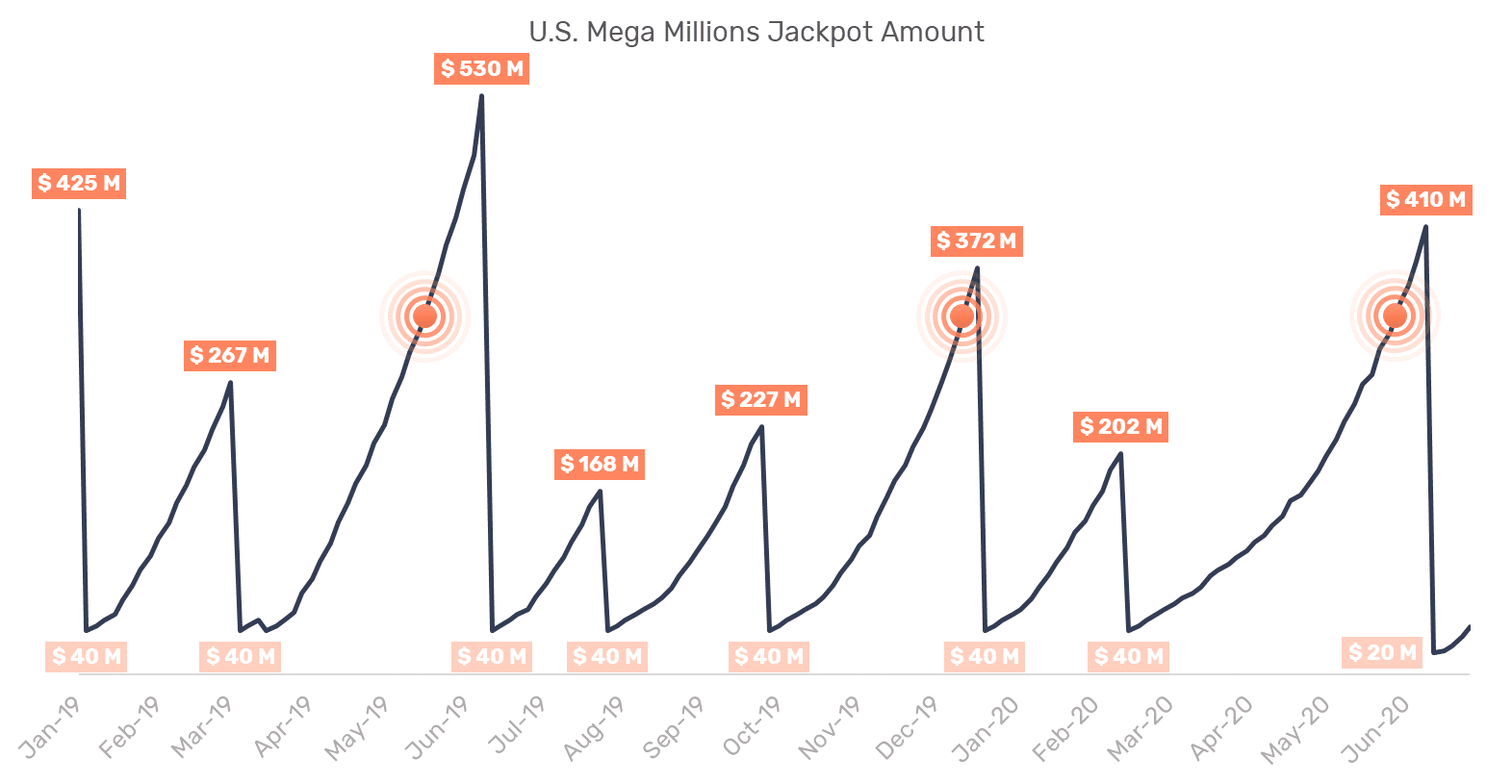
Using this definition of a high jackpot, we can see that there was a high jackpot only three times during the examined period. It's a low frequency but has a significant effect on customer behavior.
As expected, the jackpot amount has a significant impact on customer behavior.
It prompts more customers to purchase tickets. Many customers buy a ticket only when the jackpot is high, even though the odds of winning might be lower. It makes some psychological sense. It's a small investment for the (very small) chance of a life-changing prize.
This is why the betting frequency is highly correlated with the prize size, as shown below:
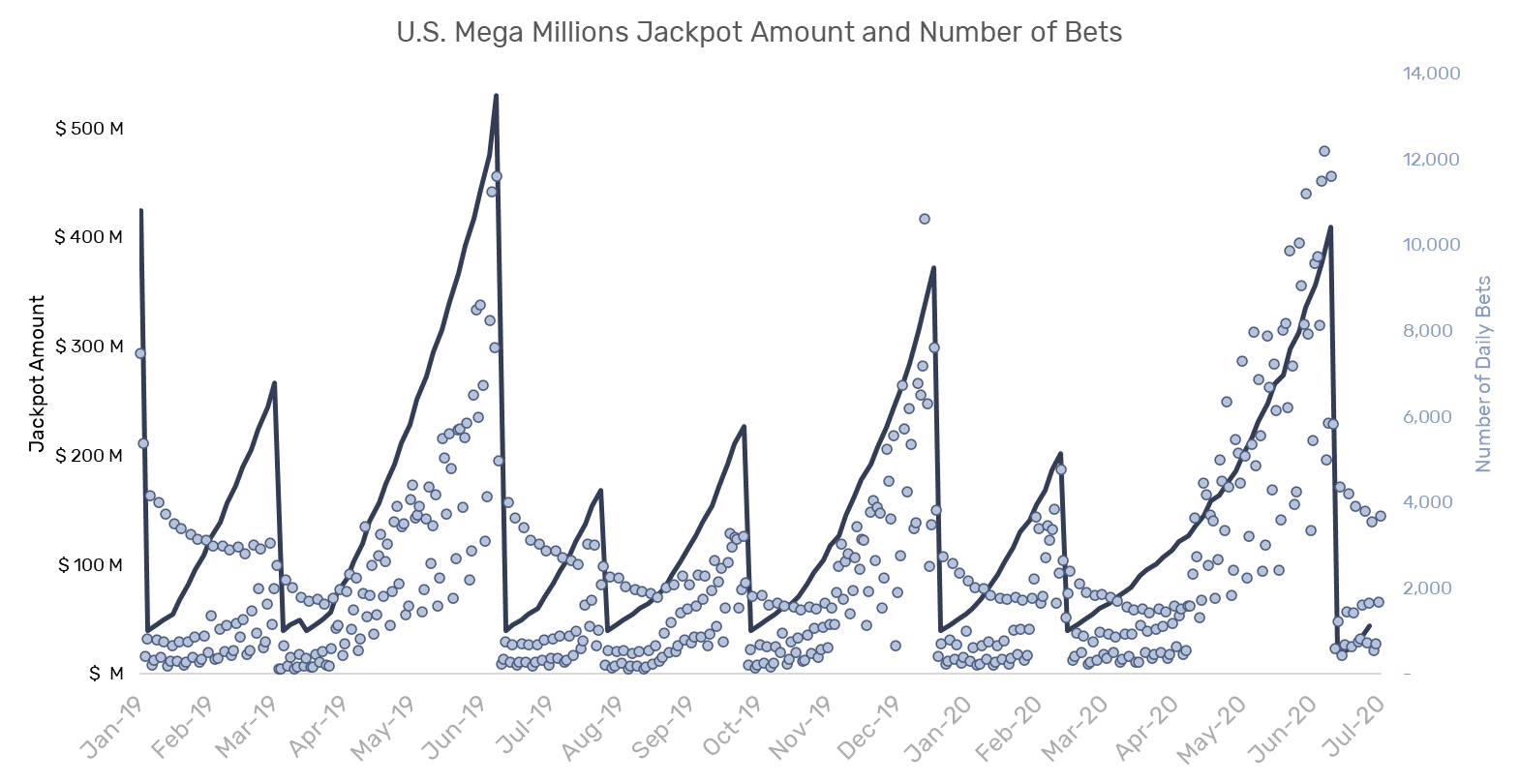
The dots represent the number of daily bets, and, as expected, they correlate with the jackpot amount. When the jackpot amount is higher, so is the number of daily bets. There's also an impact on the bet day – on a draw day, the number of bets is higher.
But what exactly is the impact of the jackpots? Well, it's enormous. When analyzing leading online lottery brands, the results amazed us: 80% of customers purchase their first ticket on 10% of jackpots!
The volatility of the jackpot amount also affects the volatility of other KPIs of the jackpot industry. During the jackpot period, the conversion rate and the reactivation rate will be doubled or more.
These jackpots heavily affect customers, so they can be used smartly to predict customer behavior and define a new persona: Jackpot-sensitive customers.
Let's compare 2 personas: One is an active player in the U.S Mega Millions who purchases tickets every week for Tuesday's draw.
The second purchased their first ticket for U.S Mega Millions in October 2018, when the jackpot amount was at a record high. Since then, they buy tickets from time to time only when the jackpot amount reaches high amounts.
These 2 well-known personas in the lottery industry differ, requiring distinct communication approaches. We can identify them by defining a "jackpot sensitivity" rate. There are various methods for calculating jackpot sensitivity. However, the most common one is calculating the rate of the high jackpots among others per customer.
For example, if the second customer in the example above participated in 10 draws during the past year, 8 of the draws were defined as high jackpot – which is the top 10% of the draws – their rate is 80%, which means they're a jackpot-sensitive player.
Based on our research, 50% of the online lottery customers are jackpot sensitive – placing more than 50% of their bets on high jackpots.
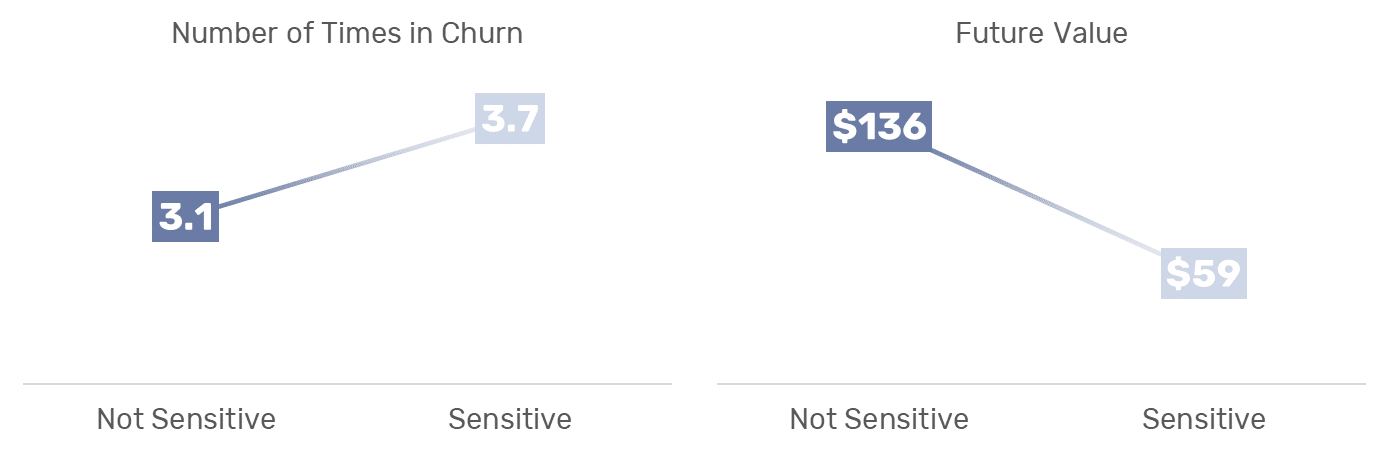
The sensitivity correlates with the loyalty: The jackpot customers have higher churn rates and lower future value, as shown below:
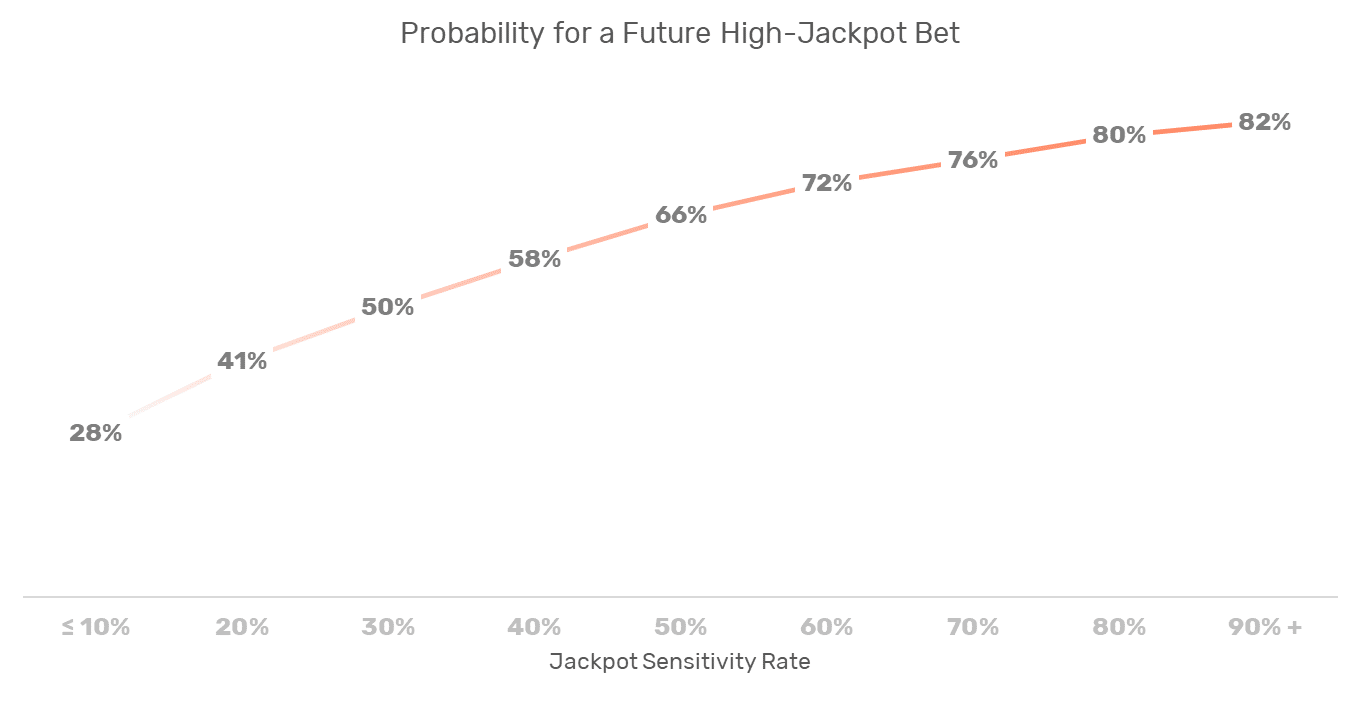
We can also use the sensitivity of the customer to predict their behavior in the future. Customers who were jackpot sensitive before, are more likely to bet on a high jackpot in their next activity:
So, what can we do to address the jackpot-sensitive customers?
Jackpot-sensitive customers are indeed less valuable compared to the non-sensitive. However, they represent a huge portion of the total player population. Therefore, you should utilize the jackpots to convert, retain, and reactivate your customers.
The jackpot is a fantastic motivator and usually doesn't require an offer; a simple reminder is enough. Follow these principles to create a unique recurring jackpot funnel:
Good luck!
Exclusive Forrester Report on AI in Marketing
In this proprietary Forrester report, learn how global marketers use AI and Positionless Marketing to streamline workflows and increase relevance.

Writers in the Optimove Team include marketing, R&D, product, data science, customer success, and technology experts who were instrumental in the creation of Positionless Marketing, a movement enabling marketers to do anything, and be everything.
Optimove’s leaders’ diverse expertise and real-world experience provide expert commentary and insight into proven and leading-edge marketing practices and trends.