
Unified Growth Solution
World-class tech needs world-class drivers. AI platform and expert services, unified
Read time 9 minutes


Today’s marketing landscape is defined by constant change, rising complexity, and growing customer expectations. Marketing teams face pressure to move faster. Traditional workflows slow execution and limit personalization. AI offers a path forward, enabling faster insights, content creation, and campaign optimization. By reducing dependencies, AI empowers marketers to work more flexibly, respond in real-time, and deliver more relevant customer experiences.
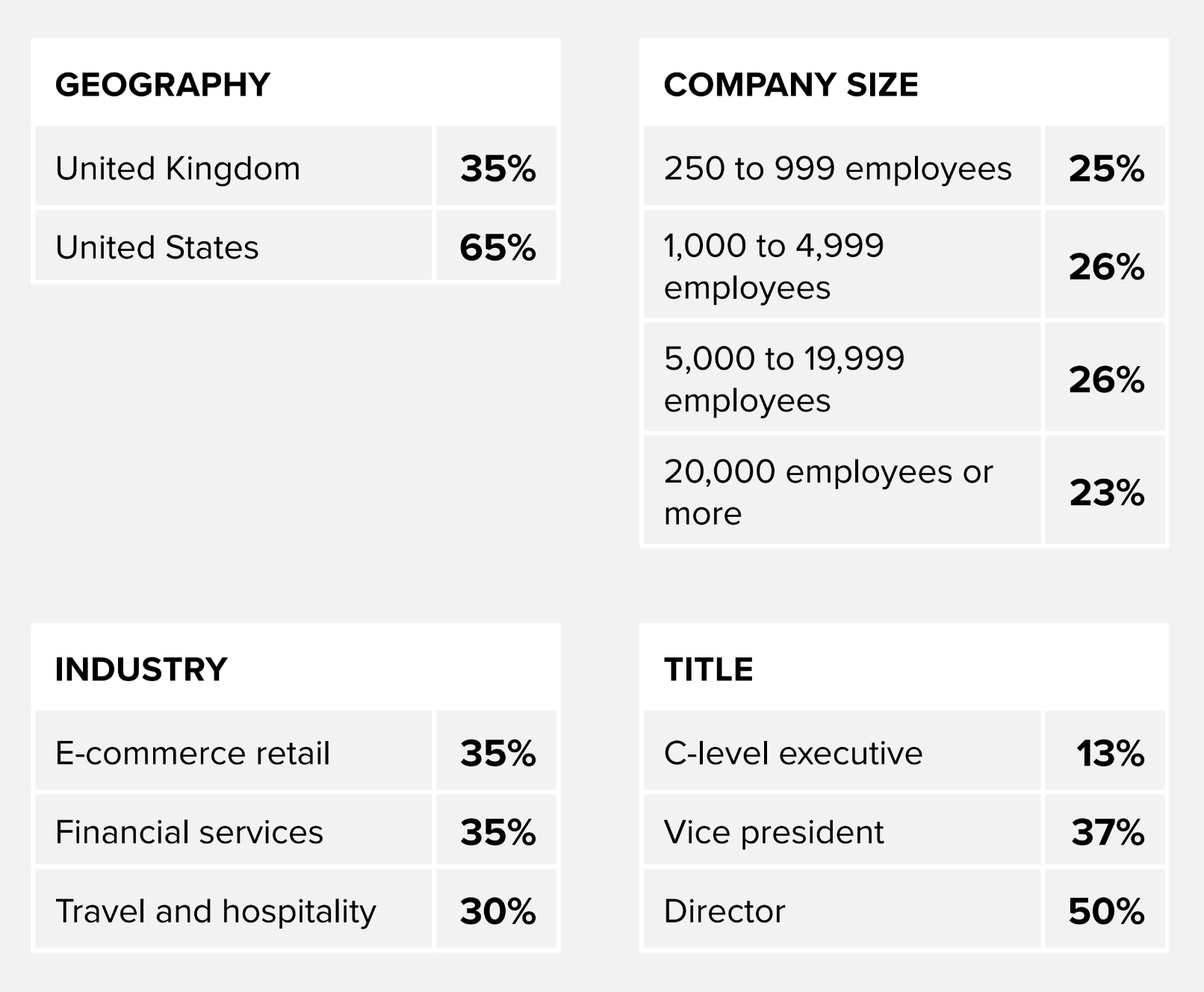
Forrester surveyed 153 decision-makers responsible for marketing strategy based in the US and UK. Respondents were from the e-commerce retail, financial services, and travel and hospitality industries with at least $200 million in annual revenue.
Rigid structures slow progress. Many marketing teams still operate silos that limit agility and delay execution. Hybrid models remain underused despite their potential to balance expertise with speed.
AI ambition outpaces adoption. Marketers are optimistic about AI’s potential, but confidence and capability gaps persist. Complexity, trust concerns, and limited expertise continue to hold back widespread implementation.
Disconnected systems block agility. Accessing real-time data remains an obstacle. Fragmented workflows and poor tech integration prevent teams from delivering personalized, high-impact experiences.
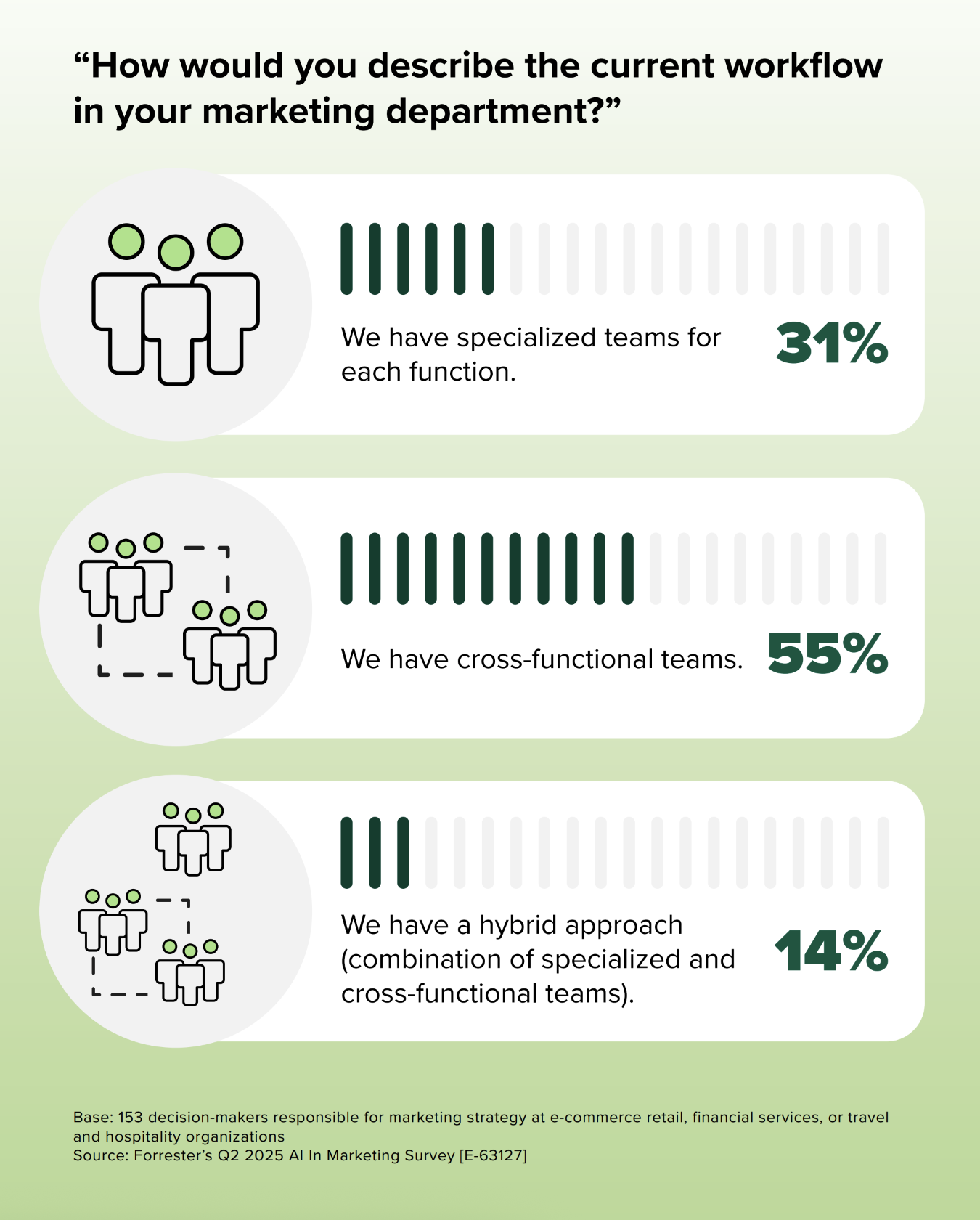
As marketing organizations adapt to a landscape defined by speed, complexity, and customer-centricity, the structure of their internal workflows is changing.
While a majority (55%) of marketing departments now report operating with cross-functional teams, a significant 31% continue to rely on specialized teams for each function, suggesting lingering organizational inertia and barriers to integration. Only 14% embrace a hybrid model that blends the strengths of both approaches, highlighting an opportunity for more flexible team design that can balance expertise with agility.
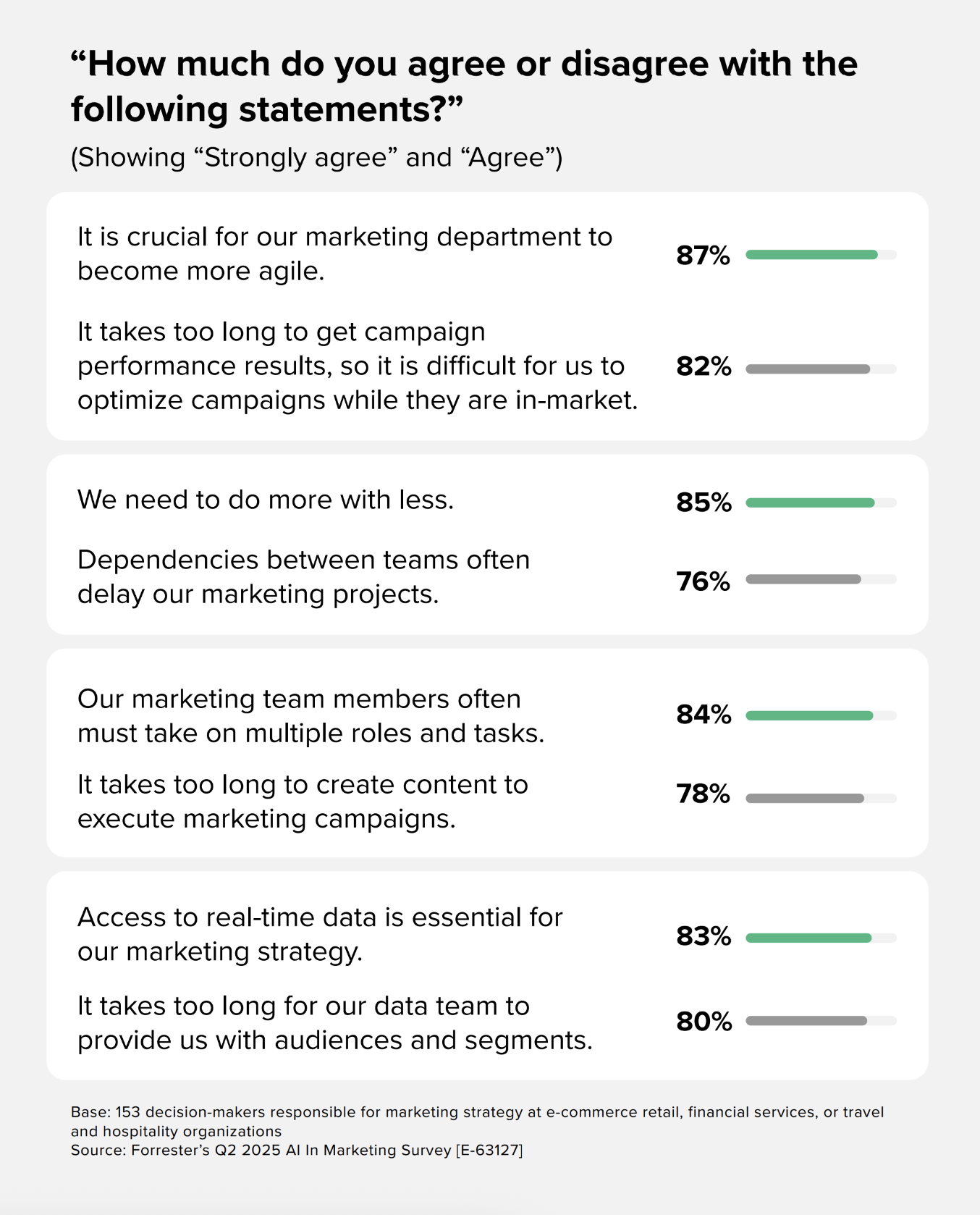
Today’s marketers operate in an environment defined by constant change and increasing pressure to perform. Agility is a top priority for 87% of the marketers we surveyed, yet 82% say it takes too long to generate the insights needed to optimize performance. At the same time, 85% are being asked to achieve more with fewer resources, while 76% cite cross-team dependencies as a major barrier to speed.
Modern marketers are expected to wear many hats: 84% report taking on multiple roles, but this often slows down campaign creation and execution, according to 78%. Real-time data is seen as essential by 83%, yet 80% say accessing it from data teams remains a bottleneck. The need for faster, more autonomous workflows is clear as teams strive to keep pace with evolving demands and deliver impact at scale.
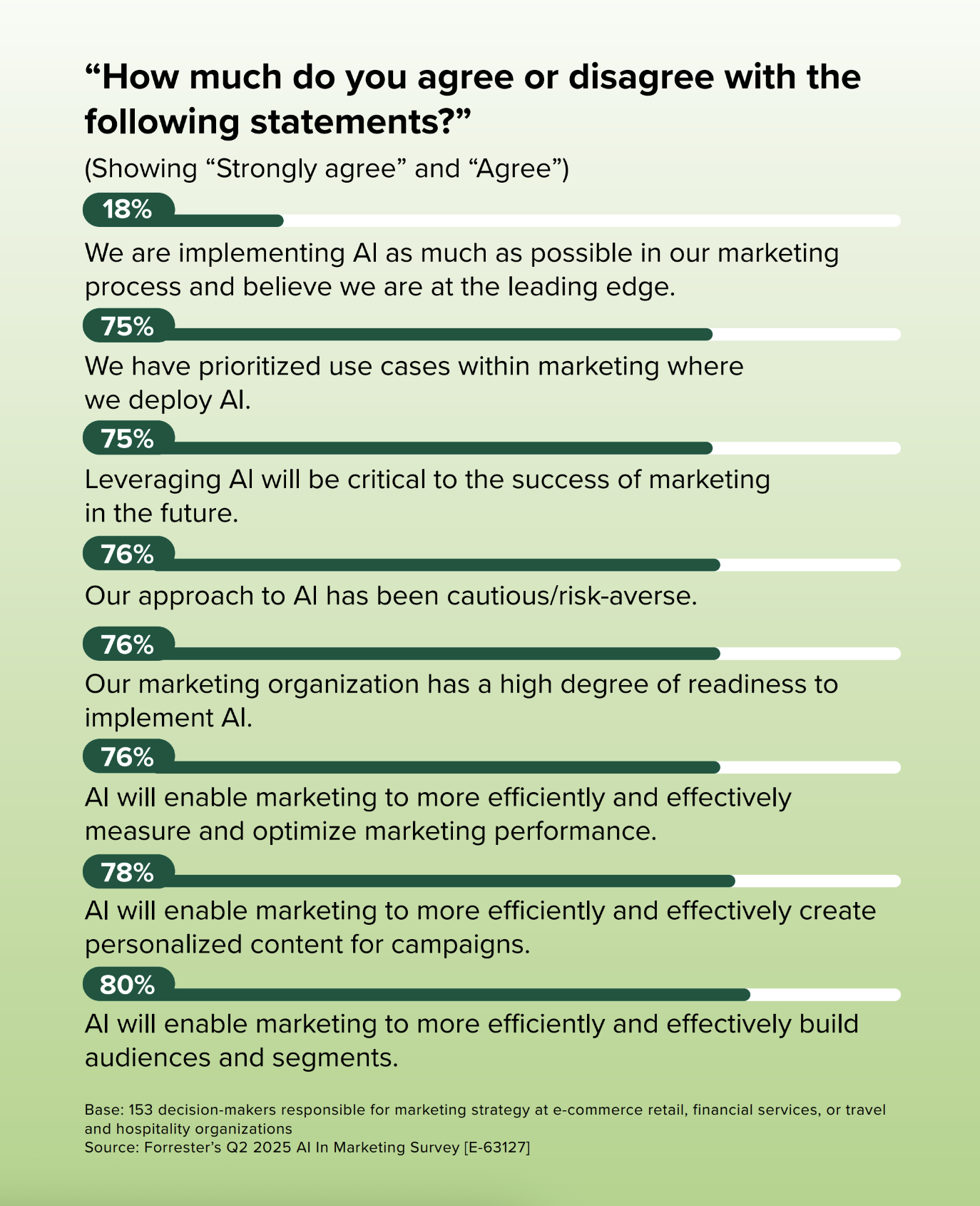
Only 18% of marketers consider themselves to be at the leading edge of AI adoption, highlighting a significant gap between ambition and execution. Despite this, optimism remains high. A strong majority believe AI will enhance efficiency and performance, with 80% expecting to help build better audiences, 78% hoping to personalize content, and 76% seeking to optimize marketing outcomes.
Three-quarters of marketers agree that leveraging AI will be critical to marketing success in the future — with almost half expressing strong agreement—indicating growing momentum. A majority (75%) say they’re actively prioritizing use cases for deployment, particularly in data analysis. While 76% express a high degree of readiness to implement AI, the same number acknowledge a cautious, risk-averse approach.
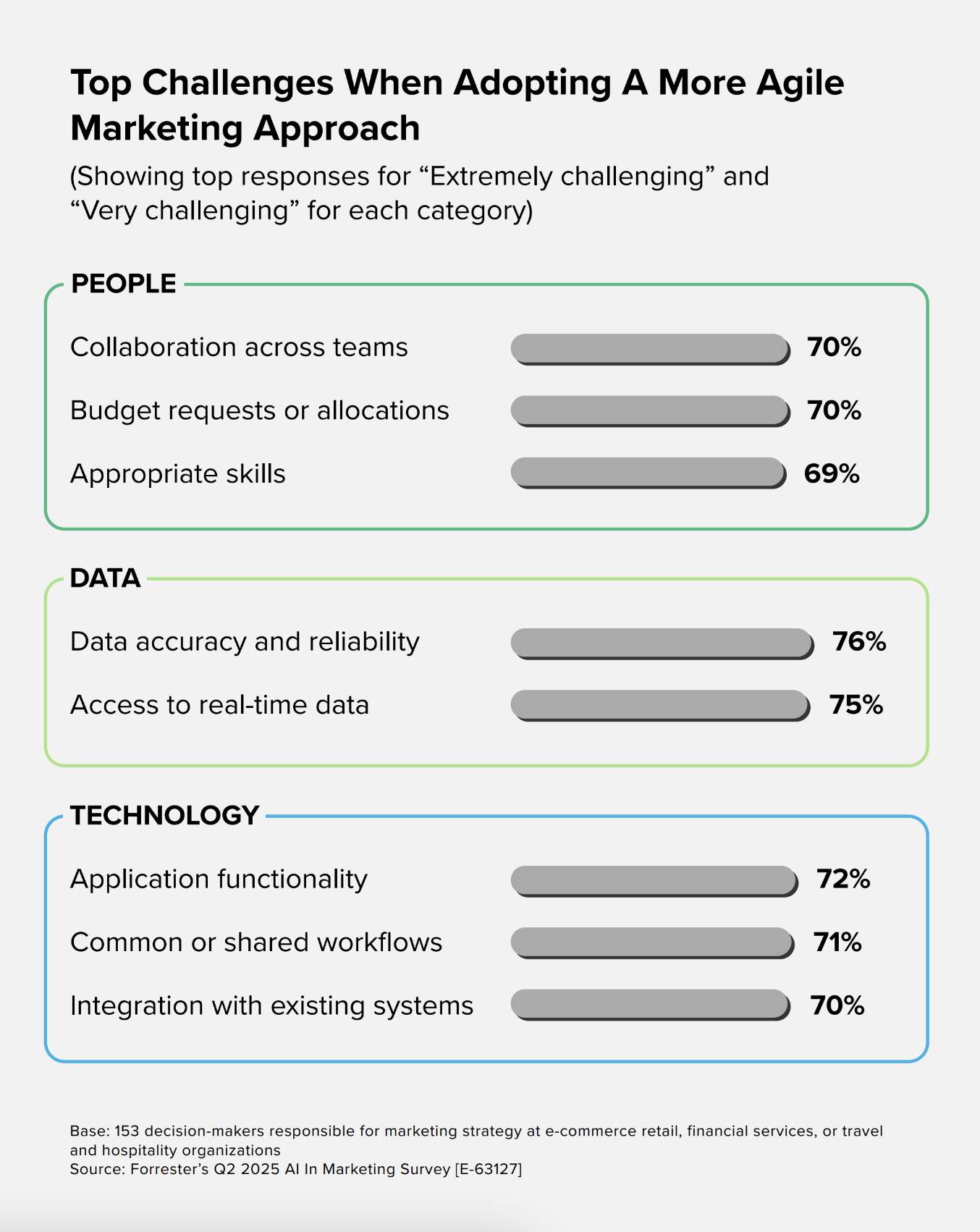
Agile marketing remains an uphill climb for many teams: Collaboration across teams is one of the most significant hurdles, cited by 70% of marketers. This challenge is further intensified by budget constraints (70%) and a shortage of relevant skills (69%), all of which contribute to organizational friction.
Data-related challenges also persist. A large majority (76%) express concerns about the accuracy and reliability of data, while 75% struggle to access real-time data, making it difficult for teams to operate with agility.
Technology, while a key enabler, also presents integration and usability issues. Application functionality (72%) and the absence of common or shared workflows (71%) hinder seamless operations. Integration with existing systems (70%) remains a persistent challenge, pointing to the need for more interoperable and user-friendly solutions.
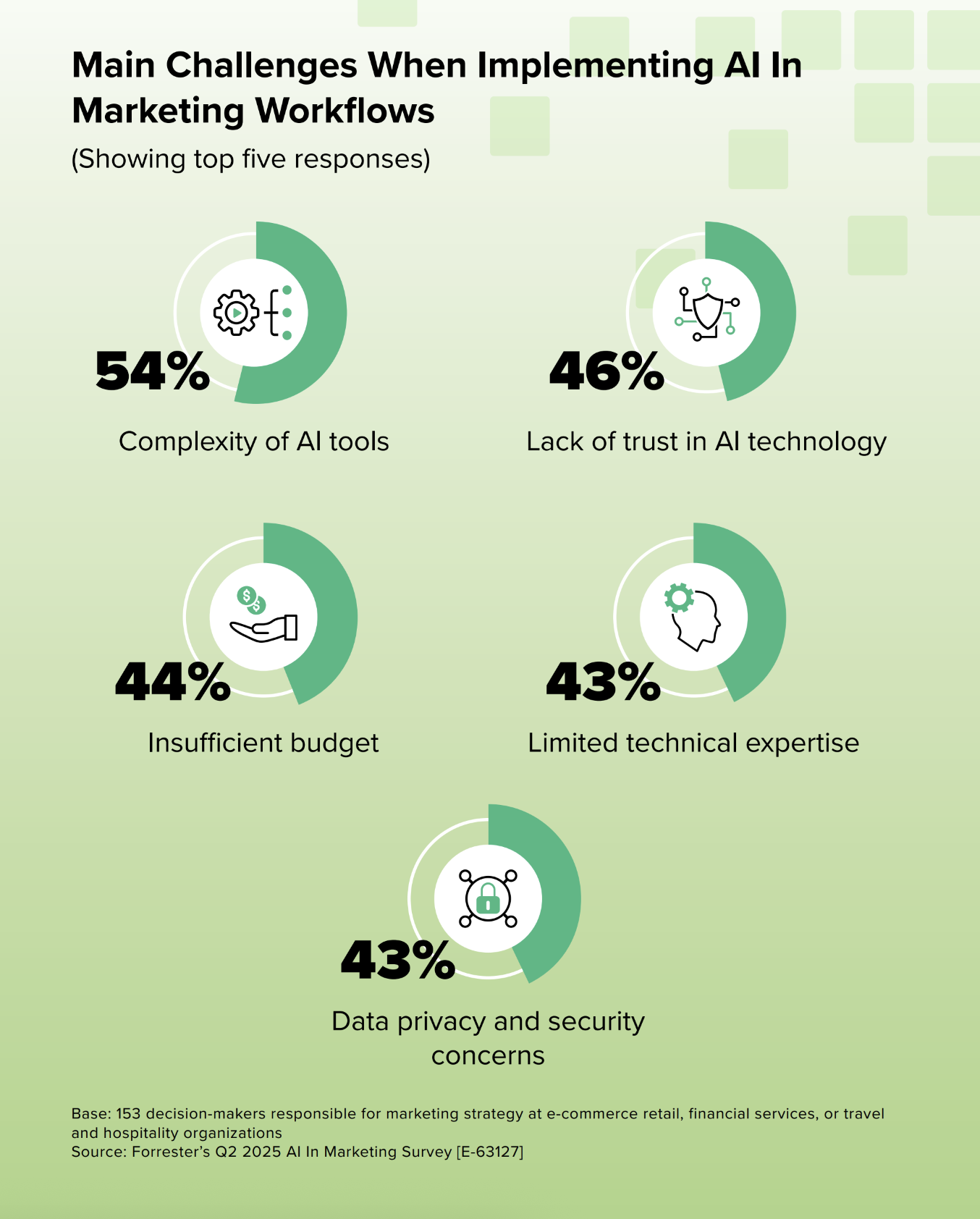
Despite its promise, the path to successful AI implementation is fraught with challenges. Several barriers hinder marketers’ ability to fully capitalize on AI technologies:
Navigating complexity and resource gaps. The complexity of AI systems (54%), the lack of specialized expertise (43%), and limited budget (44%) present significant obstacles for marketing teams striving to adopt and scale AI solutions.
Building trust and addressing risk. Concerns around AI trust (46%) continue to slow adoption. Establishing trust in AI systems is critical to driving confident and responsible use across marketing functions.
Ensuring data privacy and security. As AI becomes more embedded in workflows, data privacy and security (43%) emerge as top concerns, requiring robust governance and safeguards.
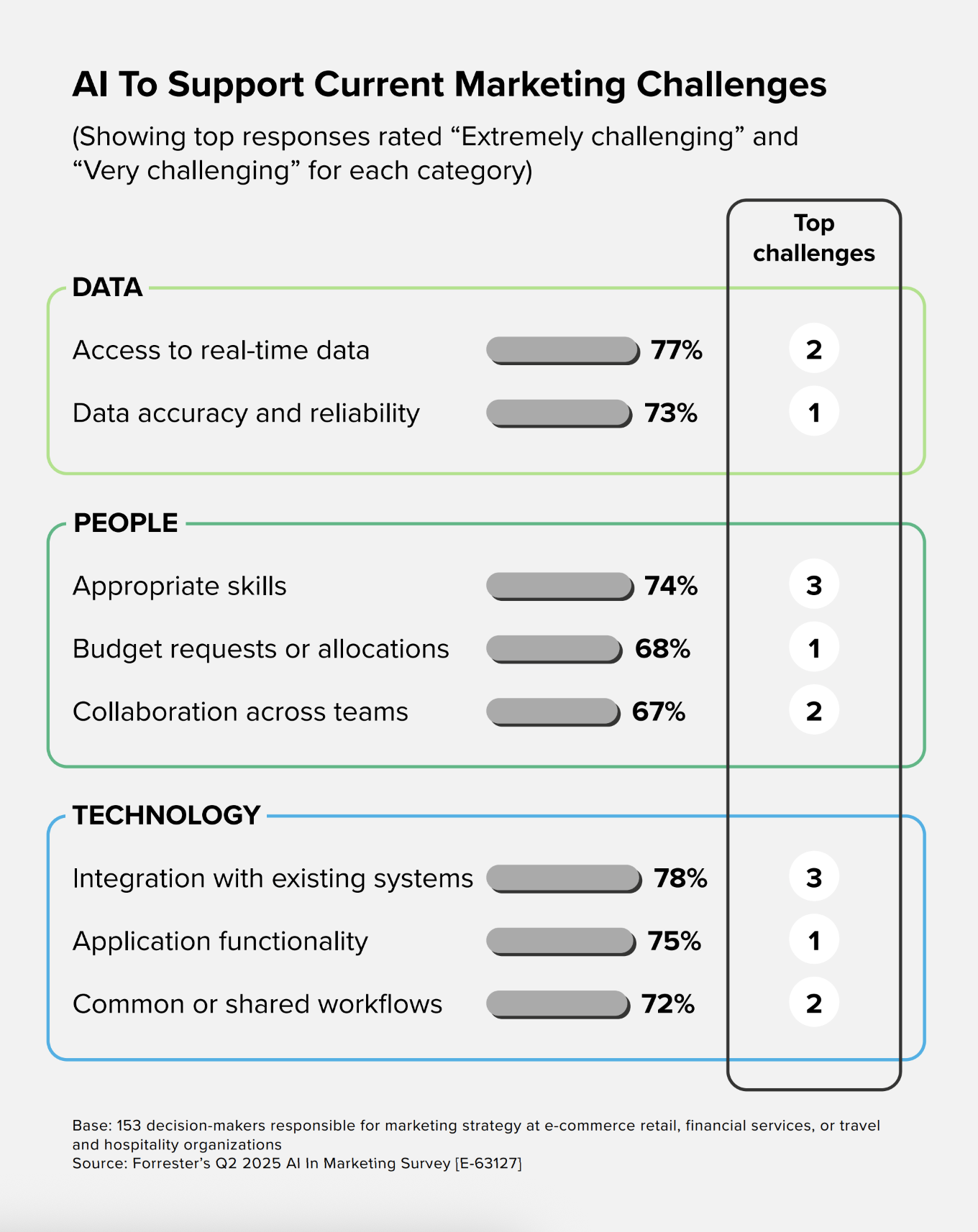
Marketers see AI as a powerful tool to help address their biggest challenges:
Unlocking data-driven insights. Seventy-seven percent of respondents expect AI to enhance access to real-time data, and 73% say it will improve data reliability—both seen as critical to smarter, faster, and more personalized strategies.
Optimizing resources and collaboration. AI is also expected to ease resource constraints on supporting skill development (74%), improving budget allocation (68%), and boosting cross-team collaboration (67%) for greater efficiency.
Enabling seamless technology integration. Technology enablement remains a cornerstone of agile transformation. Marketers anticipate that AI will streamline integration with existing systems (78%), enhance application functionality (75%), and enable more efficient, shared workflows (72%).
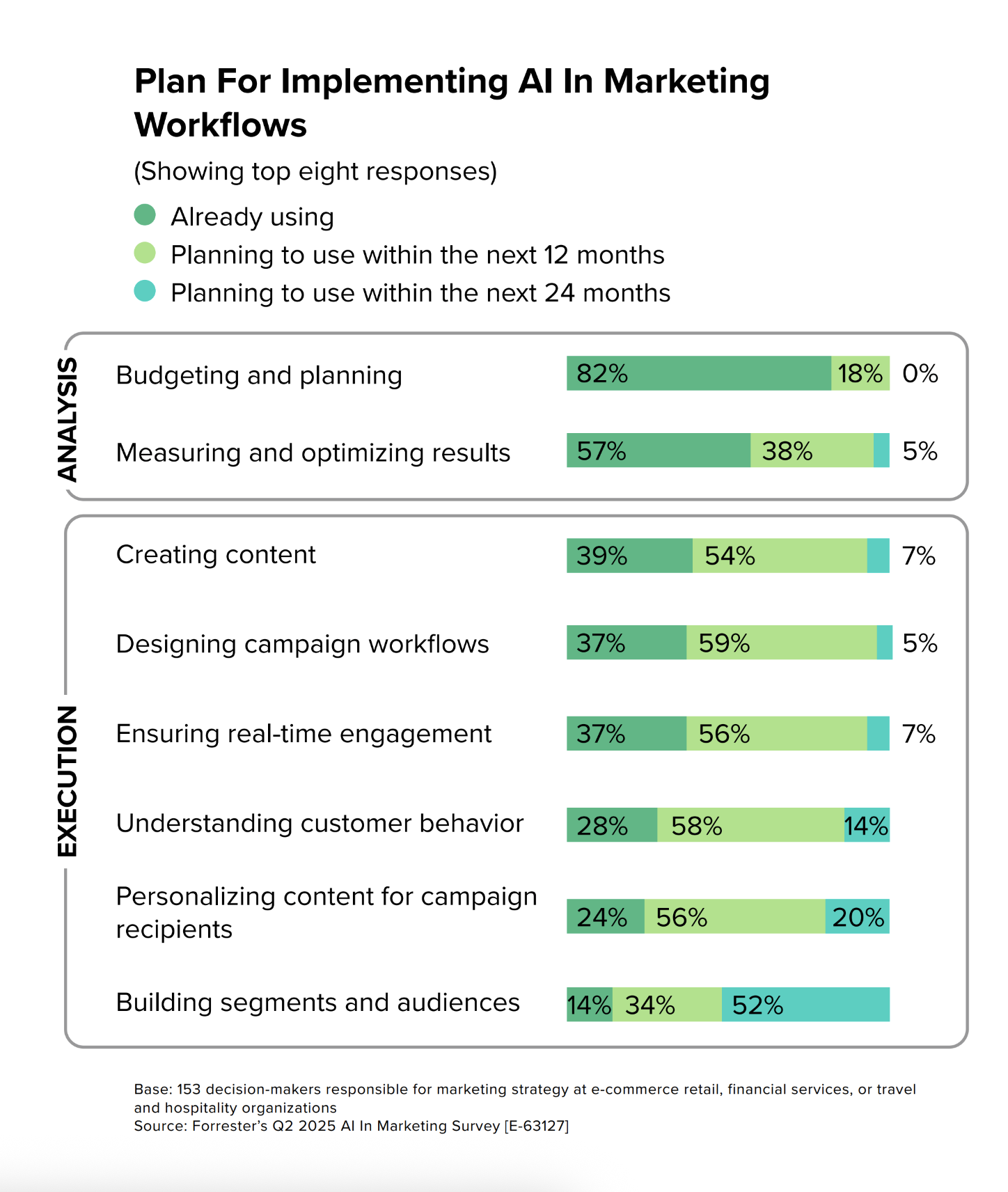
AI is already transforming marketing operations, but its use remains largely behind the scenes. While many companies embrace AI for analysis, they remain cautious regarding its ability to drive revenue.
Laying the groundwork for smarter decision-making. A compelling 82% use AI for budgeting and planning, and 57% use it for performance optimization, building a strong analytical base.
Scaling AI across high-impact use cases. Despite the potential, adoption in execution-focused areas is still limited. Only 39% of marketers use AI for content creation, 37% use it for campaign workflows, and another 37% use it for real-time engagement. Even fewer are leveraging AI to understand customer behavior (28%), deliver personalized campaign content (24%), or build audience segments (14%). The future belongs to those who embed customer-centric AI into how marketing thinks, plans, and performs.
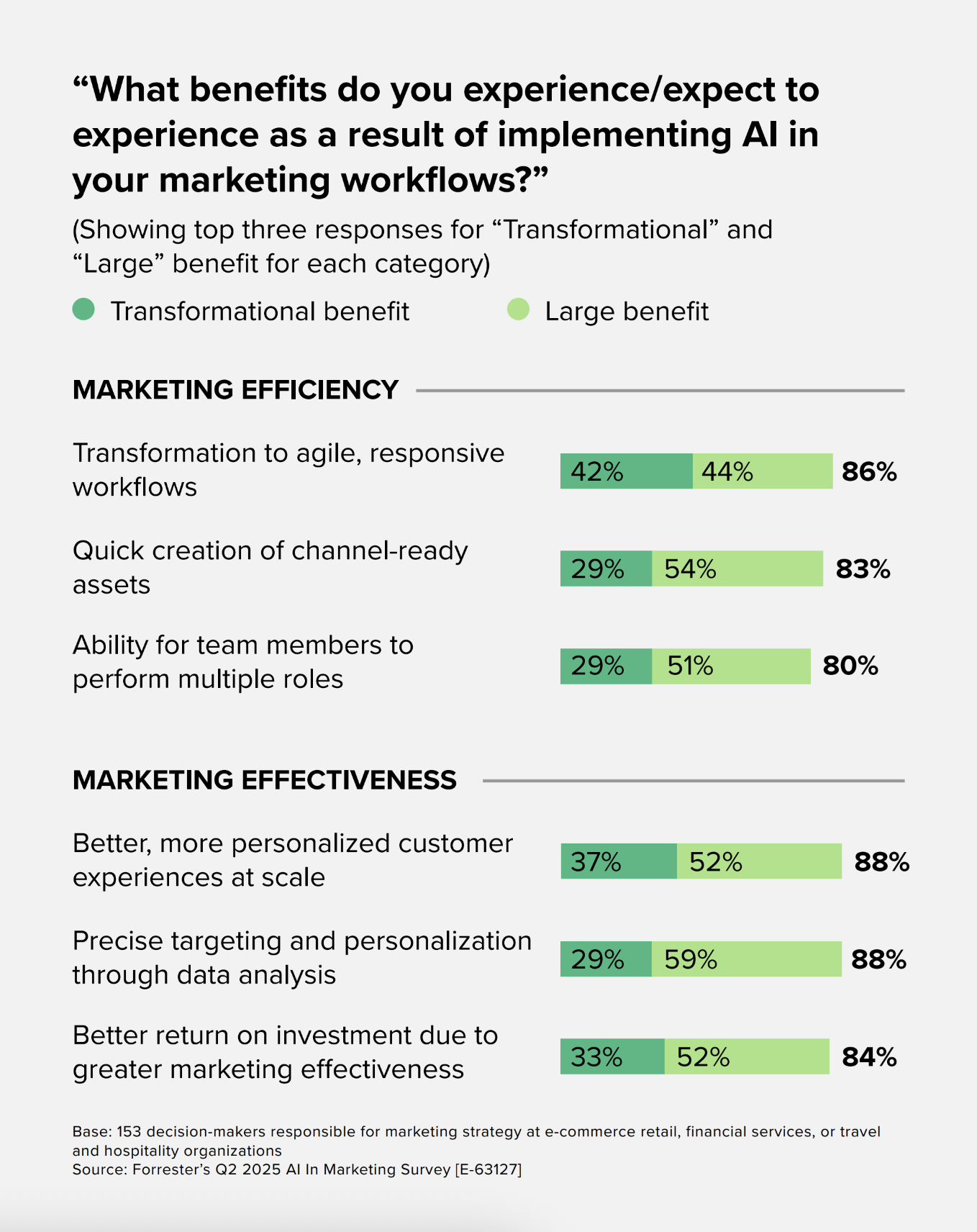
Marketing leaders expect AI to deliver both operational efficiency and strategic impact at scale.
Driving operational efficiency. Marketing leaders are increasingly turning to AI to streamline operations and accelerate execution. Agile, adaptive workflows powered by AI are a top priority for 86% of leaders, helping to reduce friction and accelerate delivery. The ability to rapidly generate channel-ready assets is also critical for 83%. At the same time, 80% are focused on building empowered, multiskilled teams enabled by intelligent tools.
Enhancing strategic effectiveness. AI is also seen as a catalyst for performance, and 88% of leaders cite personalized customer experiences at scale as essential for deeper engagement. Another 88% value precision targeting to increase relevance. Ultimately, 84% believe AI will unlock stronger ROI by improving overall marketing effectiveness.
AI and agile workflows are redefining marketing, enabling faster, smarter, and more customer-centric strategies in an increasingly complex and performance-driven landscape.
Related Forrester Research:
Project Team:
Emilie Beaud, Market Impact Consultant, Miriam Oesterreich, Market Impact Consultant.
Contributing Research: Forrester’s B2C Marketing, Executives research group.
This Opportunity Snapshot was commissioned by Optimove. To create this profile, Forrester Consulting supplemented this research with custom survey questions administered to 153 decision-makers responsible for marketing strategy, based in the US or UK and active in the e-commerce retail, financial services, or travel and hospitality industries. The custom survey began in May 2025 and was completed in May 2025.
ABOUT FORRESTER CONSULTING
Forrester provides independent and objective research-based consulting to help leaders deliver key outcomes. Fueled by our customer-obsessed research, Forrester’s seasoned consultants partner with leaders to execute their specific priorities using a unique engagement model that ensures lasting impact. For more information, visit forrester.com/consulting.
© Forrester Research, Inc. All rights reserved. Unauthorized reproduction is strictly prohibited. Information is based on best available resources. Opinions reflect judgment at the time and are subject to change. Forrester®, Technographics®, Forrester Wave, and Total Economic Impact are trademarks of Forrester Research, Inc. All other trademarks are the property of their respective companies. [E-63127]