

Unified Growth Solution
World-class tech needs world-class drivers. AI platform and expert services, unified
Read time 27 minutes


As the gaming industry continues to innovate and evolve, so too do the challenges that come with operating a successful gaming business. One of the most pressing issues facing gaming Operators today is that of responsible gambling. With the increasing popularity and ease of access to online and mobile gaming, there’s a growing concern about the potential for gambling addiction - and its devastating consequences.
However, prioritizing responsible gaming isn’t just a matter of addressing potential risks. It can also present significant opportunities for gaming Operators to build customer trust, win player loyalty, and create a highly profitable and sustainable business model. By demonstrating a commitment to responsible gaming, Operators can differentiate themselves from their competitors, attract more players, and ultimately increase revenue.
Fortunately, technology has emerged as a powerful tool to help. There are AI- powered predictive models that can spot potential at-risk players before their behavior escalates into a problem. There are also AI-powered algorithms that can detect problematic gambling behaviors in real-time. Today there is a wide range of tools available to help Operators create a safe and responsible gaming environment - and help keep it that way.
In this eBook, we will explore the challenges as well as the benefits of prioritizing responsible gaming, the latest technological solutions for promoting responsible gaming, legal and regulatory requirements, along with tips for developing a comprehensive responsible gaming strategy. You’ll discover that being proactive when it comes to responsible gaming can help power your business, empower your players, and strengthen your brand.
A flutter on the Grand National, an office sweepstake for the Superbowl, an online visit to the casino; gaming can be a thrilling, exciting pastime, with the potential for big thrills and of course, the hope of big payouts. And while the majority of those who gamble do so responsibly, it's important to acknowledge that for some at-risk players, irresponsible gambling can spiral out of control, with serious consequences for finances, relationships, mental health and more.
Financial difficulties: Left unchecked, problem gambling can lead to significant financial problems for players, creating instability, impacting their ability to pay bills and provide for their families. As things spiral out of control, trying to claw back losses and fund their habit, there’s also a very real chance problem gamblers can find themselves borrowing money and falling deeper into debt, potentially trapped in a vicious circle of gambling and debt.
Relationship problems: Lying or hiding problem gambling from family and friends can lead to a breakdown in trust and communication - with a catastrophic effect on relationships.
Emotional problems: Problem gambling can often impact players' emotional well-being as guilt, shame, and anxiety take their toll on mental health, often leading to depression.
Physical health problems: Players struggling with gambling addiction often experience high levels of stress, leading to fatigue, insomnia, and other potentially serious ailments, with a negative impact across many areas of their lives.
Legal problems: In extreme cases problem gamblers may turn to illegal activity, such as theft or fraud to support their gambling habit - with the inevitable disastrous consequences when caught.
“Most people who experience some gambling-related harm can get back to a normal way of living. But for some people, the problem gets more and more severe; and in its most severe stages, it can be life-threatening, (as) people with severe gambling problems have a very high rate of suicidal behavior.”
Keith Whyte, Executive Director of the National Council on Problem Gambling (NCPG) in the United States
Of course, the concept of responsible gaming to prevent such problems has been around for a while, at least in theory - but it has never been more important for Operators than it is today. As our own addiction to our smart phones and electronic devices grows, and online gaming becomes more popular as well as more accessible, it has never been easier or more tempting to indulge in a quick flutter or a spur of the moment spin of the wheel. And while for most of us this accessibility simply provides us with a highly convenient way to have some fun, for others, it’s precisely this ease of access that can lead to irresponsible and destructive gaming behavior.
“Players who feel safe are more likely to stay with a sole Operator for longer”
Sally Gainsbury, Director of the University of Sydney Gambling Treatment & Research Clinic
Regulatory and legal consequences: If they're found to have permitted problem gambling on their platform without performing any preventative actions, Operators can face the wrath of the regulators, leading to fines, and even loss of licenses. In the UK, regulators are raising the stakes. In 2021 total Operator fines were £40M. However in 2022, total Operator fines in the UK were £242M. Now that is a serious increase. There is of course, reputational damage to be taken into consideration.
Reputation: Building a reputation takes a great deal of time and effort, but can be lost in an instant. The importance of brand and customer loyalty cannot be underestimated, when it comes to growing a sustainable business. For gaming Operators, being perceived as profiting from problem gambling rather than addressing it, can easily lead to a decline in that loyalty, and as a result, decreasing brand equity. Once that happens, recovery can be a very long, very steep climb.
Staffing consequences: It’s not unknown for employees to report suffering from stress and burnout as they try to identify and intervene with at-risk players. The result? Mental health issues, disillusionment with the industry, and high staff turnover.
So as an Operator, where does that leave you? Well, by prioritizing responsible gaming, you’re not only providing a safer gaming experience for all your players, but in the process, you are also prioritizing growth. How? Showing a commitment to responsible gaming helps build a strong reputation as a socially responsible brand - and by default, cultivates that all- important trust and loyalty among your customers. Simply put, starting with and taking care of your customers builds loyalty that lasts, making it easier to acquire and retain customers. It’s all pretty convincing stuff, right? So why are some Operators still sitting on the fence when it comes to implementing a proactive responsible gaming strategy? Let’s take a look…
Myth No. 1: “It’s probably better to wait until the regulators force us to implement responsible gaming practices.”
This approach is shortsighted and ultimately damaging to both business and reputation.
By proactively implementing responsible gaming practices, Operators can not only minimize the risks associated with problem gambling, but also help build a loyal and satisfied customer base that trusts and respects them.
In a dynamic industry, often we find that new regulation is either flawed, or not 100% clear. This is where being proactive and making the first move can end up actually influencing regulation, where an Operator initiative may be adopted by a regulator and establishing the Operator as a leader in the field with the reputational benefits that provides.
Myth No. 2: “A responsible gaming program is costly to implement - we’d rather focus “spend” elsewhere.”
Some Operators view prioritizing responsible gaming as a “frivolous waste of money” that eats into profits - not so! Yes, there are costs involved, but over time, implementing a responsible gaming strategy is actually a highly cost-effective way to promote a safe and enjoyable gaming experience, cultivate loyalty, retain customers, and ultimately boost brand equity and the bottom line.
Myth No. 3: “There are more important issues we need to address right now.”
While some argue that responsible gaming is low priority compared to more pressing issues like market competition, technological innovation, or financial performance, the impact of problem gambling on individuals, Operators, and society at large is significant. Proactively addressing this key issue can bring tangible benefits to Operators and players alike, making it a sensible and logical priority. Importantly, failure to address the issue can actually hurt market share, and drive traffic from the Operator into the open arms of competitors.
Myth No. 4: “Implementing a responsible gaming strategy is a complex job that requires a lot of moving parts - we just don’t have the expertise nor the resources.”
Implementing a responsible gaming strategy can require a significant investment of time, money and resources, making it seem like an overwhelming challenge - but, these challenges can be overcome with the right mindset, approach, and tools. Indeed, there are expert service providers in the market who specialize in this area and can simplify and optimize the implementation process for the Operator.
Ultimately, prioritizing responsible gaming isn’t just a moral and ethical imperative - it’s also a key business strategy that over time can help build a sustainable and profitable operation. In short, the time and investment are more than worth it!
Regulation in the gaming industry is rapidly evolving, with various governments and authorities around the world implementing stricter rules and rigorous guidelines in order to protect both players and Operators.
With the increasing popularity of online gaming thanks in large part to smartphones and ease of access, the need for regulatory compliance across the industry has become more pressing, and the rules even more stringent.
The challenge for Operators is how best to adhere to these regulations, when failure to do so can result in hefty fines, legal repercussions, and reputational damage. But then again, it depends upon how you look at it. Regulations aren’t there to make life difficult for Operators - they can be just as advantageous for business as they are for players.
A rapidly growing market, with billions of dollars spent every year, the evolution of the gaming industry inevitably brings increased scrutiny and regulation from governments and industry bodies keen to promote responsible gaming practices. And while some Operators may view compliance as a hindrance, the good news is that meeting compliance can deliver significant benefits - for players and Operators alike.
Prevention of problem gambling: Compliance with regulations includes taking proactive measures to prevent problem gambling, which as we’ve discussed, can lead to numerous problems, not just for players but for their families, for wider society and for Operators. Self-exclusion programs, deposit limits, and age verification all go a long way to preventing abuse and protecting vulnerable players.
Responsible marketing: Regulatory compliance requires Operators to ensure that their marketing activities are responsible and that they don’t target vulnerable players with bonuses and other incentives which can encourage excessive gambling.
Access to responsible gambling support: Providing players with access to responsible gambling support, such as helplines and counseling services, is crucial when it comes to mitigating the fallout of problem gambling. It also demonstrates a commitment to addressing the issue before it becomes a larger problem, as well as to the best interests of your players.
Data protection: Implementing measures to protect player data, such as encryption and secure storage, is an important element of regulatory compliance, helping protect players' privacy and reducing the risk of data breaches.
“If you want the public’s trust and to be recognized as one that can be trusted with their money, responsible gaming has to be front and center in your business practices. If not, you’re not going to be a market leader.”
Michael Pollock
Managing Director, Spectrum Gaming Group
Ensures a level playing field: Regulatory compliance helps ensure that all gaming Operators are playing by the same rules, creating a level playing field that’s essential for fair competition and long-term sustainable growth of the industry as a whole.
Builds trust with customers: Compliance helps build trust by
demonstrating that you’re committed to providing a safe, secure, and fair gaming environment. This trust, in turn, can lead to increased customer loyalty - crucial when it comes to player acquisition and retention!
Drives innovation: Compliance with regulations can foster innovation by encouraging Operators to develop new and creative solutions to meet these regulations. This can lead to the development of new products, services, and technologies that help gaming Operators stand out in a crowded market.
Elevates reputation and competitive advantage: Compliance with regulations can enhance the reputation of gaming Operators by demonstrating a commitment to ethical and responsible business practices, attracting new customers and promoting loyalty with existing customers.
Increases efficiency: Compliance with regulations can often increase efficiency by streamlining processes and reduce the need for time- consuming manual interventions. This can save both time and money, freeing up funds and resources for other areas of the business to drive growth.
“You don’t have to choose between revenue and socially responsible gaming… The companies that tend to be the most profitable - the market leaders - are the ones that take the responsibility seriously.”
Michael Pollock
Managing Director, Spectrum Gaming Group
While both the UK and US have implemented regulations to promote responsible gaming, there are some key differences between the two.
In the UK, the Gambling Commission regulates online gaming and requires Operators to adhere to strict responsible gaming guidelines. This includes measures such as age verification, self-exclusion, and advertising standards.
Additionally, the UK's self-exclusion program, Gamestop, is a mandatory requirement for all licensed Operators. The UK has also recently introduced new regulations requiring Operators to verify customers' identities before they can make a deposit or gamble,helping to mitigate the risk of underage gaming and money laundering.
In contrast, the US has a more fragmented regulatory environment, with each state responsible for its own gaming regulations. While some states, such as New Jersey and Pennsylvania, have implemented responsible gaming measures similar to those in the UK, others have been slower to get on board - but this is changing with many states considering or actually implementing stricter responsible gaming requirements as the landscape continues to evolve. Bottom line? Proactively implementing responsible gaming practices and complying with regulations builds customer trust, which in turn rewards Operators with customer loyalty, growth and profitability. It’s also critical when it comes to legal and ethical responsibilities. similar to those in the UK, others have been slower to get on board - but this is changing with many states considering or actually implementing stricter responsible gaming requirements as the landscape continues to evolve.
Bottom line? Proactively implementing responsible gaming practices and complying with regulations builds customer trust, which in turn rewards Operators with customer loyalty, growth and profitability. It’s also critical when it comes to legal and ethical responsibilities…
From a legal standpoint, Operators must meet strict regulations and guidelines set by regulatory bodies. This can mean:
Legal obligations aside, most would agree that there is also a moral responsibility to protect customers. More often than not, this means identifying and supporting players who may be at risk of developing a gambling problem and:
Ultimately, Operators want to prioritize the well-being of their customers. Acknowledging the very real problems associated with problem gambling, and developing strategies to mitigate its negative impacts is crucial, not only for the well-being of at-risk players, but also for business reputation and growth.
As we’ve seen, Operators face the enormous, but exciting challenge of balancing their responsibility to address problem gambling, with ensuring customer enjoyment and satisfaction. And while the vast majority of players do indeed enjoy a safe and responsible gaming experience, we know that some players develop problem behaviors that need to be proactively addressed. And that’s where AI technology and the ‘predictive model’ comes in…
A predictive model is a statistical model that leverages data mining, machine learning, and other AI techniques to analyze historical data and make predictions about future events or behavior. By using predictive models as a key element of their responsible gaming arsenal, Operators have the foundations to analyze vast amounts of player data and identify behavioral patterns that could indicate at-risk players, For example, frequent deposits, high bet amounts, or sudden changes in gameplay activities.
By identifying these patterns early, Operators can then adopt a ‘soft’ marketing approach to intervene. This could mean putting the brakes on offering incentives and bonuses, and instead, providing personalized, educational support that actively encourages behavioral change. Think educational resources about responsible gambling, setting deposit limits and offering information about where to find additional support. This approach offers the possibility of changing player behavior and retaining reformed at-risk players rather than simply cutting them off, or referring them to GA, or other
Increased Player Retention
increase player retention. This would include providing targeted messaging and interventions that help players stay in control of their gaming behavior. Try offering proactive support, such as setting deposit limits, and providing information on where to find additional help.
Improved Customer Experience
Predictive models enable Operators to provide a more personalized customer experience. By identifying at-risk players, Operators can provide tailored messaging and resources which support a player rather than penalizing them. This not only improves the customer experience, but also increases the likelihood of player retention.
Increased Efficiencies and Cost Savings
An added advantage of the predictive model is that in automating the process of identifying at-risk players, you make significant savings in man hours and manual labor, while speeding up the process, and saving time, money and resources.
Increased ROI
Investing in a predictive model may require a significant upfront investment, but the long-term benefits far outweigh the initial cost. By preventing churn and increasing player retention, Operators can achieve a higher ROI on their marketing spend and generate more revenue over time.
Competitive Advantage
In a highly competitive market, predictive models can provide a significant competitive advantage. Operators that leverage predictive models to identify at-risk players and provide crucial support at the right time are far more likely to retain players and generate higher revenue. By identifying at-risk players early on, Operators can take proactive measures to stop the problem from escalating, prevent churn and generate higher revenue.
To create a predictive model, the first port of call needs to be the a definition of at-risk players. Why, once you’ve established what an at-risk player looks like, your predictive model will use that information to identify them on your platform - allowing your team to take the necessary actions. But how do you define an at-risk player?

Up until very recently, Operators have typically relied on problem players to define themselves - think self-assessment and self-exclusion - an approach that creates more problems than it addresses. No one really thinks or likes to think of themselves as a problem gambler, and even with self-exclusion in place, only a tiny percentage of players will ever self-exclude (usually less than 1%).
It’s a reactive approach that in essence looks to deal with a problem after “the horse has bolted”. The proactive approach means taking the onus off of players, and identifying at-risk players on the Operators side - and that comes with its own set of challenges.
One of the main challenges Operators encounter when defining at-risk players is identifying the right indicators to accurately capture at-risk behavior; how do you know which data points need to be tracked and analyzed? And what about the risk of false positives? Misidentifying a player as ‘at-risk’ can lead to unnecessary interventions, potentially tainting a player's gaming experience and sending them straight into the arms of a competitor.
Another big challenge is the similarity between VIP players and those exhibiting problem behavior, completely different profiles on paper, but VIP players very often exhibit high levels of activity and spending - similar to the behavior of at- risk players. So, how do you know which is which?
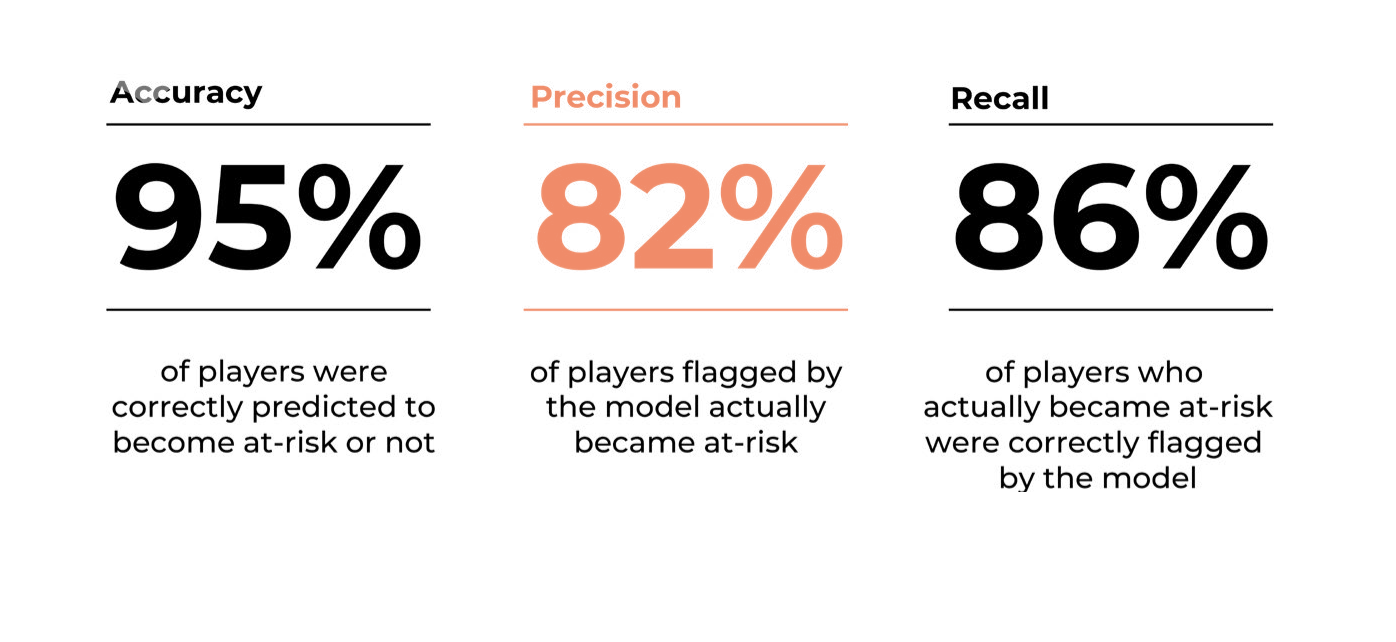
Although there are significant challenges with identifying at-risk players, it's still crucial to do so! The good news? Optimove has developed a tried and tested model using a very large data set, created with real-world client data. The even better news? The model has demonstrated a really strong performance in its ability to identify individuals with a high probability of becoming at-risk, achieving an average accuracy of 95%.
Let's take a look at one use case that addresses the challenge of the similarity between at-risk and VIP players.
Usually segmented as a small group of players generating a substantial percentage of revenue, VIPs also exhibit the same qualities as at-risk players and can often be segmented as such. From a marketing point of view, this can lead to VIPs receiving inappropriate interventions that could once again, send them straight into the arms of a competitor. What’s more, at-risk players may end up being segmented as a VIP, receiving bonuses and incentives to play, ultimately leading to a dangerous escalation of their gambling problem.
To ensure the right marketing approach for each player type, and to avoid exposing them to promotions that could have a negative impact, it's important to separate VIP campaigns into ‘non-risk VIPs’ only - and exclude at-risk players so that they receive the appropriate educational messaging and support they need to “cool down” their gambling activity, and mitigate the risk of problem behavior.
One Optimove client implemented our at-risk scoring model in order to better understand the risk level of their active player segment.
Started with RG informative communications
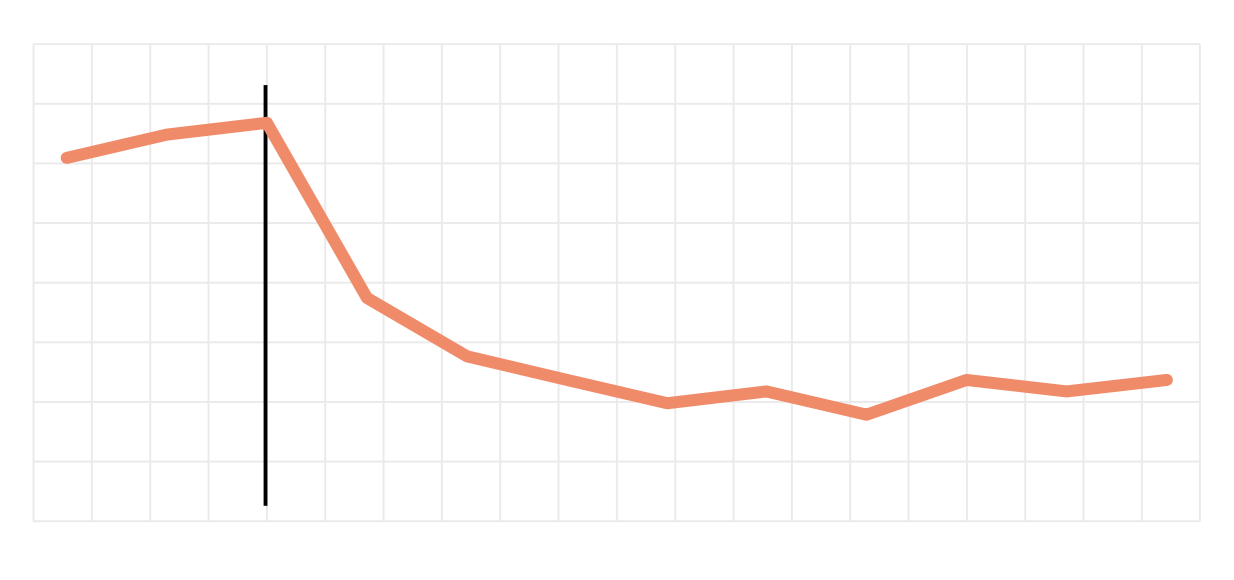
They found that the average at-risk score for their active players was 6.5 - a score that they wanted to lower. To do this, the client created a segment of all of the players with a risk score of 7 or higher and sent them a campaign focusing on informative, educational messaging about responsible gaming to support them in making more informed decisions around their gaming behavior. As a result, the client was able to achieve a 35% drop in the average at-risk score (6.5 to 4.2).
This demonstrates the effectiveness of using predictive analytics to identify at- risk players - and the effectiveness of the right interventions at the right time to help and support them.
Now that you’ve defined your at-risk players, and built your predictive model, you have the foundations in place to identify at-risk behavioral patterns and as a result predict which players are potentially at-risk ahead of time. You can then build out a “soft” responsible gaming marketing strategy - but what does that look like?
Traditionally, marketing in the gaming industry goes something like this: tempt players with bonuses, use messaging that promotes ‘easy wins’ and ‘big jackpots’, cross-sell various products, and nudge players to increase their betting activity and amounts.
With a responsible gaming strategy, the focus is now on marketing practices that promote healthy gaming habits and provide resources and educational materials that encourage responsible gaming, allowing you to retain more players - including many of those originally deemed at risk.
Understand the risks. Before developing your marketing strategy, it's important to have a thorough understanding of the risks associated with problem gambling. We’ve already talked about these in-depth, but when armed with the latest research, industry guidelines and regulations, and perhaps consulting with experts in the field, you’ll ensure you’ve got all the information you need to continually refine and improve your campaigns and messaging.
Know your audience: Who are the players? What motivates them to gamble? What are their behavior patterns? What kind of messaging resonates with them? By gathering data about player behavior, preferences, and attitudes towards gambling, you can tailor your marketing efforts to ensure maximum impact.
Develop relevant Messaging: Once you have a better understanding of your audience, you can develop messaging that resonates with players. Messaging should promote responsible gaming practices and emphasize the importance of playing within one's limits. Some examples of responsible gaming marketing conten...:
"Know your limits" messaging that encourages players to set realistic deposit limits and stick to them
"Gamble for fun, not for profit!" messaging that emphasizes that gambling should be an enjoyable pastime, not a source of income
"Responsible gambling starts with you" messaging that encourages players to take personal responsibility for their gambling behavior
Avoid the use of misleading or exaggerated claims. We’ve alluded to this above, but it’s important to reiterate - messaging such as ‘Win easy, win BIG!’, ‘Win a truckload of cash!’, or ‘Bet to forget!’ (believe it or not, these are all genuine examples!), encourage irresponsible gambling. Moving away from this approach and towards more honest and transparent messaging demonstrates a commitment to responsible gaming, elevating your reputation and driving growth while protecting your players.
Be transparent: Just over one fifth of Gen Z consumers say that a lack of transparency clouds their opinion of brands and products, with nearly one quarter believing authenticity to be an important element in their choice of Operator. That’s a lot of customers, and potentially, a significant percentage of your audience. The key takeaway? Be honest with your key messaging, be transparent about the risks associated with gambling, and provide clear information on how to access support if needed.
Create campaigns according to player risk levels: Segmenting your high, medium, and low-risk players means you'll be able to personalize your campaigns for maximum engagement and effect across each group.
For example, high-risk players will need educational resources along with the right support materials and information so they can get the help they need. This can include support group information, helplines, and online resources to help players identify and address problematic behaviors.
On the other hand, promotional campaigns that include bonuses and incentives, will be appropriate for lower-risk and VIP players.
Manage offers according to different attributes: Deposit limits are a crucial element in managing responsible gaming practices. For example, players who experience several losses in a row and immediately make additional deposits are more than likely trying to claw back these losses. This is a strong indicator of a player with an unhealthy/risky approach, and should be seen as a red flag.
When a customer hits one of the predetermined limits they set up, the right marketing action would be to send out responsible gambling messaging, as opposed to incentives that a) could encourage them to play more or b) will alienate them if they’re unable to participate.
Implement deposit limit interventions: To help minimize the risk of problem gambling, it’s a good idea to use your AI tool to monitor deposit thresholds so that when a player continues to deposit without any limit, you can intervene with the appropriate messaging.
Practice safe gaming journeys: Analyzing the attributes players have already set up in the system provides valuable insight into potential risk triggers. Over time, you can use these attributes to develop a safe gaming journey for players who have neglected to set any limits on their account. This could be as simple as creating intervention thresholds when it comes to the number of times a player is hitting one of their limits, and intervening with information about limit options.
Think about implementing a Player Protection Team: Such a team will be able to identify potentially at-risk customers and interact with them on a personal level. This includes creating follow-up journeys and implementing a softer CRM marketing approach.
Monitor and measure success: Regularly monitor and measure the success of your marketing efforts to ensure that they’re having a positive impact across each of your player segments. Use these insights to continuously improve and optimize your marketing strategy to your different groups. Adjust marketing standards, update resources for problem gambling, and identify new ways to promote healthy behaviors.
To create impactful responsible gaming marketing strategies, you want to be able to segment players into groups based on their risk level. In doing so, Operators stand a far better chance of building strategies that both encourage healthy gaming behaviors and reduce the number of at-risk players; a win-win for everyone!
With Optimove, Operators can identify at-risk players and respond in the most appropriate way by:
Differentiating between VIP and at-risk players
By accurately identifying the differences between VIP and at-risk players, Operators can provide different marketing experiences to each player. Doing so allows the Operator’s marketers to both monitor the frequency of communication, as well as to deliver promotional content to their VIP players, and educational content to their at-risk players.
Adapting campaigns based on each player’s risk level
To ensure players are continually receiving the most appropriate content and messaging for their risk level, it’s imperative that Operators create dynamic player journeys. Doing so allows players to migrate from one risk level to another, while always receiving pitch-perfect messaging and content. Without a smart orchestration engine, these interactions would be impossible to manage and scale.
Reacting to suspected at-risk behavior in real-time
By leveraging Optimove’s real-time capabilities, Operators can easily identify players who exhibit signs of problem behavior, then for example, trigger a website pop-up encouraging the player to take a timeout and refrain from making an additional deposit. Furthermore, players exhibiting signs of at-risk behavior can easily be excluded from any other promotional campaigns that include bonuses and incentives to play.
Creating customer journeys that actively encourage healthy gaming habits
The different interactions Operators have with a player have a tremendous effect on the likelihood of a player adopting healthy habits, or alternatively, developing problematic behaviors.
Optimove gives Operators the ability to measure the impact their campaigns have on player behavior, allowing them to optimize campaigns and ensure they’re continually promoting and influencing healthy gaming behaviors.
Optimove is the first Customer-Led Marketing Platform. Its solutions ensure that marketing always starts with the customer instead of a campaign or product. Customer-Led Marketing has been proven to deliver brands an average increase of 33% in customer lifetime value.
It is the only Customer-Led Marketing Platform powered by the combination of
Optimove provides industry-specific and use-case solutions for hundreds of leading consumer brands including BetMGM, SodaStream, Pennsylvania Lottery, Papa John's, bet365, Staples and many others across multiple business sectors.
Request a demo and find out how Optimove can help you meet - and exceed - your goals for responsible gaming.
Not only is it ethical to provide a safe and enjoyable gambling experience for players, it also provides strategic advantage and benefits to your business. By prioritizing responsible gambling, Operators are doing right by their customers, cultivating a loyal customer base, and safeguarding brand reputation and equity - all priceless when it comes to driving growth, and ensuring a bright future for your business, and the industry as a whole. In short, everyone wins!