

Unified Growth Solution
World-class tech needs world-class drivers. AI platform and expert services, unified
Read time 7 minutes


One of the biggest hurdles Real Money Gaming (RMG) operators face is encouraging first time depositors to make additional deposits. Given the competitiveness of the market, RMG operators need to find ways to outperform other operators to maintain and increase the value of their new players.
The majority of players might never make an additional deposit; however, both the average future value and the likelihood of a player remaining active increases with every subsequent bet and deposit.
By implementing strong, personalized CRM strategies, including segmentation and personalization, RMG marketers can improve the odds, increase deposit amounts and player longevity to retain more of their first-time players
This document presents a best-practices-based methodology that can be easily implemented with Optimove.
To retain more players and avoid them remaining as one-time depositors, marketers need to implement a dynamic customer journey for their new players. Based on years of experience within the industry, Optimove recommends that this plan be based on the following fundamental concepts:
Furthermore, to accurately test the effectiveness of such a plan, it is recommended to set aside a control group of 10% of all new players, who will receive the standard messages that the company has been sending until now. The remaining 90% of new players should receive the automated marketing plan described herein.
Please note, the following use case demonstrates a marketing plan for Casino players, however – a similar practice can be followed for other operations such as Poker, Lottery or Sports Betting.
Data shows that new players are ideally defined as those who are within the first two weeks following their initial deposit.
Although it is enticing to send a campaign every day, Optimove research shows this is counterproductive, with the best practice being to spread the campaigns over the two-week period at different intervals. A comprehensive example is described in the schedule shown here and the following sample campaigns.
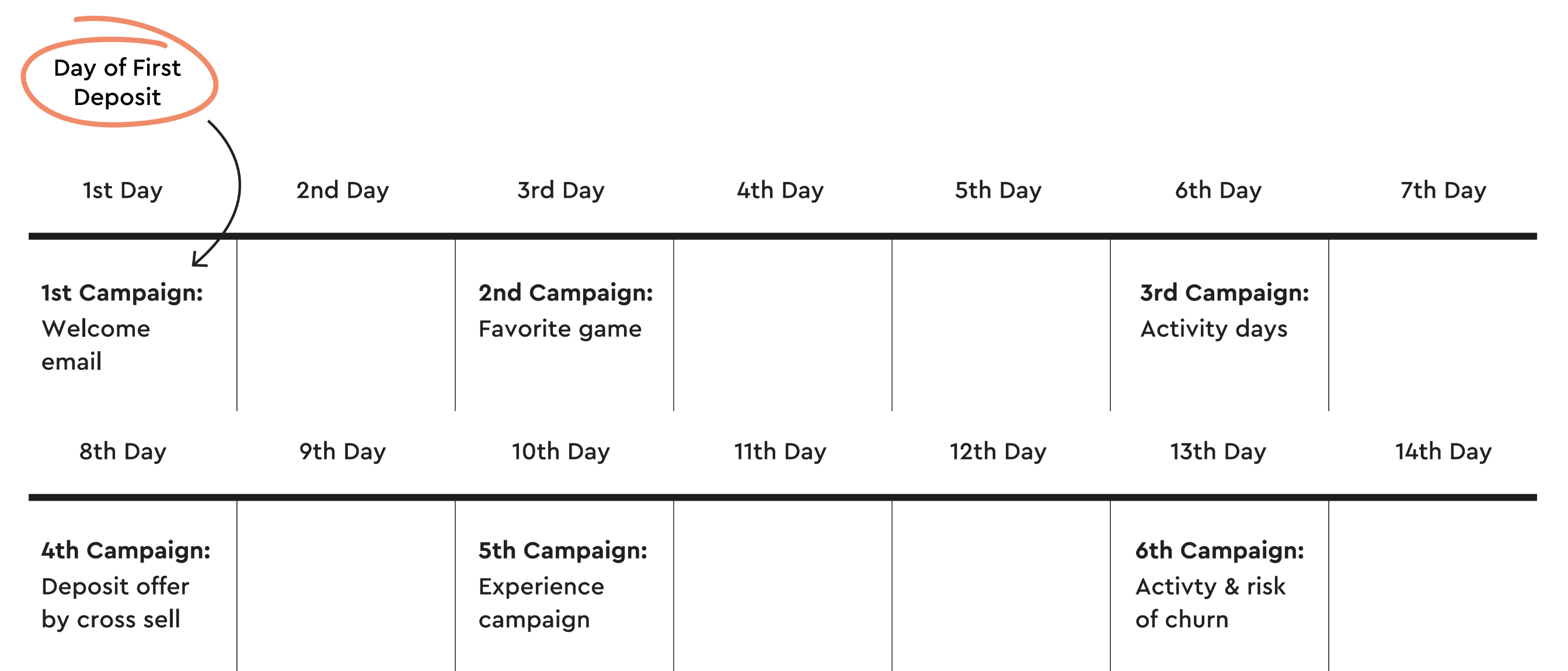
All new players should receive an educational “welcome” email on the day of their first deposit. This email should include a warm thank-you message, information regarding protection, security for responsible gambling, and tips and details about upcoming events. With the exception of this campaign, the messaging and incentives in each of the subsequent campaigns should be directly related to each player’s individual behavior, characteristics, and current situation.
Using Optimove, marketers can easily identify, and group players based on their preferred product and game, allowing them to create automated personalized communications to incentivize players to deposit again:
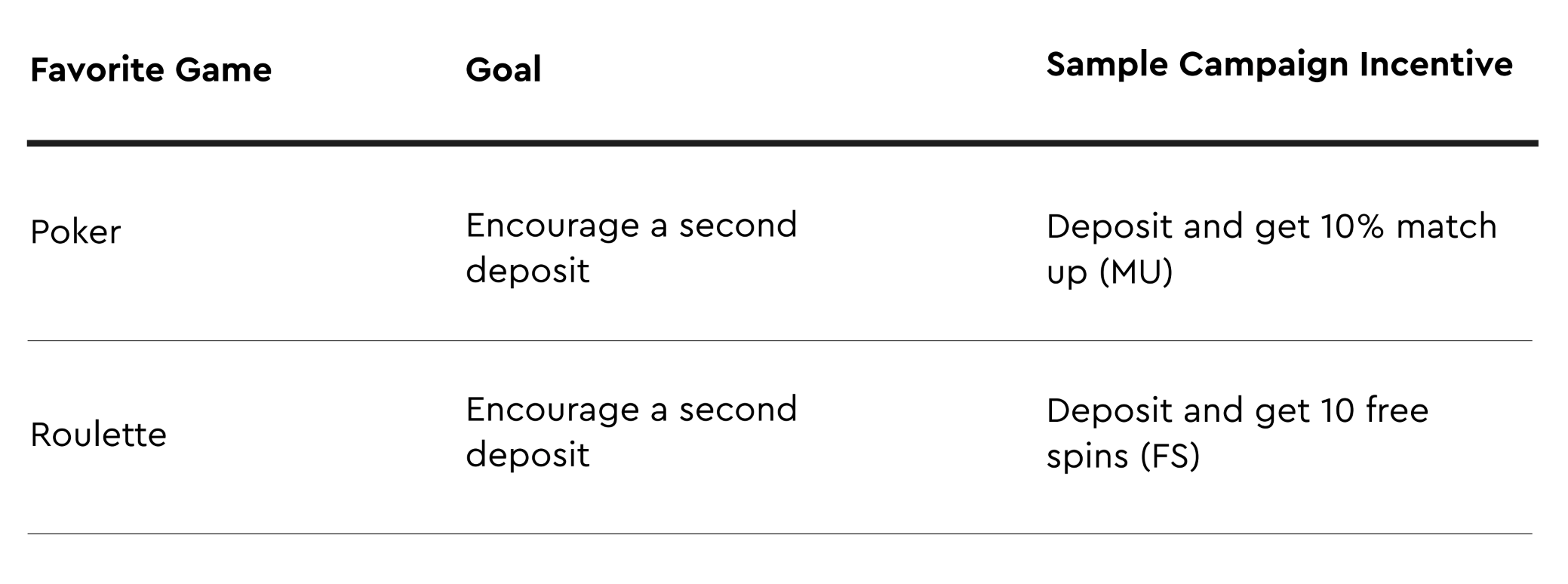
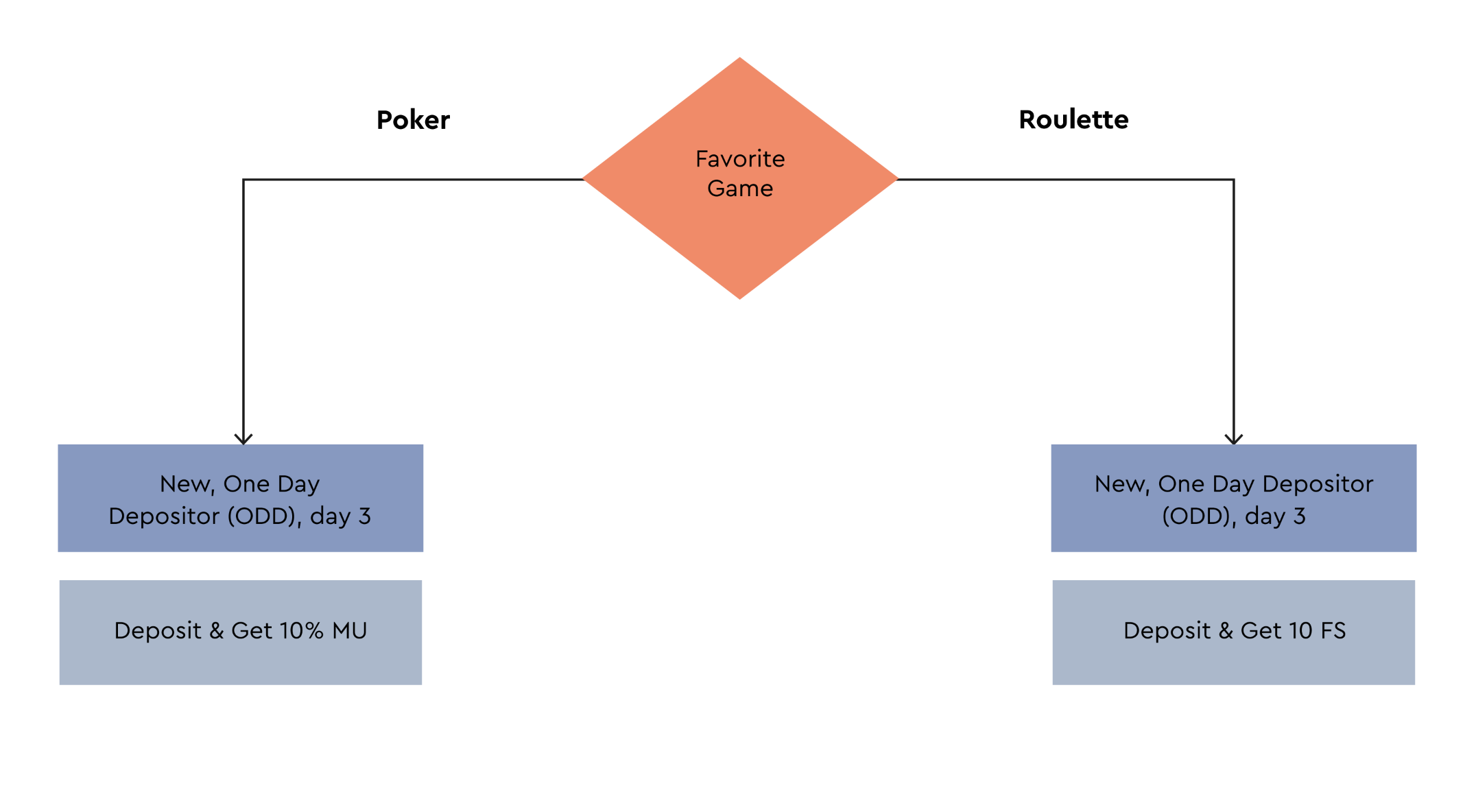
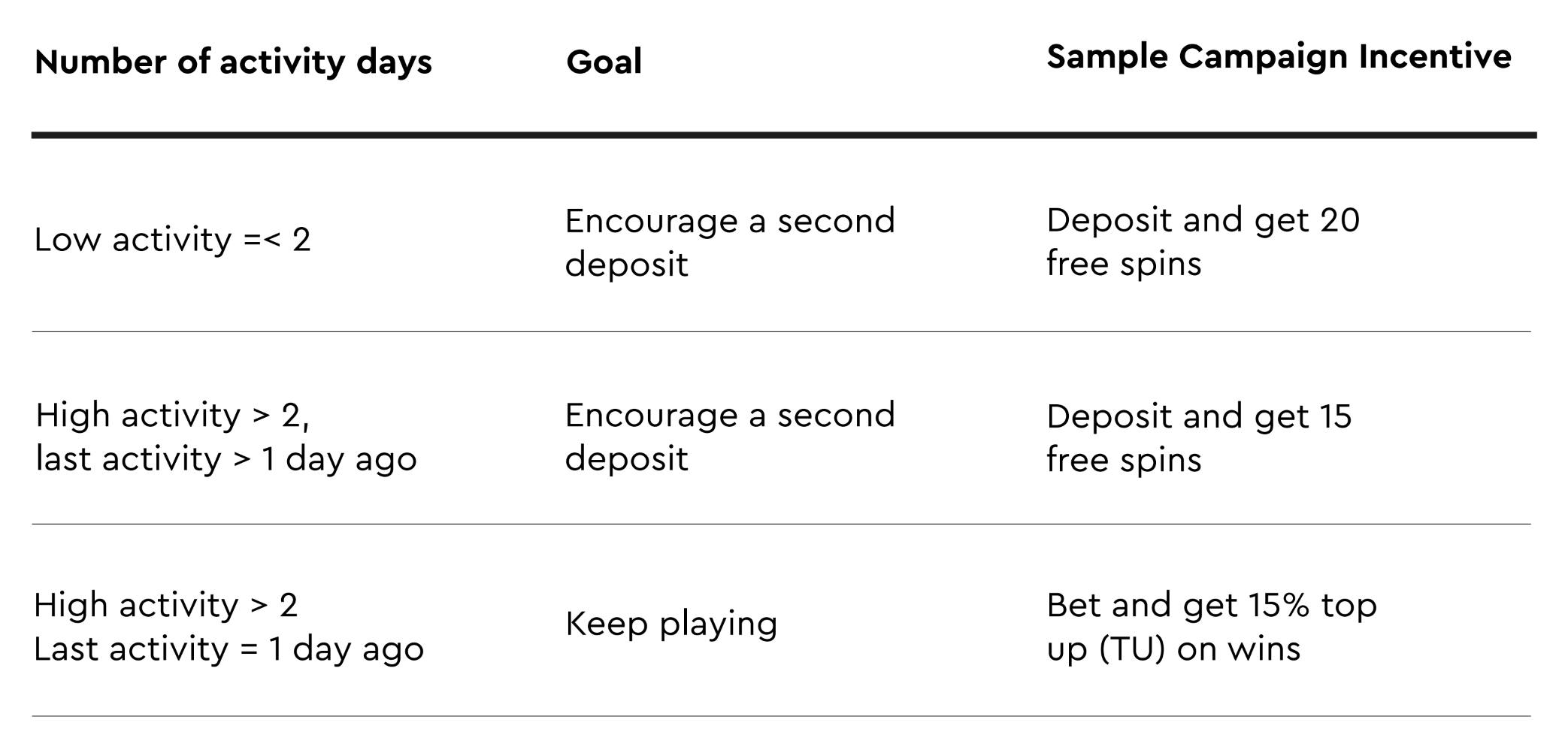
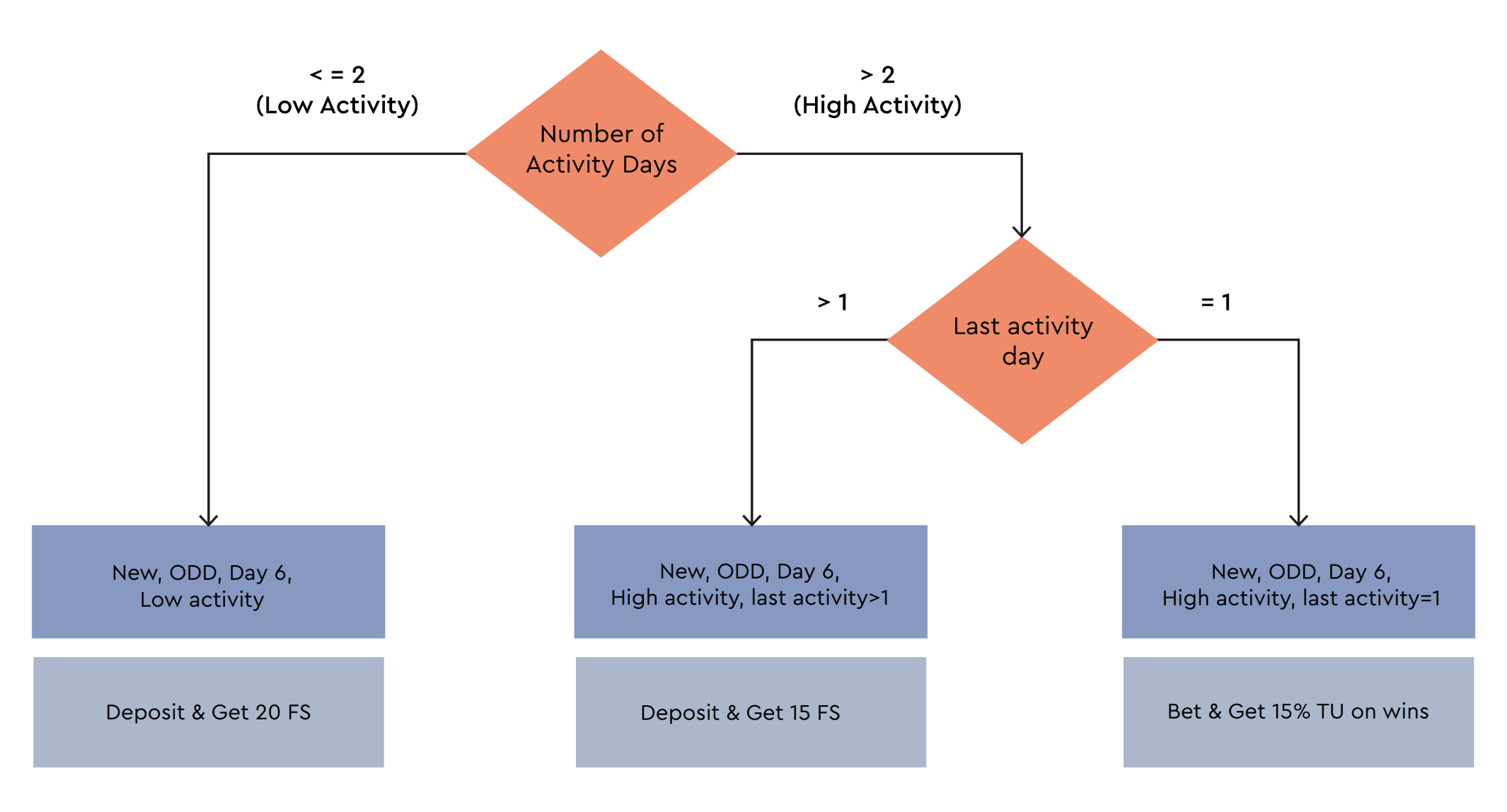
Despite a player only having one deposit day in the new lifecycle stage, they can have multiple activity days. The more activity days the player has in their first days, the higher the probability that the player will migrate to the active stage. In fact, players with five activity days are twice as likely to remain active than those with only a couple of activity days.
Using this insight, marketers can divide their new players into two groups. Then they can adjust the level of incentives given to each group, based on their likelihood to remain active – providing those with multiple activity days lower incentives. They can further personalize this campaign by segmenting players based on their product preference as well:
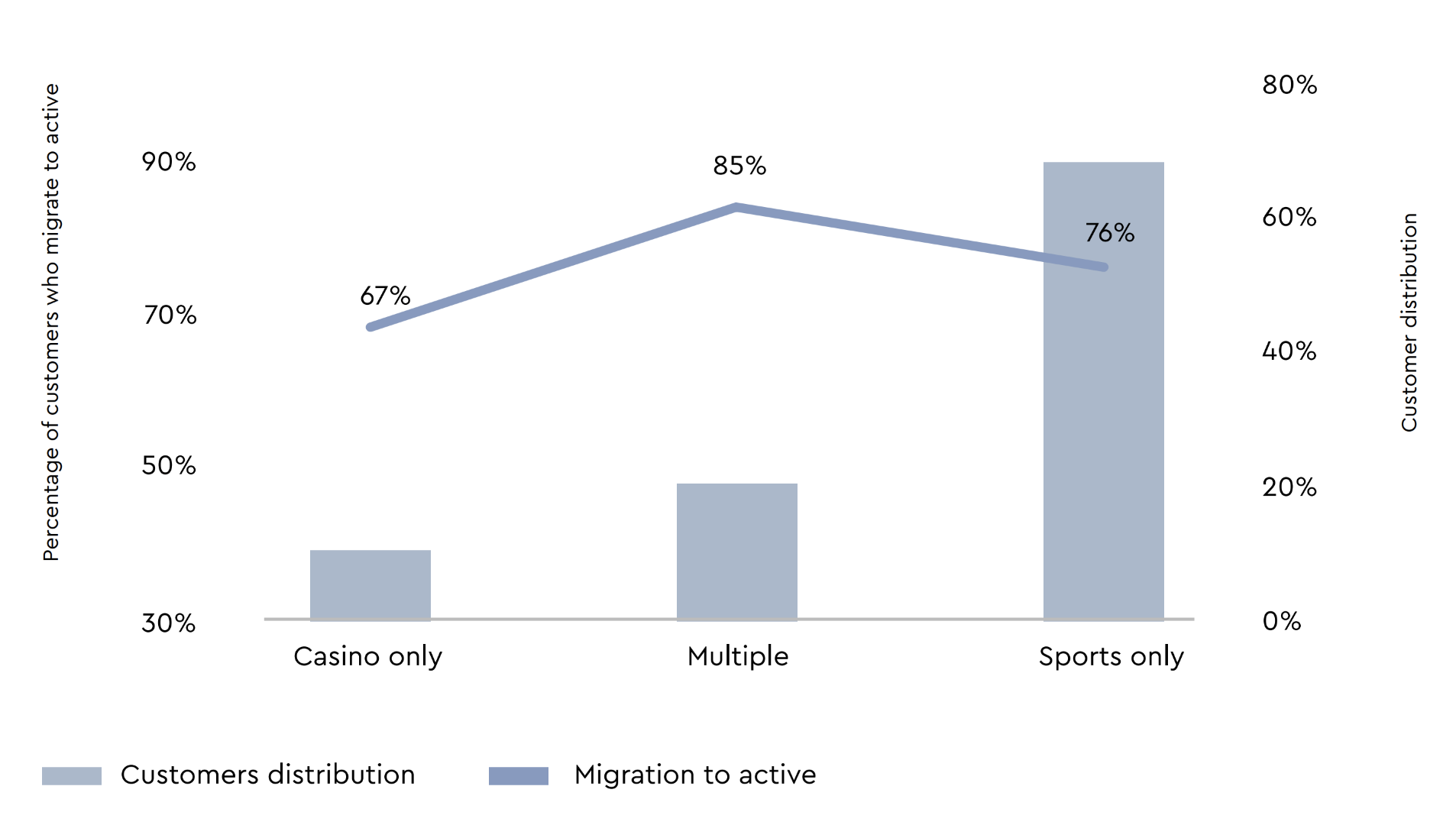
While by the 8th day, the majority of players display a level of loyalty to the products they prefer, Optimove research suggests that with operators that have more than one product, players who’ve had activity in more than one product have higher rates of migration to the active stage, as seen below.
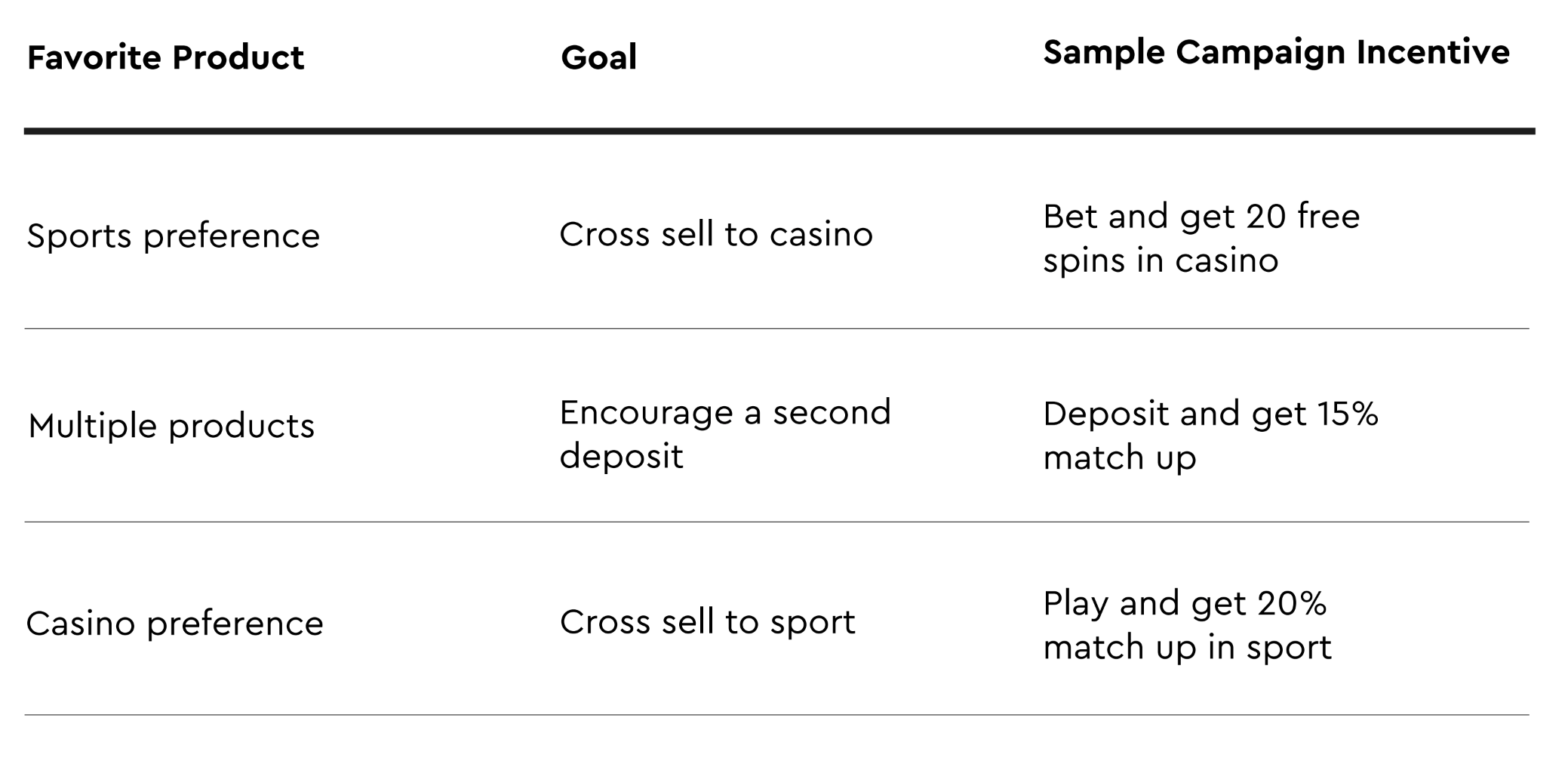
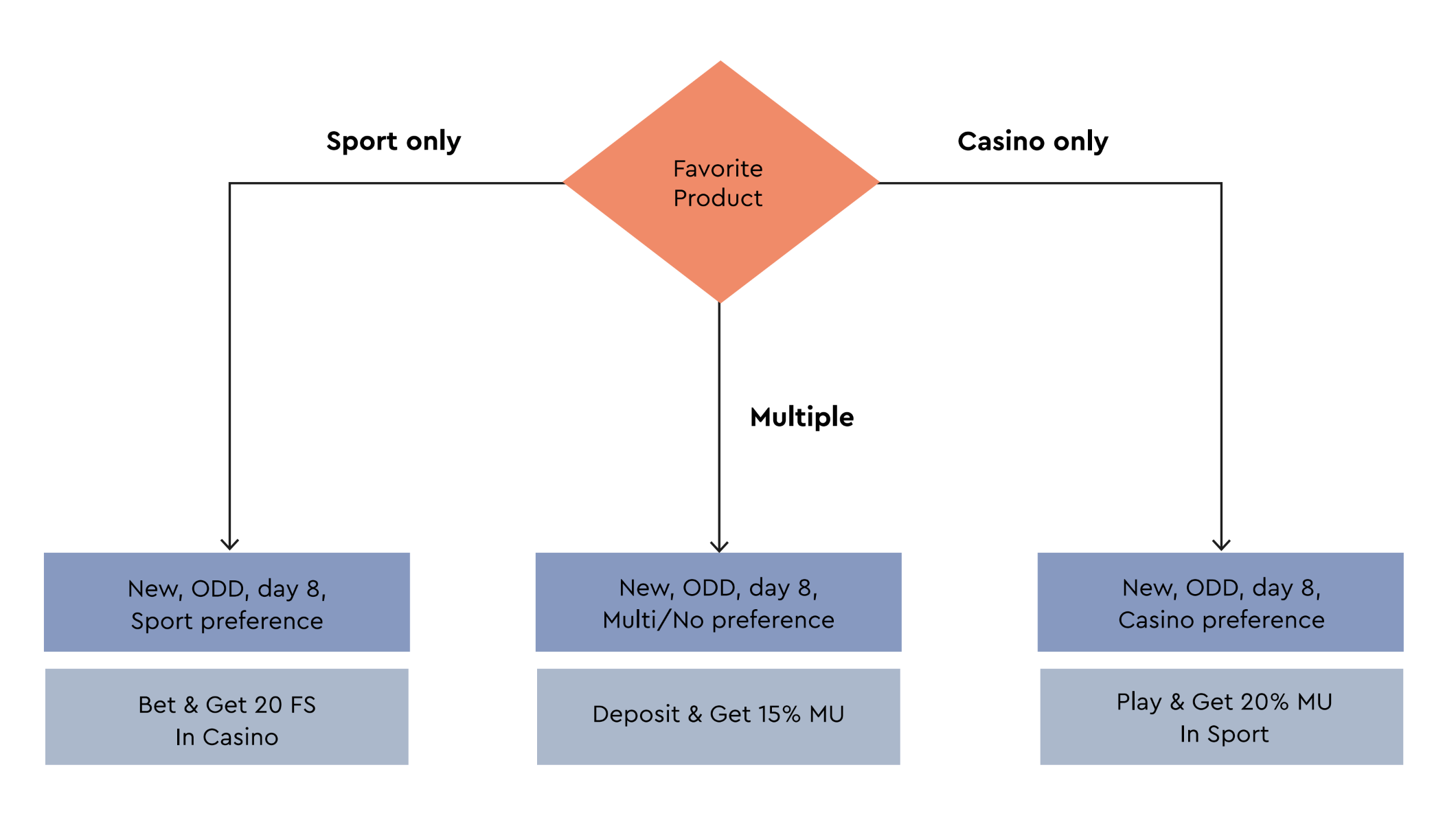
Sending cross sell offers to players with a single product preference can instill behaviors that increase the likelihood of a player becoming and remaining active. Using the player segments within Optimove, marketers can create three separate campaigns based on the player’s product affinity:
One of the determining factors of a player becoming and remaining active, is how they perceive their experience. Those who had a positive experience are more likely to remain active, making it crucial for marketers to identify negative experience and mitigate their effect. To measure player’s satisfaction level, Optimove calculates the player’s payout ratio as the win amount divided by the wager amount. The higher the ratio, the better the experience:
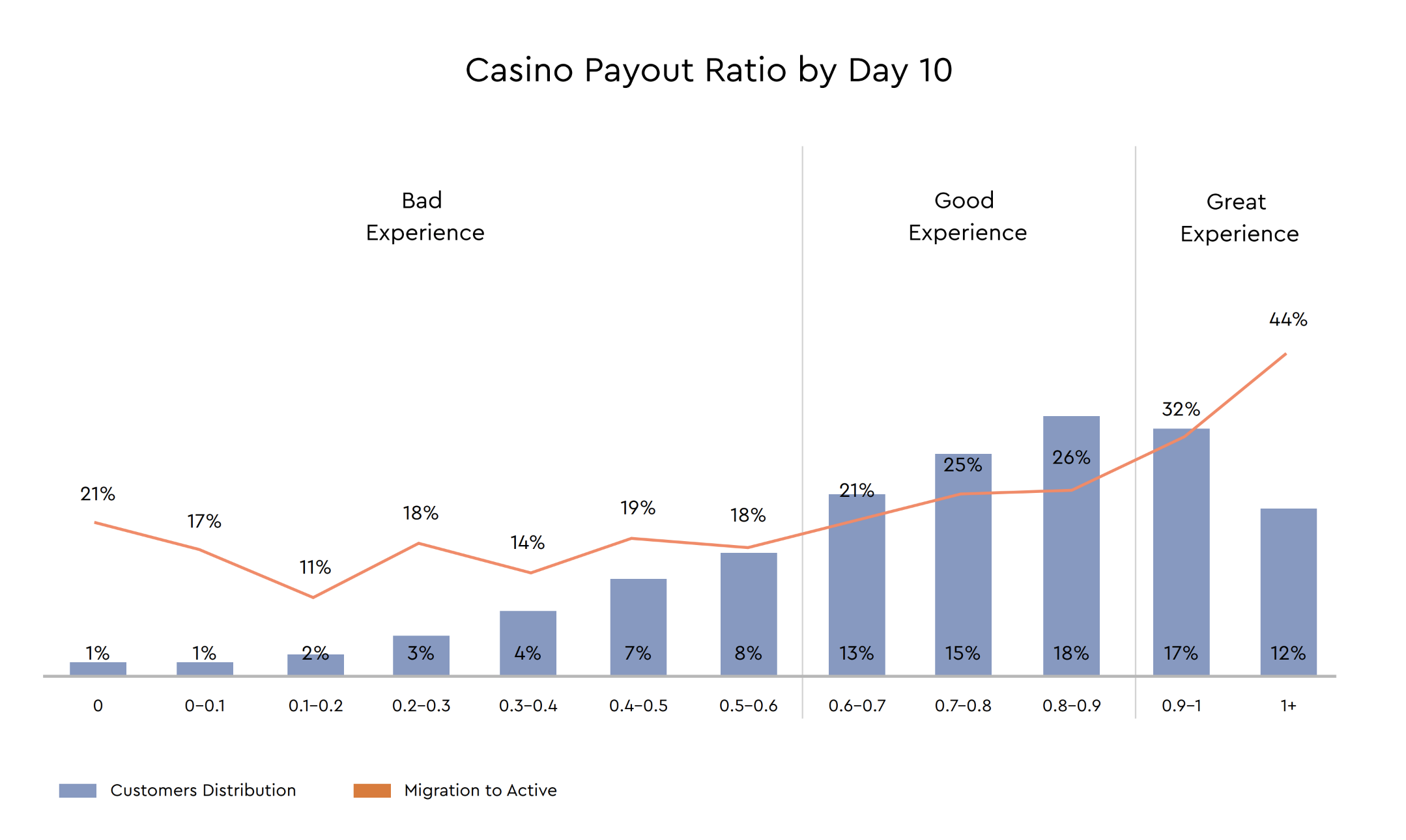
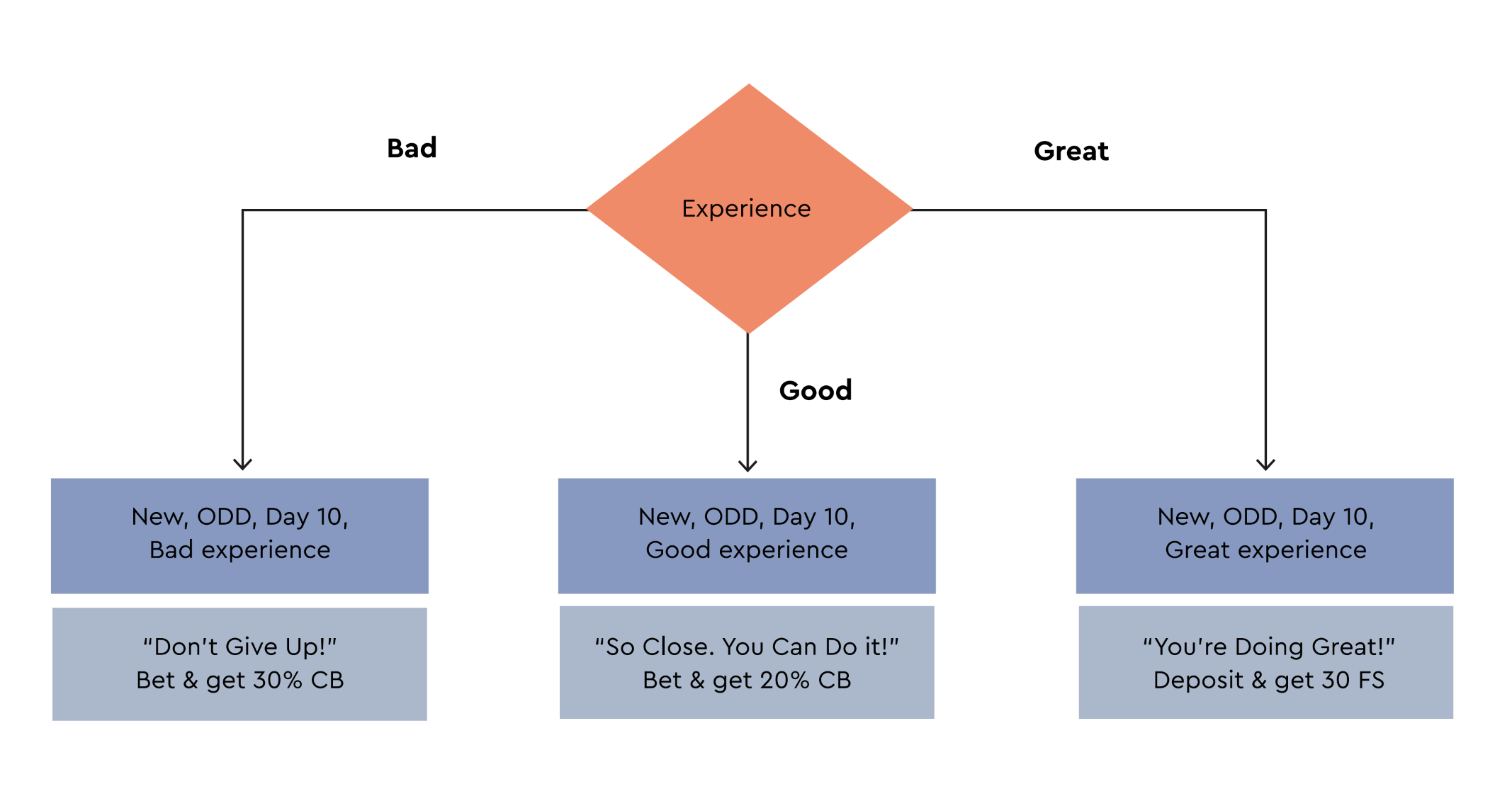
By calculating each player’s payout ratio, marketers can divide their customers to three groups based on their experience to acknowledge those who are having a good experience and mitigate the effects of negative experiences:
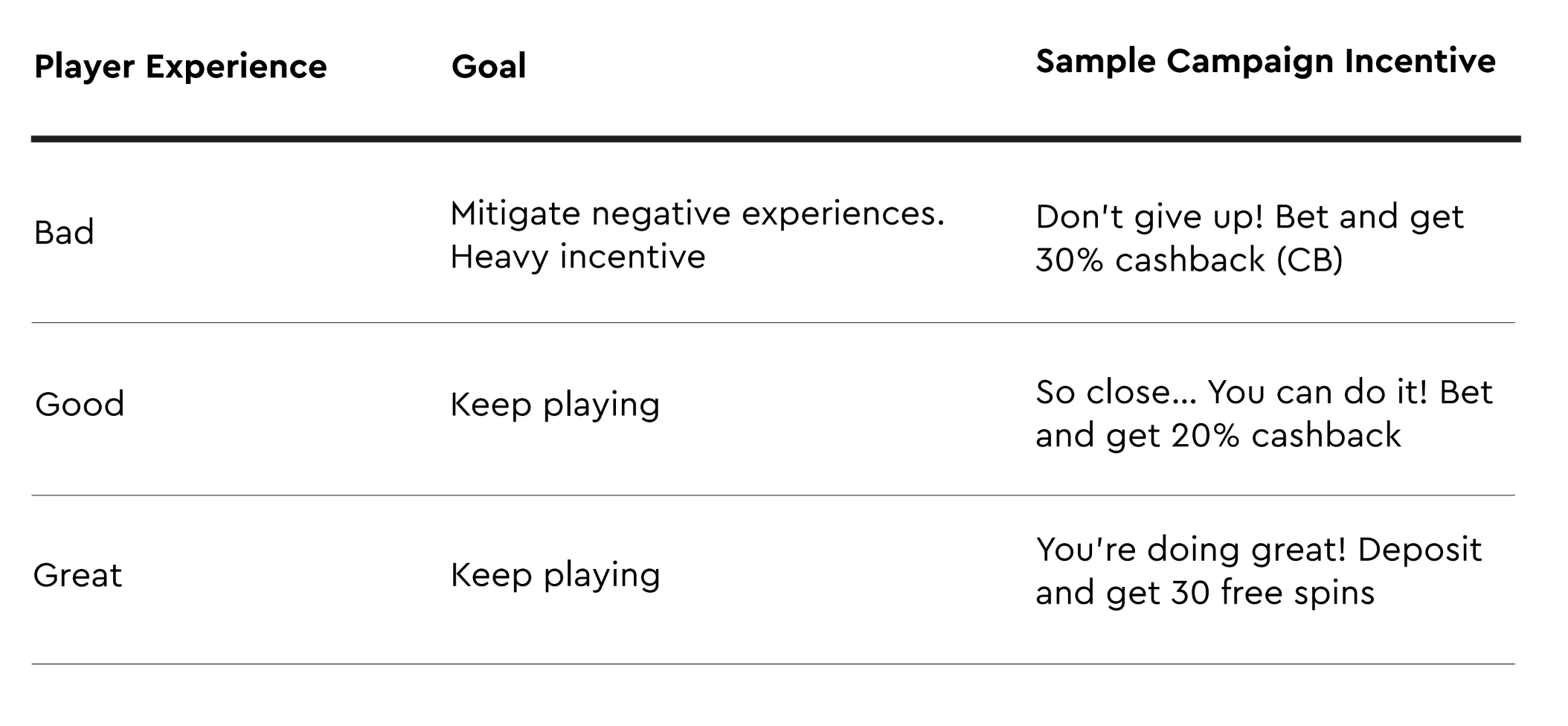
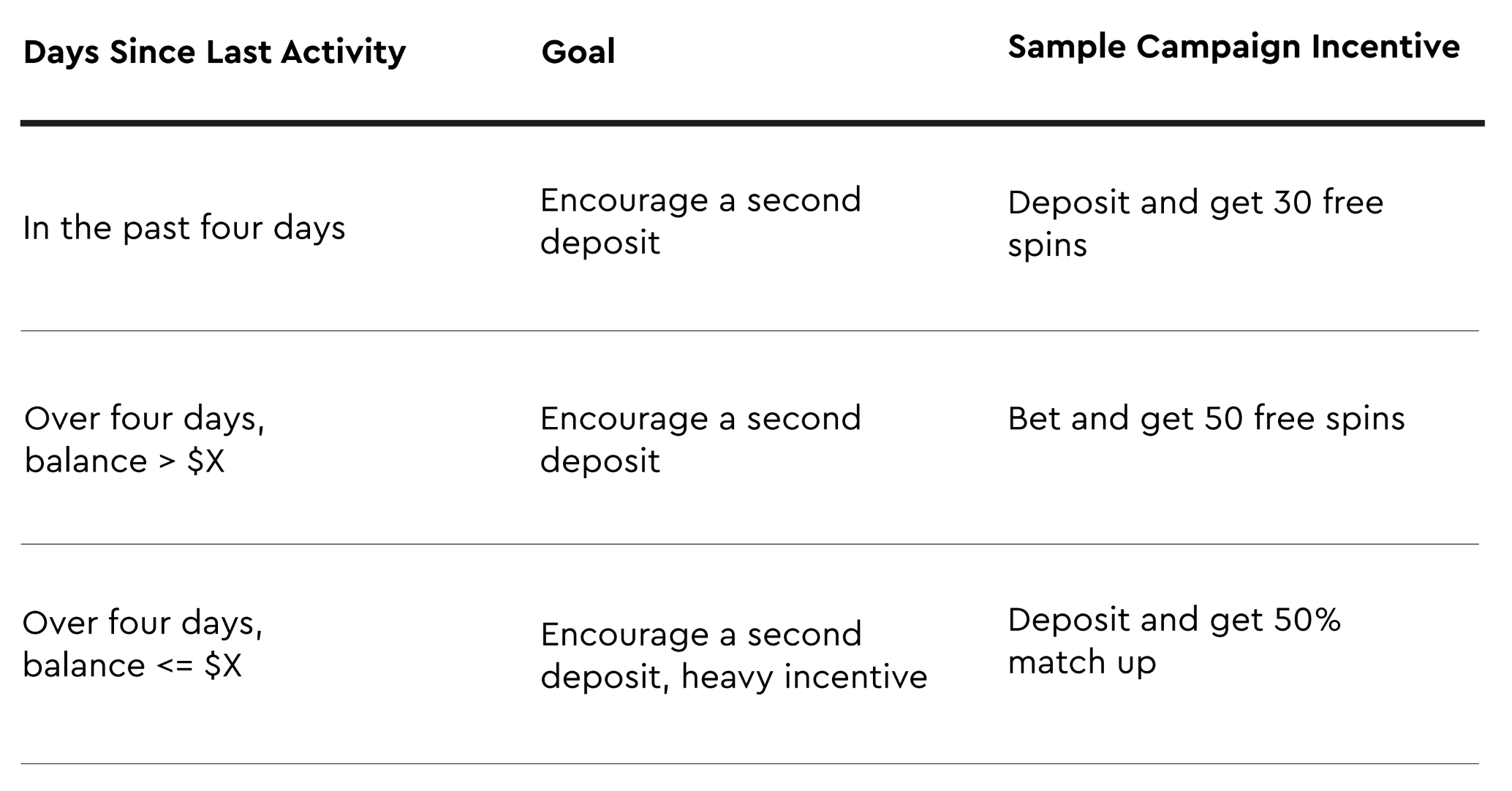
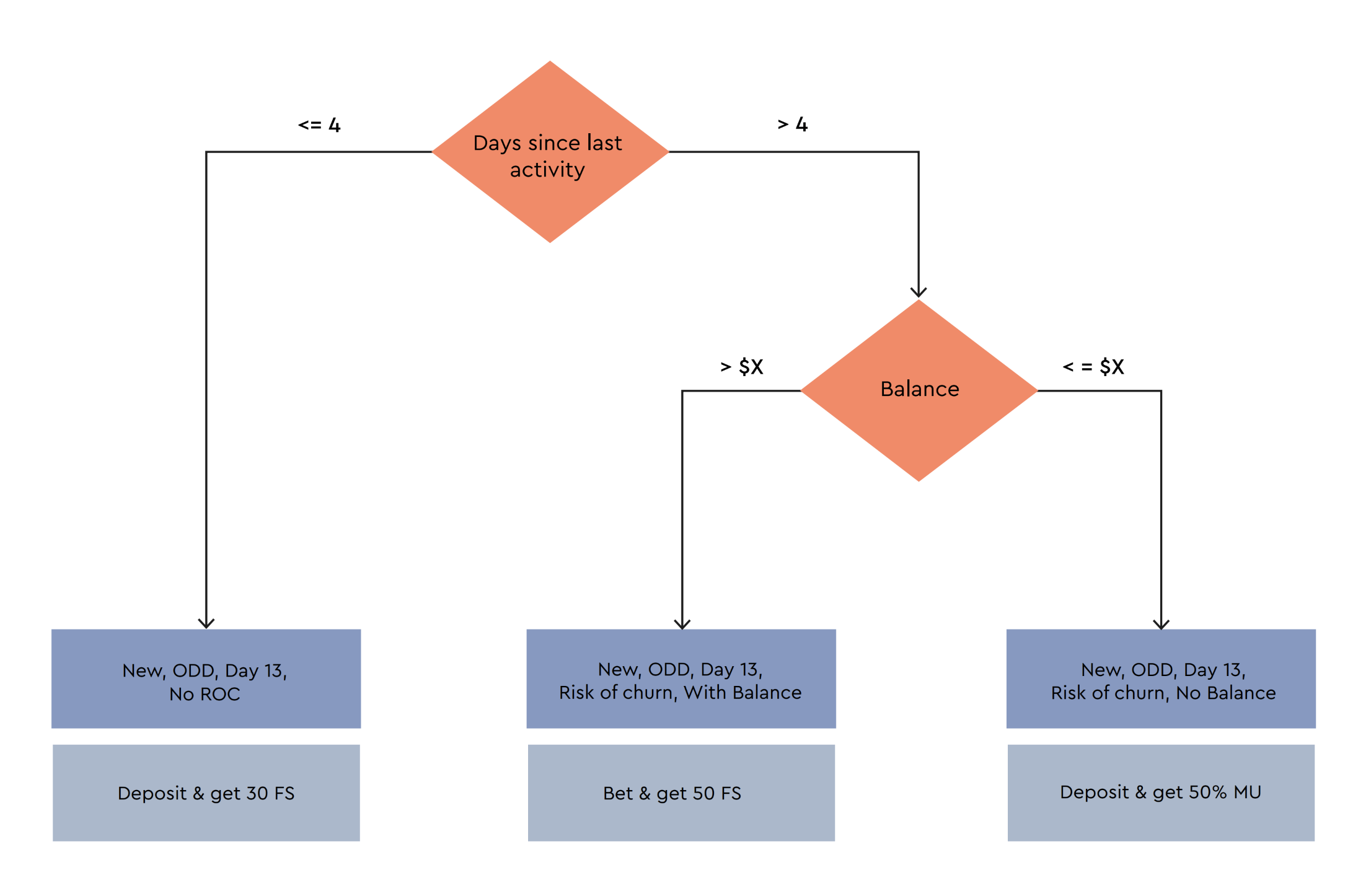
The sixth and final campaign, is sent on the thirteenth day since each player’s first deposit. Players should be segmented into two groups – those who have had an activity in the past four days, and those who haven’t. The players who haven’t had an activity in the past four days can be segmented further to identify those with a remaining balance over $X and those with less. Those who haven’t been active in the past four days and have the lowest remaining balance, have the highest risk of churn and should therefore be targeted with the strongest incentive. Using multiple templates within Optimove, marketers can easily send each of their segments highly personalized communications based on their risk of churn with incentives related to their preferred product.
Besides the scheduled campaigns in the plan described above, savvy operators create a parallel “remaining balance” campaign: if a particular player has a remaining account balance of at least the amount of the player’s own average daily bet amount, then the Daily Remaining Balance Campaign would be sent to that player instead of any other pre-scheduled campaign slotted for that particular day.
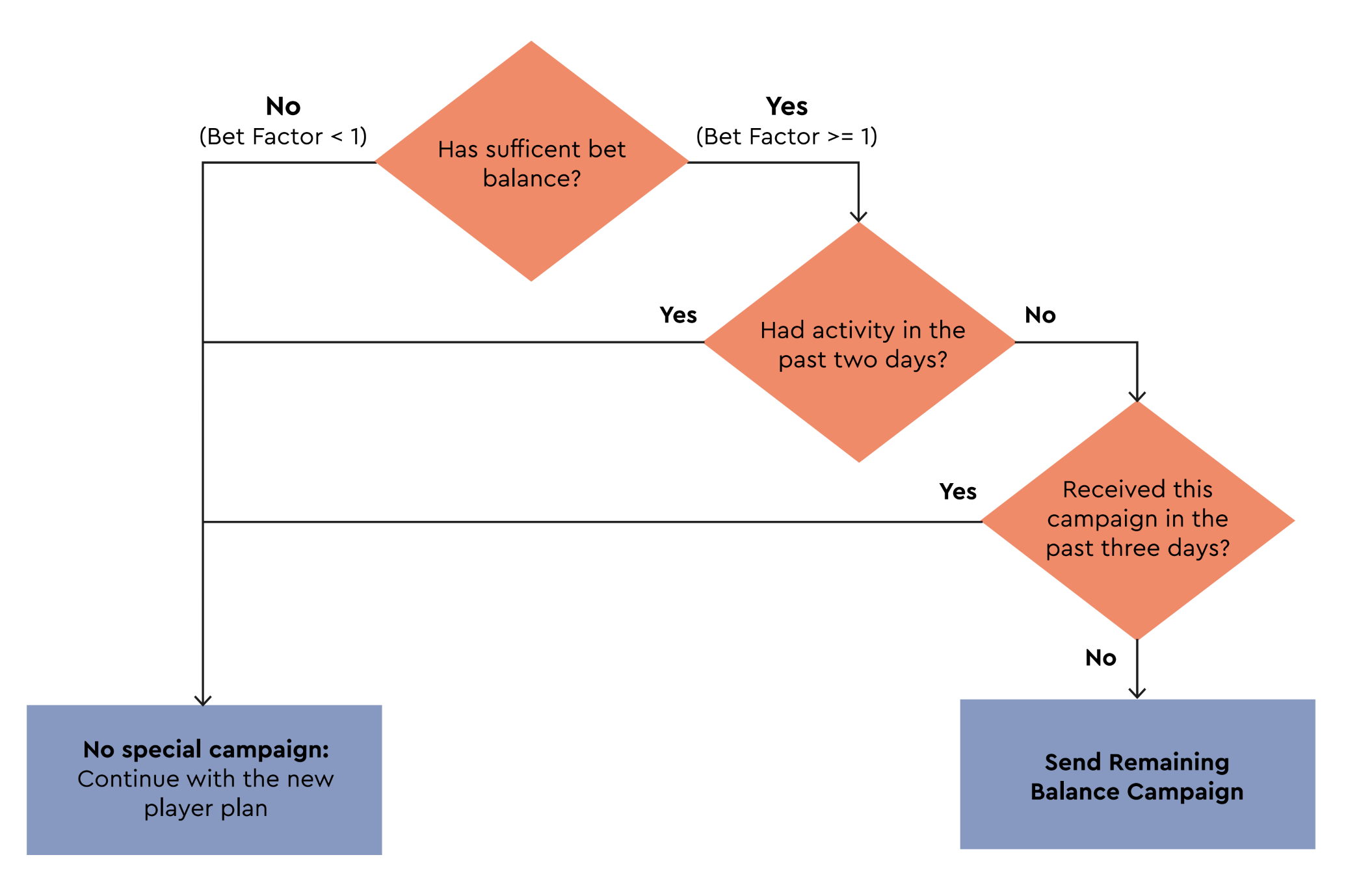
Using Optimove, it is easy for marketers to create calculated customer attributes, such as “bet factor” (each player’s remaining monetary balance divided by his/her average daily bet amount to date). If the player’s bet factor is greater than one (i.e., there is enough money in the account to make an average-sized bet), then the Daily Remaining Balance Campaign should be sent.
Two additional conditions should be taken into consideration before sending this campaign, in order to provide a more personalized experience and avoid communication fatigue:
Only if the answer to both these questions is “no” should the player receive the Remaining Balance Campaign. This flowchart summarizes the logic:
One of Optimove’s clients, an RMG operator, defined its new players as those who made their first purchase within the past 14 days. The operator tested a marketing plan, similar to the above, for a period of three months. In order to measure the effectiveness of the proposed marketing plan, the operator held 10% of the new customers, randomly selected, in a control group. The strategy was tested on 7,222 new players and 733 players serving as the control group.
Following is a summary of the KPI improvements achieved by the suggested marketing plan:
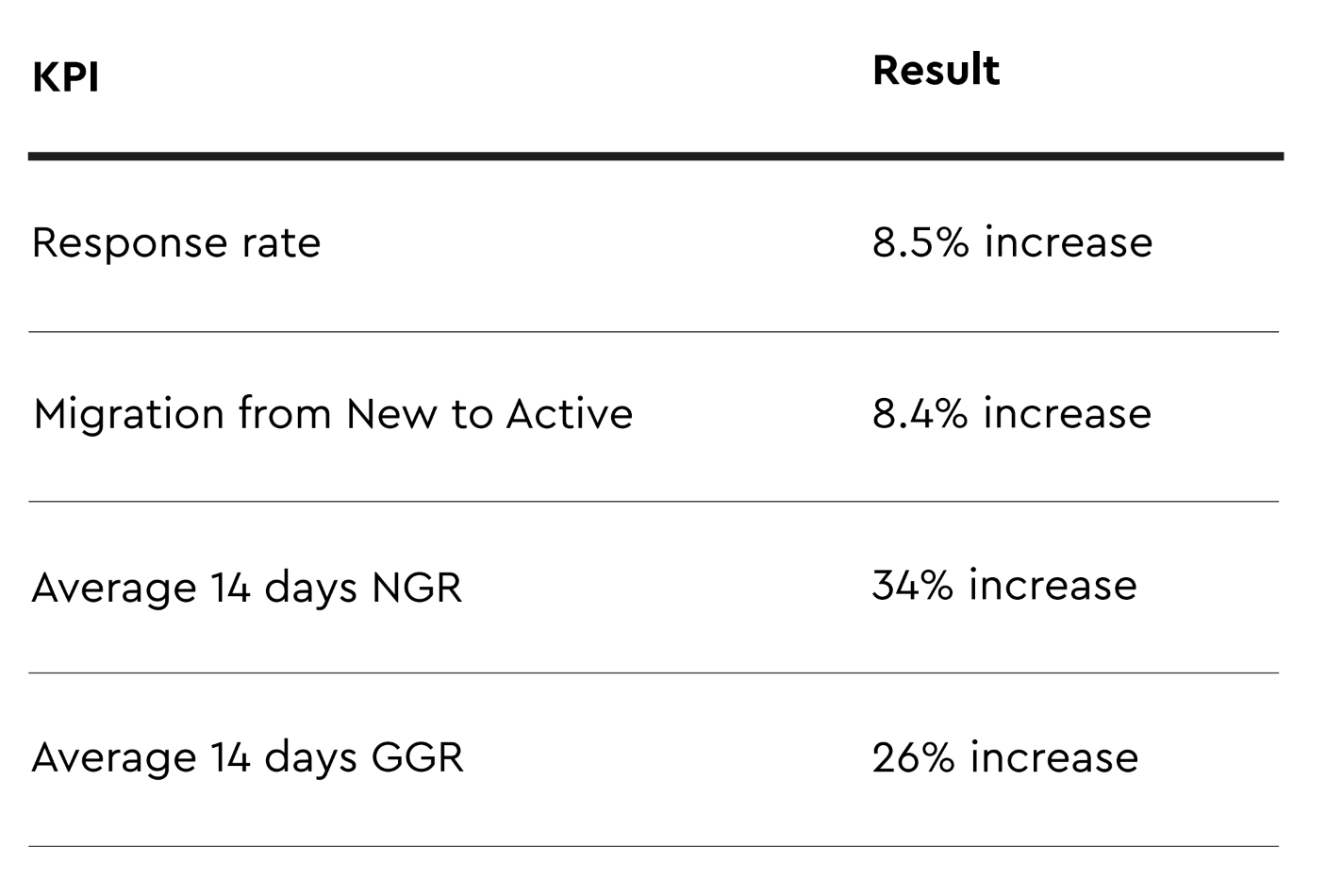
These strong results show the effectiveness of a highly personalized, well-crafted, and automated marketing plans.
Using Optimove, marketers can easily implement similar strategies as well as analyze their player data and incorporate best-practices based methodologies to improve the business performance of their operation.
To learn more, contact us.