Unified Growth Solution
World-class tech needs world-class drivers. AI platform and expert services, unified
Read time 8 minutes


Loyalty, leveled up.
Connect gamification, loyalty, and rewards in one platform.

Why it matters:
IGaming operators widely deploy gamification, yet many run programs that generate engagement sessions without building commitment. This post helps senior marketing leaders understand why short-term engagement mechanics and long-term loyalty are not the same thing, and what it takes to connect both. The insight draws directly from Ben Tepfer’s session at Optimove Connect 2026, grounding the argument in practitioner experience.
Key takeaways:
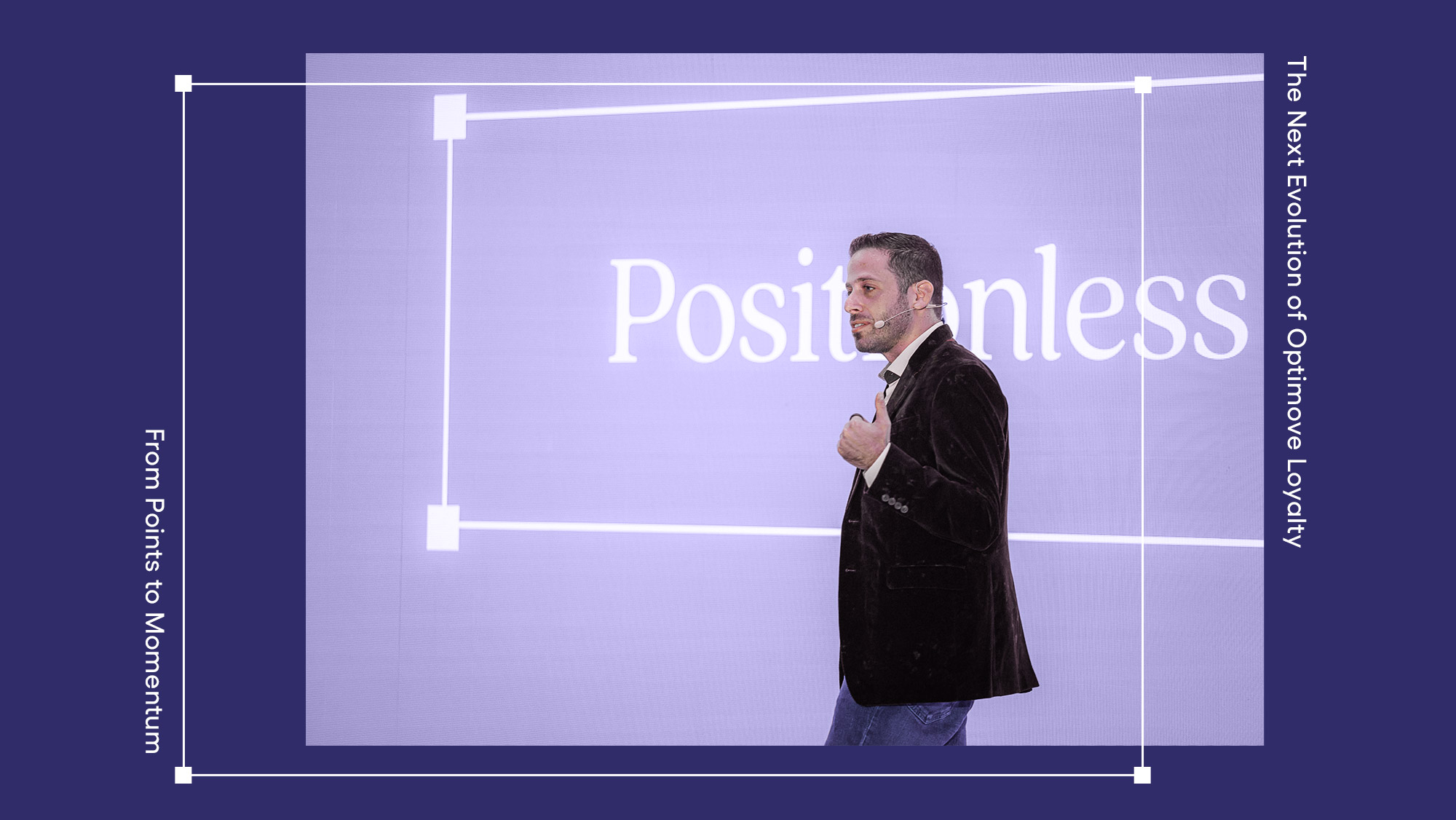
At Optimove Connect 2026, Ben Tepfer, Head of Product for Optimove Gamify, opened his session with a question: think about the last time you leveled up at something. Not a game. Something real. What was the moment you thought "Yes, I’m moving forward"?
This feeling — progress, momentum, the sense of evolving in something — is at the heart of what loyalty actually is. And it’s exactly what most iGaming loyalty programs fail to create.
The industry has no shortage of gamification. Points, badges, leaderboards, missions…100% of iGaming operators now use some form of it. But engagement and loyalty are not the same thing. Conflating the two is the reason why so many programs generate short-term sessions without getting long-term commitment.
Tepfer describes traditional loyalty programs as being like a bank account. You earn points. They sit there. Maybe you use them; maybe you forget them entirely.
That last part is more common than operators tend to assume. Research consistently shows that people enroll in loyalty programs and promptly disengage. They signed up once, maybe made a purchase, and then the program disappeared from their mental map. The average consumer belongs to nearly 19 loyalty programs, but only about half of those memberships are active.
The root cause, according to Tepfer, is that traditional programs lack three things: urgency, identity, and fun. There is no reason to think about the program until you happen to remember it exists. There is nothing in the experience that connects to who the player is or who they want to become. And there is no moment of genuine engagement, just a balance sitting idle in an account.
Gamification, deployed as decoration on top of this model, does not fix it. It adds missions and badges to a structure that still has no forward pull.
Tepfer’s central argument is that loyalty is an outcome, and that the mechanism for producing it is momentum. Players become loyal not because they have accumulated something, but because they can see and feel that they are progressing toward something.
He illustrates this with a study from a B2B peer-review platform — a context with no natural connection to gamification. The platform added a badge system: log in a certain number of times, leave a certain number of reviews, and earn a badge. No monetary reward, no significant change to the experience. Just visible markers of progress.
Engagement time increased significantly.
Users stayed longer and participated more, driven entirely by the ability to see their own advancement.
The mechanism is the same in iGaming. Engagement is the time spent now. Loyalty is an investment in coming back. The bridge between them is a player who can see that they are four missions away from the next level, that their badge collection reflects something about who they are on this platform, that there is a leaderboard with their name on it.
These are not points sitting in a bank. They are a story the player is living.
Tepfer outlines five principles that distinguish programs with momentum from those without.
One practical implication of Tepfer’s framework is that loyalty does not have to be a single monolithic program. Operators can think about it in three modes.
Always-on progression is the continuous layer: tiers, badges, experience points that accumulate over time and give players a persistent sense of advancement. This is the foundation of long-term loyalty.
Modular programs are time-bound loyalty experiences attached to a season or event. Tepfer’s example is the World Cup: a standalone loyalty system that runs for a defined period, gives players a focused progression arc, and then is archived—but continues the momentum of the broader relationship.
Campaign-native moments are the lightest version: a single challenge embedded in a campaign that creates a brief but genuine engagement. Tepfer offers the example of a ride-share app challenging users to take five rides a week for a reward. No permanent infrastructure. A moment of surprise and delight that, if well-timed, registers as the brand paying attention.
The key insight is that all three modes work only when they are connected to what the platform knows about the player. A World Cup loyalty program that assigns the same missions to every player is just a feature. One that tailors missions to what it already knows (this player bets on football, this one prefers casino, this one has never completed a challenge before) is a relationship.
Optimove Gamify is the product Tepfer presented at Connect 2026. It is a no-code platform that brings together three modules: Optimove Loyalty (missions, badges, virtual currencies, tiered progression), Optimove Minigames (40+ branded games deployable as engagement or zero-party data capture), and Optimove Promotions (generosity management and budget-controlled reward delivery).
What makes Optimove Gamify different from a standalone gamification tool is its integration with the Optimove Positionless Marketing Platform. Loyalty mechanics are not layered on top of CRM; they are orchestrated alongside every other campaign. The same AI decisioning that determines what message a player receives determines what mission they see next. The same segmentation that targets a reactivation email also shapes the loyalty challenge that arrives in the same journey.
The result is that every loyalty interaction generates a signal, and every signal improves the next one. A player who chooses a sports tournament over a casino challenge tells the platform something about their affinity. A player who spends virtual currency on early access rather than a discount tells the platform something about how they think about exclusivity. These behavioral signals, collected through the loyalty layer, feed directly into personalization across the entire player relationship.
This is the closing of the loop that is described: loyalty is not a program you run. It is an ongoing cycle where each interaction deepens the relationship, increases the player’s investment in the platform, and generates the intelligence to make the next interaction more relevant.
Every iGaming operator using gamification has the mechanics. The operators building genuine loyalty have something else: a system where players can feel themselves moving forward, where the program responds to who they are, and where the data flows back into the broader marketing relationship.
Gamification keeps players busy. Momentum keeps them coming back.
To see how Optimove Gamify connects loyalty mechanics to CRM intelligence, request a demo.
Loyalty, leveled up.
Connect gamification, loyalty, and rewards in one platform.

Ben Tepfer is a storyteller with over a decade of experience in product marketing. He is passionate about driving growth through innovative product marketing strategies. As the Director of Product Marketing at Optimove, Ben drives the shaping of the narrative and positioning of the company's cutting-edge technology.
Ben specializes in developing comprehensive product marketing strategies through storytelling to showcase the unique value propositions of Optimove that resonate with target audiences across diverse industries. Beyond his day-to-day responsibilities, Ben is a thought leader in marketing technology.
He frequently shares his insights at industry conferences, contributes articles to leading publications, including Entrepreneur, Adweek, Cheddar, Huffington Post, VentureBeat, and MediaPost, and engages with the marketing community.
Gamification is the use of game-like mechanics — points, missions, badges, leaderboards — to drive engagement. Loyalty is the outcome: a player’s sustained commitment to a platform over time. Gamification can produce loyalty, but only when it creates ongoing momentum and a felt sense of progress for the player.
Most traditional programs are passive. Players earn points, but there’s no urgency, no identity attached, and no visible path forward. Without momentum, players forget they’re even enrolled.
A program is momentum-driven when players can see where they are, where they’re going, and feel the distance closing. This involves progressive missions, tiered advancement, visible achievement markers like badges, and challenges that are personalized to each player’s behavior.
Yes. Campaign-native gamification, like short surprise-and-delight moments, modular seasonal programs, and one-off challenges, drives engagement without focusing on long-term loyalty. The key is that even these moments feed back into a broader player understanding.
Optimove Gamify integrates missions, badges, virtual currencies, and tiered progression directly into the CRM, so loyalty mechanics are personalized to each player’s behavioral profile and orchestrated alongside all other marketing campaigns.