
Unified Growth Solution
World-class tech needs world-class drivers. AI platform and expert services, unified
Read time 10 minutes


Future Commerce's Positionless Marketing Guide
Why it matters:
AI-driven marketing platforms only create value when teams can operate them quickly and easily. This post helps marketers evaluate vendors by their ability to execute immediately while transferring the skills and operating model needed to become independent.
Key takeaways:
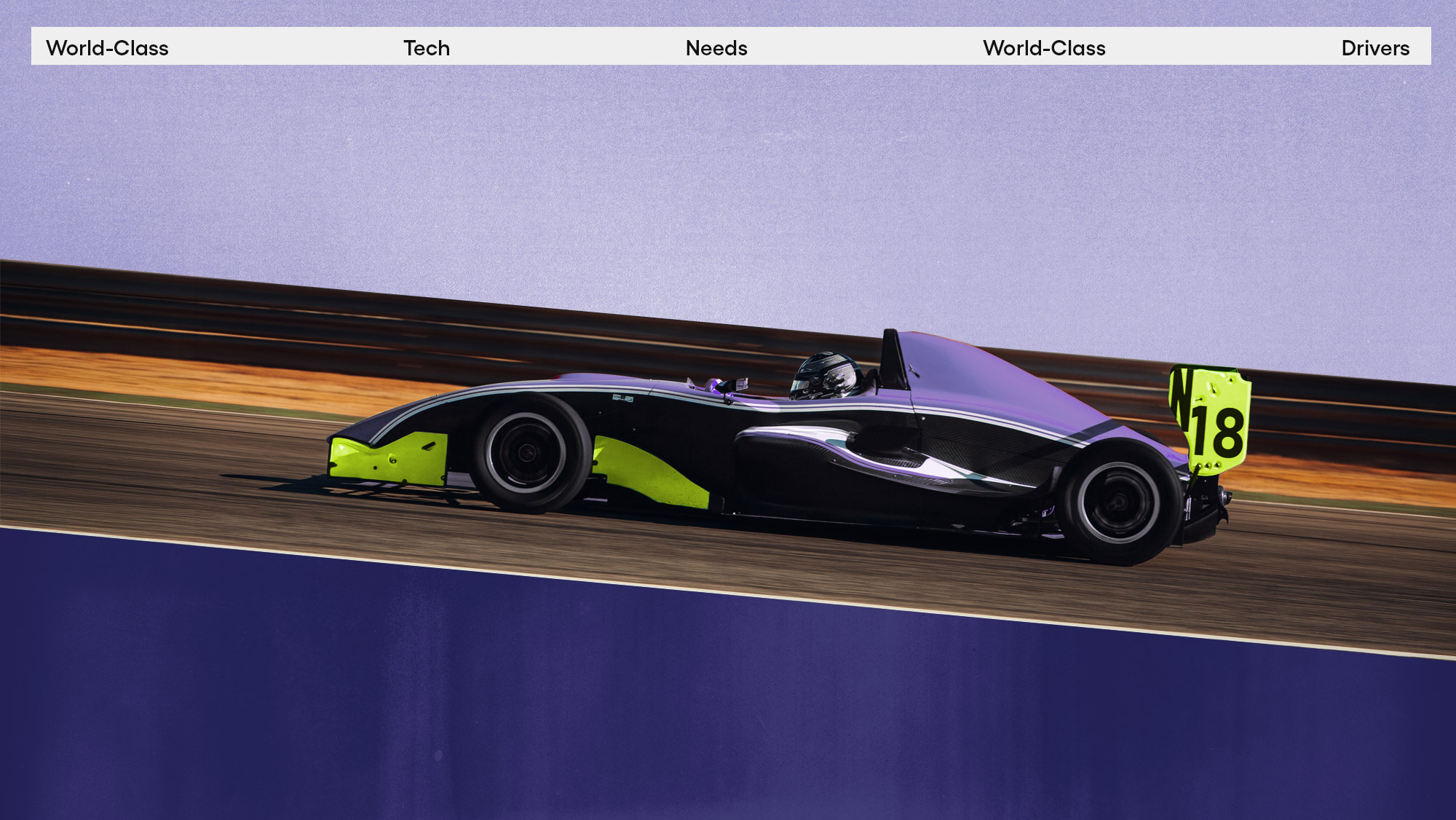
The bottleneck to optimizing AI in marketing is not the technology. It is the operational ability to use it effectively. Buying a sophisticated AI platform does not guarantee sophisticated marketing, any more than buying a Formula One car guarantees winning the race. The machine is only as powerful as the team behind the wheel.
And yet, retail and eCommerce brands have never had access to more powerful marketing technology. AI-driven platforms promise real-time decisioning, hyper-personalization at scale, and agentic automation that can fundamentally transform how brands engage their customers.
Most teams are leaving the majority of that value on the table.
Today's AI-driven marketing platforms can unify customer data across every touchpoint, automate next-best-action decisioning in real-time, and orchestrate personalized journeys across every channel without manual intervention.
But a Formula One car does not win races in the hands of an average driver. But rather, technology raises the ceiling dramatically. It does not raise the floor automatically.
Operating at this level requires a fundamentally different kind of marketer. One who thinks in systems, not campaigns. One who understands data architecture, AI logic, and optimization models, not just creative briefs and send schedules. A marketer who can read the instrument panel at speed and make the right call in the moment.
Most marketing teams were not hired for this. Most were not trained for it either. And that gap, more than any limitation in the technology itself, can hold performance back.
Most internal marketing teams are still structured around the old assembly-line model: submit a campaign request, wait for it to move through the queue, execute, and repeat. That model worked when the tools were simpler. It does not work when the platform is capable of making thousands of micro-decisions per second, empowering marketers to be Positionless.
Traditional marketing workflows often follow a familiar pattern:
Request → wait → execute → wait → analyze → repeat
It is a legacy structure. Technology evolved faster than the talent pipeline could keep up. As a result, many brands are only scratching the surface of what their platforms can do.
Every CMO wants AI Marketing Agents and next-best-action decisioning to meet customers in the moment. Senior executives and the board are demanding a comprehensive AI strategy. Competitors are moving faster and the pressure to optimize AI is real and it is not going away.
But wanting it and being able to execute it are two very different things.
The gap between what an AI platform can do and what a team can actually execute is widening, and hiring alone will not close it. Specialized Martech talent is scarce. Onboarding takes months, and by the time a new hire is fully up to speed, the platform has already evolved.
The bigger risk is this: Brands invest heavily in powerful technology, realize only a fraction of its potential, and eventually conclude that the technology did not deliver. In most cases, the technology was never the problem. The operating model and team structure never changed.
That is the skills gap, and in a world where AI and agentic automation are becoming the baseline expectation, it is one of the most consequential challenges facing retail and e-commerce marketing leaders today.
The most important factor to consider when choosing a Martech vendor is not what the platform can do, but whether the vendor can empower the brand’s marketing team to use it effectively.
Most vendor evaluations focus on features, integrations, and pricing. Those matter but for brands serious about closing the AI skills gap, the following five questions matter more:
A vendor who installs the platform and walks away is selling you a Formula One car without a racing school. Look for vendors who invest in building your team's capability from day one, not just getting the technology live.
AI platforms are not static. The vendors who drive the most value are those who help your team continuously adapt, bringing new use cases, updated best practices, and proactive recommendations as the technology changes.
Benchmarks and case studies from brands in your category are a direct signal of what is possible. If a vendor cannot show you relevant proof points, that is a gap worth probing.
Adoption metrics tell you whether your team is using the platform. Outcome metrics tell you whether it is working. The right vendor is accountable for the latter.
The best Martech vendors are not just selling what exists today. They are building toward what comes next. Ask them where the technology is heading and whether their roadmap matches your ambitions.
The right vendor does not just sell the car. They help you win the race.
The first step is to end the assembly-line marketing model and adopt the Positionless Marketing model, where marketers have Data Power, Creative Power, and Optimization Power, allowing them to act instantly and independently. This shift empowers teams to make data-driven decisions without waiting on vendors, closing the gap between strategy and execution.
A credible skills gap partnership follows the following three distinct phases:
In the first phase, the vendor's services team drives the process. They handle the implementation, integration, and execution from day one, delivering immediate results. This allows the brand's marketing team to bypass the lag of hiring and upskilling, achieving quick wins that are measurable within the first few months.
The internal team learns alongside the platform's experts. Campaign strategy, data logic, and optimization models are all transferred through direct, hands-on collaboration. The AI platform’s experts help the brand team identify the right internal talent to hire and train existing team members on the platform with the depth that only comes from working with the people who built it.
The brand’s internal team takes full control. They lead end-to-end strategy and execution as the vendor's service footprint scales back. The team has gone from dependent to autonomous — operating as true Positionless marketers with the skills to drive the platform at full capacity.
The key point for any marketing leader evaluating this model: Value does not start at month 24. It starts on day one. The timeline is about building ownership, not waiting for results.
The results below are not theoretical. They come from brands that made the shift from underutilized technology to fully empowered execution.
SodaStream, the global manufacturing company and PepsiCo subsidiary, closed the skills gap by consolidating expertise under one roof — enabling one team to do the work of three.
With Optimove, the brand unified data, creative, and optimization in a single workflow, using personalized messaging and A/B testing to deliver dynamic email content that showed customers how many plastic bottles they had prevented from polluting the environment with each new purchase.
Those tailored emails outperformed standard versions, driving 62% more repeat purchases, a 30% higher average order amount, and a 560% higher total order amount.
Staples, the leading office supply retail chain, increased purchase rates by 16.1X, driven by a team that finally had the skills and the support to operate their platform at full potential.
With Optimove’s platform, the brand reduced campaign launch time, removed cross-team bottlenecks, and enabled marketers to execute more independently. That shift allowed Staples to move from a broad, inefficient direct mail strategy to a targeted one, reaching just 30% of its customer base while achieving an impressive 80% response rate.
Therefore, these two use cases prove that these are not platform results in isolation. They are what happens when the right people are driving the right machine.
The conversation around Martech investment has long been dominated by one question: What does this platform do? But the more important question is: Who will help us drive it?
The brands outperforming their competitors in retail and e-commerce right now are not necessarily the ones with the biggest technology budgets. They are the ones who closed the gap between what their platform is capable of and what their team can execute. They found a vendor who brought the expertise with the technology and had a plan to transfer that expertise in-house.
That is what bridging the skills gap actually looks like.
Optimove's Unified Platform & Services Offering is built around this reality: Marketing success no longer depends only on buying powerful technology. It depends on having the expertise, execution model, and support structure to put that technology to work from day one. The core challenge is not access to sophisticated tools, but the operational ability to wield them effectively.
This is why so many brands underutilize the tools they buy. It is not because the platform lacks capability but due to the lack of time, specialized skills, or cross-functional support needed to unlock it fully. Therefore, brands are investing in “F1-level” marketing technology but operating it at “sedan speeds.”
Optimove's Unified Platform & Services Offering maps this out in three stages with the goal of delivering immediate value first and increasing internal autonomy over time.
By combining AI-powered platforms with expert guidance and structured knowledge transfer, brands can accelerate their path toward Positionless Marketing, where marketers are empowered to act instantly and independently... and yes, drive marketing independently.
For more insights, contact us to request a demo.
Free your marketing team from the bottlenecks of the assembly line


Moshe Demri leads Optimove’s global revenue team and is focused on helping clients optimize their customer retention plans and their use of the Optimove software. Moshe has vast experience consulting clients as a data scientist, analyzing their customer data and revealing actionable, data-driven marketing insights.
Moshe holds a BSc in Industrial Engineering and Management, specializing in Information Systems.