

Unified Growth Solution
World-class tech needs world-class drivers. AI platform and expert services, unified
Read time 12 minutes


Generic experiences cost revenue.
Executive Summary :
Optimove Insights’ 2026 Mother’s Day Shopping Report shows that consumers approach the occasion with intent, but not with rigidity. Shoppers begin with a clear sense of what they want and where they expect to shop, yet they are still researching, comparing, and remaining open to new brands that meet their expectations. It is an active process in which discovery, relevance, and timing can truly shape the outcome.
Data show that quality sets the standard for choosing Mother's Day gifts, but that alone doesn't determine who closes the sale. Price remains an important factor, capable of forwarding purchase decisions, while personalization seems to be more relevant than generic discounts in drawing consumers' attention.
Finally, Mother’s Day shopping will be clearly omnichannel. Consumers move fluidly between online and physical environments, using one to support the other throughout the journey.
The strongest brands will be those that combine quality-led positioning with offers and recommendations that feel specifically right for the shopper and recipient. Positionless Marketing makes this personalization at scale possible by allowing marketers to access real-time consumer behavioral data and move from insight to action, delivering relevant and timely offers without delays between analysis, creative, and activation.
Methodology :
Optimove surveyed 648 U.S. consumers in April 2026, ages 18+, with household incomes of $75,000+. The analysis in this report focuses on Mother’s Day shopping behaviors and attitudes, using both dedicated Mother’s Day questions and related cross-survey data on discovery, decision-making, messaging, payments, and omnichannel behavior.
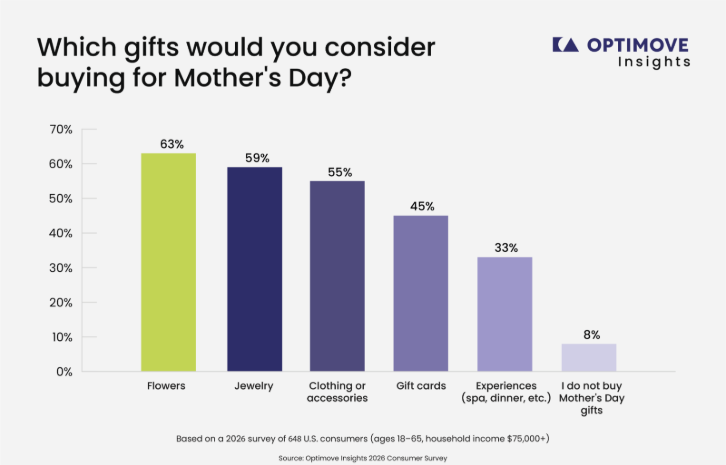
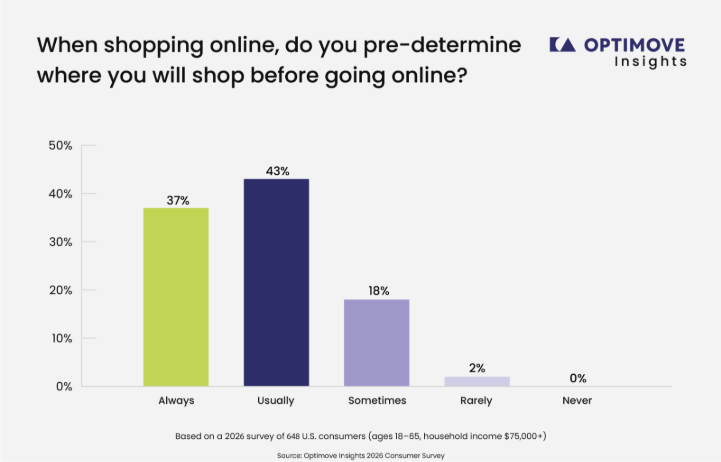
Findings: Mother’s Day shoppers demonstrate strong purchase intent and clear category preferences. Top gifts include flowers (63%), jewelry (59%), and clothing or accessories (55%). At the same time, 80% report that they usually or always decide where they will shop before they begin.
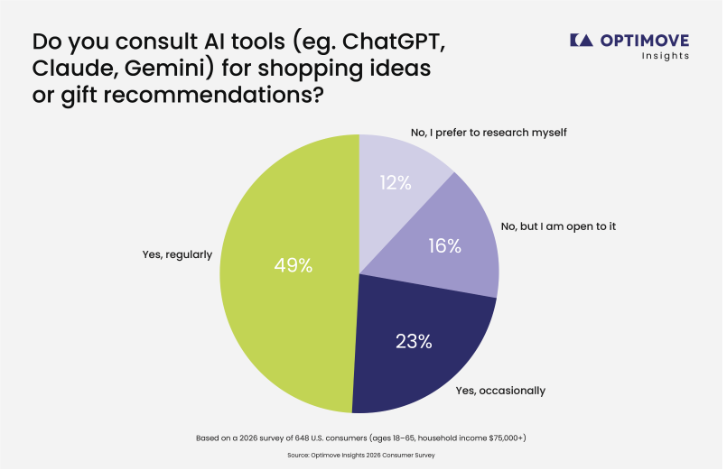
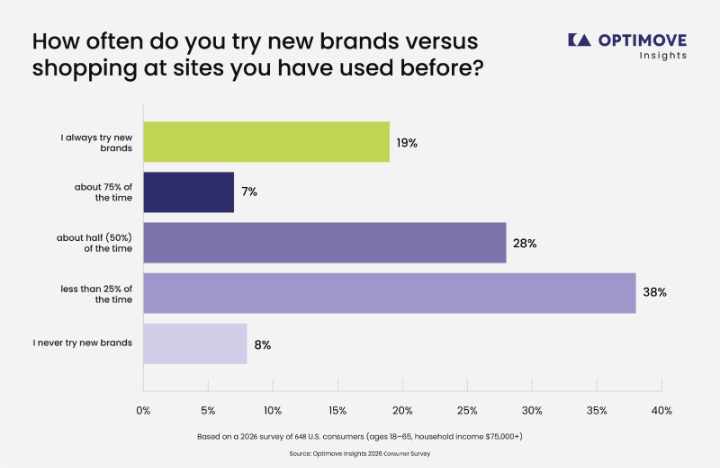
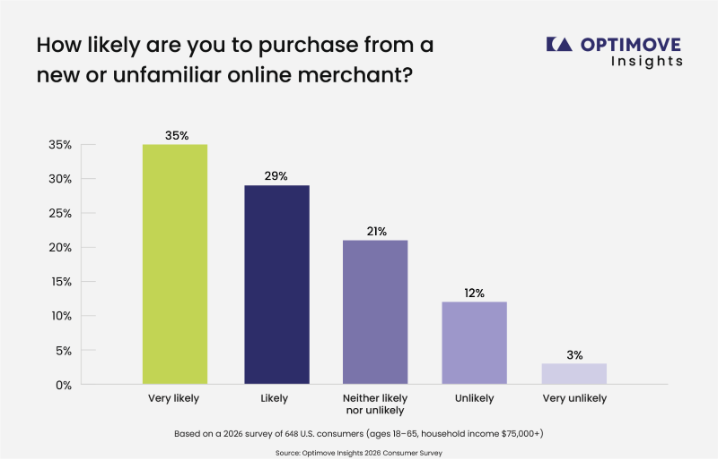
However, choosing where to shop in advance does not limit openness to discovery. Nearly half (49%) regularly use AI tools for shopping ideas or gift recommendations, 54% try new brands in at least half of their shopping experiences, and 64% are likely or very likely to purchase from a new or unfamiliar online merchant.
Insights:
For marketers, Mother’s Day is more than a loyalty moment. It is a moment when relevance, visibility, and timely influence can still change the outcome.
While shoppers often begin with a plan, that plan is not fixed. Consumers typically enter the occasion with a clear idea of the types of gifts they want to buy and where they expect to shop, signaling strong purchase intent from the outset.
However, intent does not equal commitment. Shoppers actively validate their choices before purchasing, using research to confirm they are making the right decision. The growing use of AI tools for gift ideas and recommendations underscores how consumers are comparing options, refining preferences, and pressure-testing decisions before checkout.
This creates a critical window of opportunity. Even when shoppers start with a category or retailer in mind, many remain open to discovering new brands if they encounter a more compelling offer, better fit, or stronger idea. Brands that show up with relevance in these moments can still influence the final decision.
How Marketers Should Respond:
Brands should not assume that early intent guarantees purchase. Mother’s Day campaigns must support the discovery and decisioning phase by helping shoppers evaluate options, surface relevant gift ideas, and build confidence before they convert. The brands most likely to win will be those that show up early with useful guidance, strong category visibility, and messaging designed to support comparison, not just last-mile conversion.
This is where Positionless Marketing comes in: being able to instantly identify interest signals, generate relevant content, and deploy it across different channels without depending on separate teams enables brands to draw attention faster and shine brighter among others.
Findings: Quality is the top driver of Mother’s Day gift choice, selected by 51% of shoppers, while personalization ranks second at 22%, and price follows closely at 18%. Convenience plays only a minor role, at 5%.
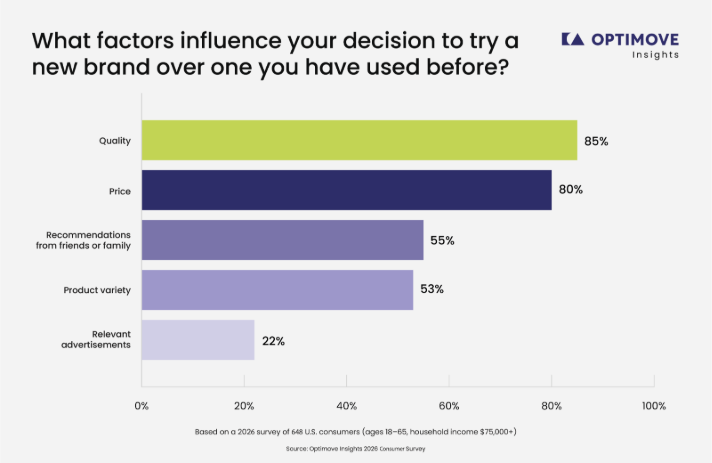
Data on general purchasing behavior confirm the importance of quality in the decision-making process, but reinforce the importance of price, especially in attracting new customers. While nearly 85% of consumers say that quality is the deciding factor for trying a new brand, a very close percentage (80%) cite price as the key influencer.
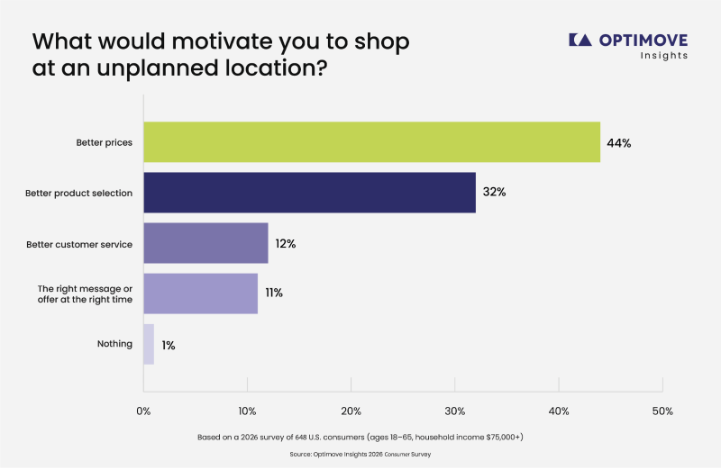
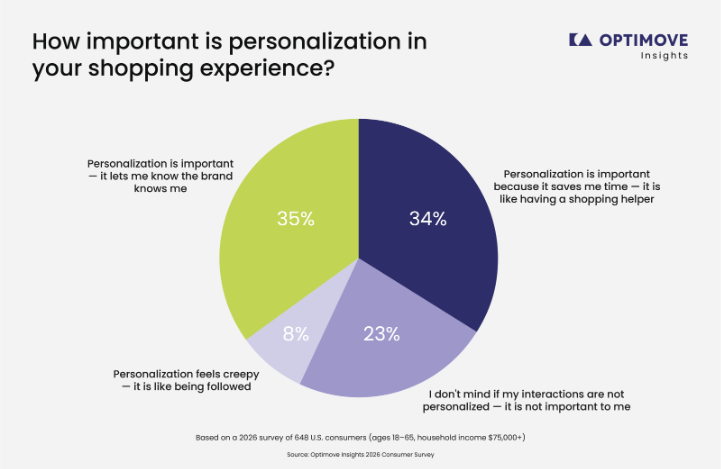
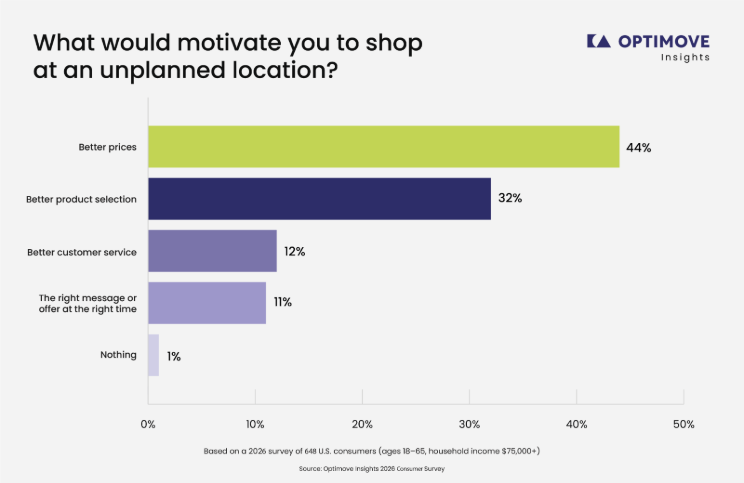
Forty-four percent (44%) also say that better prices would motivate them to shop at an unplanned location, while 69% reinforce that personalization is important for the shopping experience as a whole.

Insights:
Brands win by understanding the quality standards that better respond to the emotional weight of Mother's Day to their clients. Shoppers are not simply looking for the cheapest or fastest gift option; they want gifts that feel well-made and worthy of the occasion.
But quality does not operate in isolation.
Price remains a major force in how shoppers evaluate and compare options, especially when deciding whether to deviate from an original plan. That means price may not define the ideal gift, but it still plays a powerful role in attracting attention and nudging action.
Personalization also plays an essential role since Mother’s Day is not about generic purchases. Shoppers want relevant and intentional gifts, not mass-market or interchangeable.
How Marketers Should Respond:
The opportunity lies in combining strong product quality messaging with recommendations that make the gift feel personalized and right for the recipient. Reinforce craftsmanship, product value, and emotional fit; deliver well-timed, relevant offers, and personalized guidance; and use price to draw attention to gifts that already feel worth buying.
Being a Positionless Marketer, empowered by the right tools, means being able to move quickly from insight to segmentation to deliver timely and personalized messages at scale to each of your current clients or prospects. This way, execution becomes simpler, and brands can respond faster to shopper signals, giving them exactly what they are looking for without relying on slow handoffs across teams.
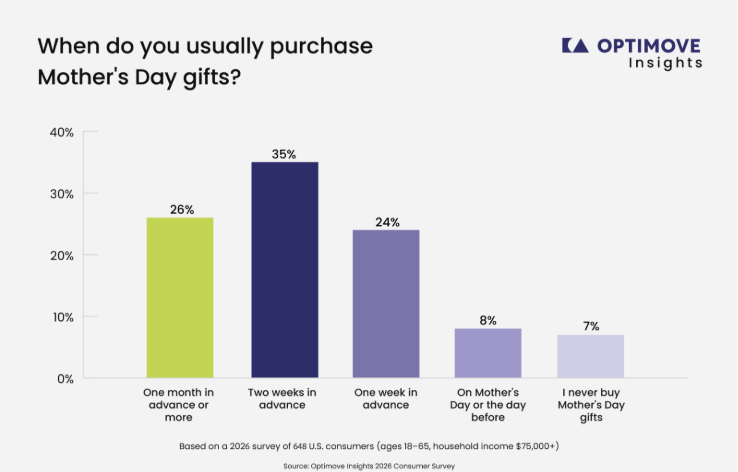
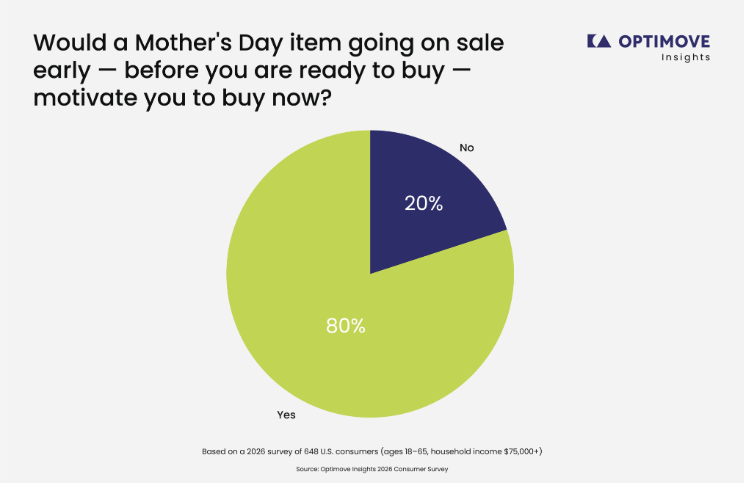
Findings: Mother’s Day shoppers make purchases in advance, with 61% buying from one month to two weeks prior, and only 8% purchasing on Mother's Day or the day before. Price can accelerate this timeline even more: Eighty percent (80%) say that an early sale would motivate them to buy right away.
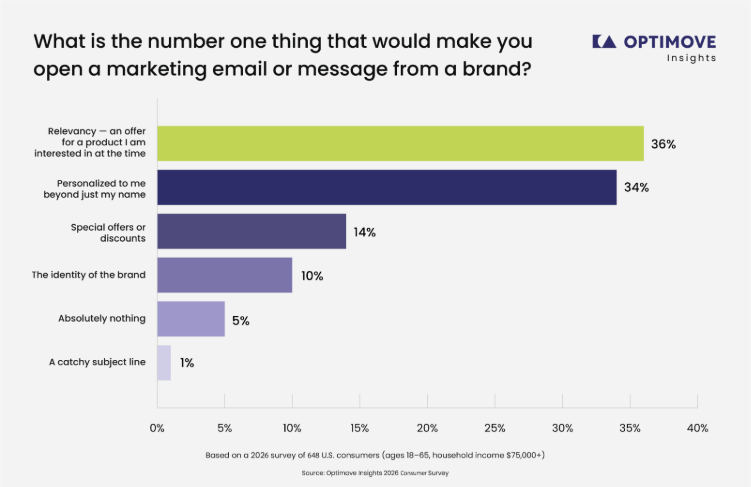
While price is indeed a strong driver for conversion, it takes more to catch buyers' attention: they say that relevancy (36%) and personalization (34%) of the messages are key, far ahead of discounts alone (14%).
Insights:
For Mother’s Day, the most effective conversion strategy is not simply giving discounts earlier, but making the offer feel relevant and personal, at the right time.
As the majority say they will buy in advance, brands have the opportunity to influence the conversion moment if moving strategically, using data to deliver accurate offers.
Price remains a strong action trigger, but catching attention requires more than an early offer. Knowing exactly how much your client is willing to pay, which products they are looking for, and what their mom's characteristics are based on their browsing history this year and in previous years can be game-changing.
Delivering personalized offers matters much more than a generic promotion. Consumers are most responsive when brands show they understand their preferences and interests, including gift needs.
How Marketers Should Respond:
Brands should start Mother’s Day outreach early. Price must act as the accelerator, but customer knowledge should drive the message. Use promotions to create urgency while relying on relevance and personalization to win attention. The strongest campaigns must show a clear reason to buy now with messaging shaped around shopper interests, likely gift categories, prior purchases, and real-time browsing behavior.
To orchestrate the campaigns that can be generated from this level of data, Positionless Marketing is essential. It allows marketers to quickly move from analyzing insights to selecting the target audience, creating the message, and executing, without losing momentum in transitions between teams.
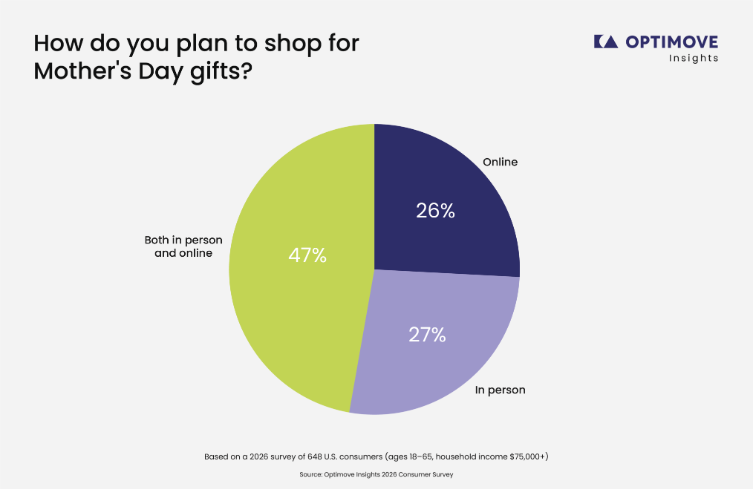
Findings: Mother’s Day shopping will be strongly omnichannel in 2026: 47% of shoppers plan to buy gifts both in person and online, compared with 27% who will shop only in person and 26% only online. Greeting cards follow a similarly blended pattern, with 30% buying both online and physical options.
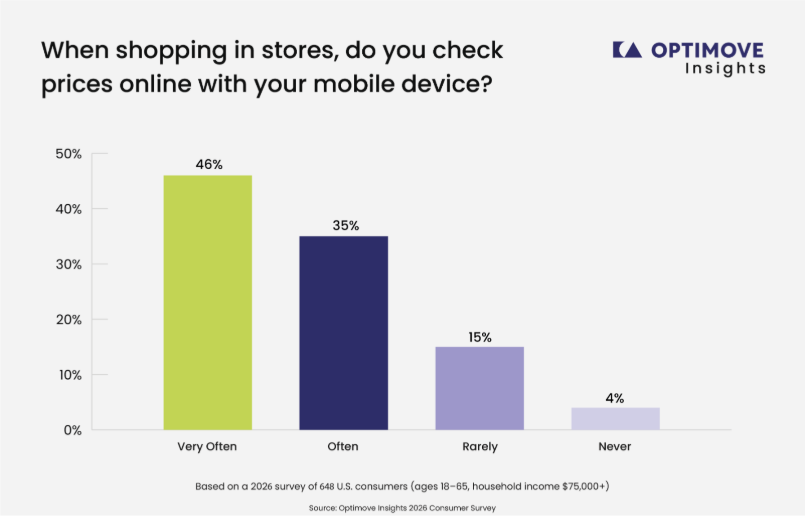
As seen in previous sections, nearly 80% of shoppers say they usually or always pre-determine where they will shop, but better prices can influence channel switching according to 44% of respondents. Price importance is confirmed by 81% of consumers who often or very often check prices online while in stores.
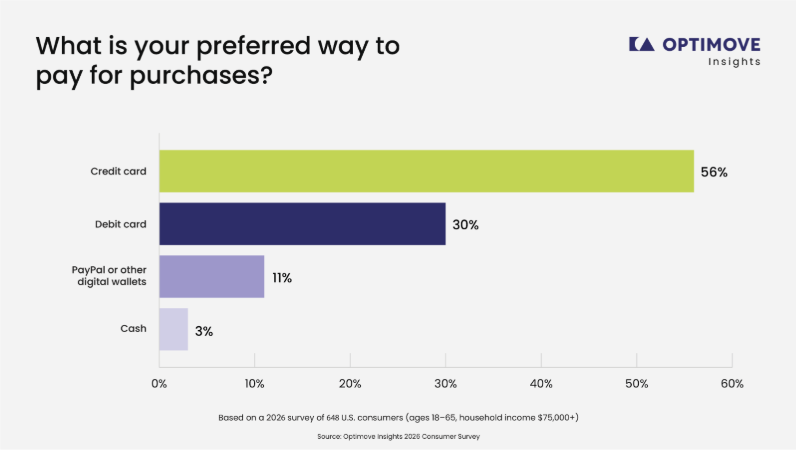
Regarding payment methods, 97% prefer to pay with credit cards, debit cards, or digital wallets rather than cash.

Insights:
For most consumers, physical and digital channels will work as part of the same purchase journey on Mother's Day, which can start with a planned online destination, continue with in-store quality check, can be complemented by mobile to compare prices, and end with the decision of buying wherever feels more relevant.
Omnichannel behavior is about complementarity, and this movement between channels can create opportunities for brands to intercept or redirect demand and win the conversion race.
Better prices and stronger product selection are the leading reasons shoppers would buy from an unplanned location, but better customer service and timely, relevant messaging also can catch attention. This means that none of the factors act alone, and brand strategies must deliver the right offer, at the right time, with the best price.
At checkout, the dominance of cards and digital wallets confirms that even when the purchase happens in a physical environment, the transaction experience is now overwhelmingly digital or card-based.
How Marketers Should Respond:
Brands should design Mother’s Day campaigns around a connected shopping journey rather than separate online and in-store strategies. Winning requires consistent pricing, strong product visibility, mobile-friendly comparison support, and seamless checkout options across channels. The brands best positioned to convert will be those that treat digital research, store visits, and card-based payment not as separate moments, but as part of one integrated Mother’s Day experience.
Brands should build Mother’s Day campaigns around one connected journey rather than separate online and in-store strategies. The goal is to recognize when consumers are researching, comparing, or ready to buy, and then deliver the most relevant message, type of product, and deal at that moment.
To convert omnichannel shoppers, marketers need to be Positionless to identify customer journeys and interests faster, predict purchasing trends, anticipate when intent is rising, and act quickly with the right offer in the moment. When marketers can move from one point to another to cover all points of the strategy without waiting for insights or creation teams, this is the power of Positionless Marketing.
Mother’s Day shopping will not be driven by a single lever. Consumers begin with clear intent, but are open to discover, compare, and reassess before purchase. They prioritize quality, remain attentive to price, respond strongly to relevance and personalization, and move fluidly across digital and physical channels.
All these factors are deeply interconnected and can be relevant to several stages of the buying journey, making the decision process increasingly sophisticated.
It is crucial that brands deeply understand customer behavior and expectations, and that they are prepared to respond at the right time, with the right message.
In a market where consumers are open to new brands, willing to shift channels, and motivated by timely offers, the advantage goes to brands that can connect insight with execution quickly and consistently. In other words, being Positionless.
Mother’s Day success requires Positionless Marketers to interpret signals, identify rising intent, shape relevant messages, and activate across channels without losing momentum in handoffs between teams. When marketers can move directly from data to audience to creative to deployment, they are better equipped to meet shoppers with the right product, the right message, and the right offer at the exact moment it matters most.
Optimove, the creator of Positionless Marketing, frees marketing teams from the limitations of fixed roles, giving every marketer the power to execute any marketing task instantly and independently. Positionless Marketing has been proven to improve campaign efficiency by 88%, allowing marketing teams to create more personalized engagement with existing customers.
For two years running, Optimove has been positioned as a Visionary in Gartner’s Magic Quadrant for Multichannel Marketing Hubs, recognized for its AI-driven decisioning, prescriptive insights, and proven ability to orchestrate thousands of personalized campaigns in real time across channels. AI-led marketing is a hallmark of Optimove’s visionary leadership. By embedding AI directly into its platform as early as 2012, Optimove paved the way for today’s Positionless Marketing standard.
Its Positionless Marketing Platform includes Optimove Engage and Orchestrate for cross-channel campaign decisioning and orchestration; Optimove Personalize, a digital personalization engine; and Optimove Gamify, a loyalty and gamification platform.
Today, its comprehensive AI-powered suite is at the leading edge of empowering marketers to streamline workflows from Insight to Creation and through Optimization. Optimove provides industry-specific and use-case solutions for leading consumer brands globally.
Optimove Insights is the analytical and research arm of Optimove, dedicated to providing valuable industry insights and data-driven research to empower B2C businesses.
Personalize anything. Everywhere.
Tailor every page, message, and moment with AI-driven personalization.