
Unified Growth Solution
World-class tech needs world-class drivers. AI platform and expert services, unified
Read time 10 minutes


Why it matters:
Marketing teams are under pressure to move faster, personalize deeper, and do more with fewer resources, but many are still slowed down by silos, handoffs, and outdated processes. This post shows how Positionless Marketing helps teams turn customer signals into action faster, use AI without losing human control, and improve efficiency without sacrificing quality, governance, or personalization.
Key takeaways:
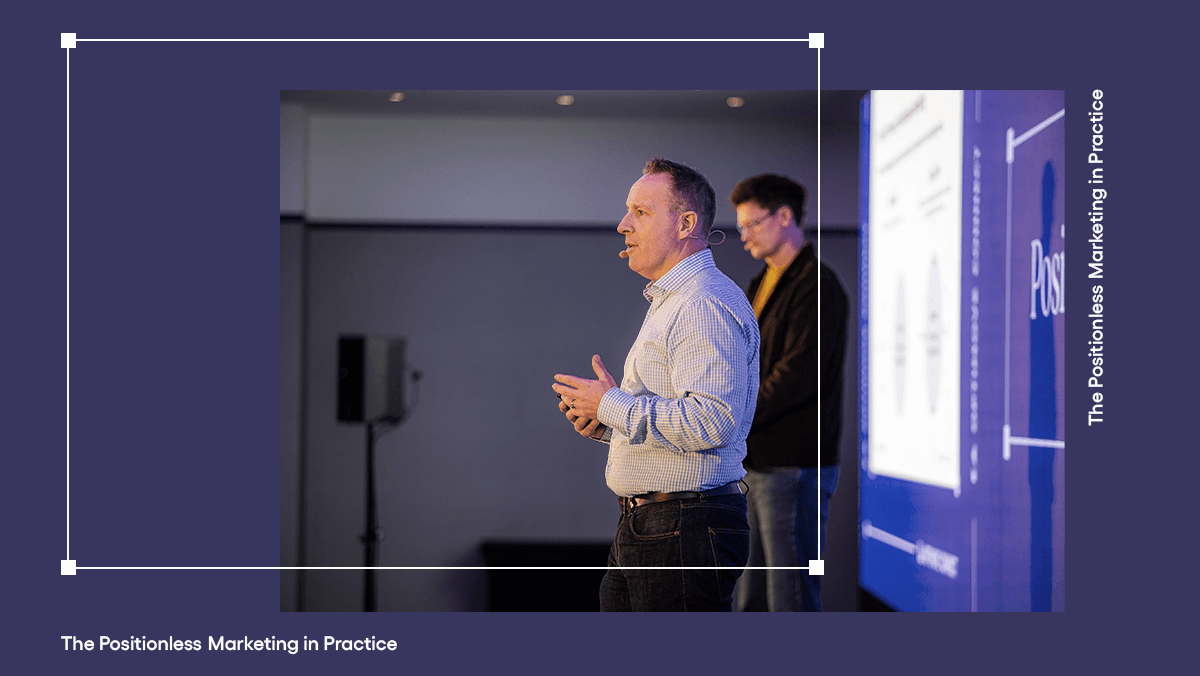
Watch Optimove's VP of Professional Services, David Hardy, and VP of Customer Success, Paul O'Shea, show what Positionless Marketing actually looks like inside real CRM organizations:
Marketing is entering a new operating era. AI is no longer just helping marketers write copy, generate ideas, or automate repetitive steps. It is beginning to act, decide, optimize, and learn across the customer journey.
In the next three to five years, many operational marketing tasks will be handled by AI copilots and agents. Manual campaign builds, channel-specific ownership, manual segmentation, static journey calendars, repetitive creative versioning, and slow campaign QA will become less central.
That is where the Positionless Marketer comes in. As AI takes on more operational complexity, marketers will be able to focus less on managing handoffs and more on defining intent, designing customer experiences, and deciding what outcomes matter most.
New roles may emerge, such as:
The titles could not be exactly those, but the direction is clear: execution-heavy marketing will give way to AI-augmented, positionless professionals.
Over the past decade, marketing teams have become more sophisticated than ever. There are more channels, more customer data, more personalization opportunities, more content demands, and now, agentic AI.
Yet execution is still slower than it should be.
Campaign backlogs remain long. Data often waits for analysts. Creative still sits in request queues. Channel execution is divided across different owners. Tests can take weeks. Marketers spend too much time coordinating between teams and not enough time acting on customer signals.
That matters because customers do not wait for internal processes to catch up. When a team cannot act quickly on a customer signal, the moment is lost.
In practical terms, it means:
This does not mean every marketer becomes a data scientist, designer, developer, media buyer, strategist, and channel specialist at once. It means the marketer is no longer blocked by every handoff between those functions.
The practical result is a marketing team that spends less time managing the production line and more time improving customer outcomes.
A Positionless Marketer needs broad fluency across the full marketing lifecycle. The six core traits I look for are:
There are also three mindset shifts that matter. Positionless Marketers tend to have a growth mindset, want a broader purview, and prefer agile environments where they can operate closer to the speed of the customer.
Positionless in practice starts with one question: What customer outcome needs to improve?
From there, the operating model should help the marketer move through the full loop with fewer handoffs.
The old way starts with a channel, a campaign request, a content calendar, or an internal business priority. The Positionless way starts with a customer signal.
Is churn rising? Are new customers failing to activate? Is a segment engaging but not converting? Are high-value customers showing lower retention? Is a product category underperforming with a specific audience? Is a campaign producing clicks but not meaningful behavior?
The goal is not to send more campaigns. The goal is to understand what is happening in the customer journey and decide what action should come next.
A Positionless Marketer needs direct access to customer insight. That means no waiting for a BI queue just to answer a basic question.
In a Positionless workflow, the marketer can examine dashboards, lifecycle movement, cohort behavior, predictive segments, channel performance, and customer value to understand where the issue lies.
For example, if churn is rising among new customers, the marketer should be able to see whether acquisition quality is declining, whether activation journeys are underperforming, or whether specific customer groups are dropping off before reaching the active stage.
Data access is the starting point for customer-led execution.
Once the problem is clear, the marketer should be able to ask: What can be tested?
The insight might be that users are dropping off at a specific lifecycle stage. The hypothesis might be that a different offer, better timing, clearer messaging, a more relevant creative variant, or a different channel mix can improve conversion.
This is where Positionless becomes practical. The marketer does not just request a campaign from another team. The marketer builds and tests the hypothesis, using AI and platform capabilities to reduce manual work.
AI should not only generate ideas. It should help decide which action is best for each customer.
That includes send-time optimization, offer decisioning, content variant decisioning, channel prioritization, and journey prioritization. In practice, this means customers receive the right message, offer, creative, or experience based on what is most likely to move them forward.
The operating principle is simple: AI suggests and optimizes; humans decide the strategy, and the technology executes.
Creative bottlenecks are one of the biggest barriers to marketing speed. Positionless teams reduce that bottleneck by building pre-approved creative assets, no-code templates, dynamic content blocks, and modular personalization.
One template can become thousands of variants when it is connected to data. A hero message can change by lifecycle stage. A content block can change by product affinity. An offer can change by customer value or predicted behavior. A campaign can adapt across regions, brands, products, and customer segments without starting from zero every time.
This is how personalization moves from a manual task to a scalable capability.
Larger marketing organizations often have many versions of the same campaign, lifecycle journey, or customer experience across brands, products, markets, or regions. Every team may believe its version is best, but without standardization, it is hard to fairly compare performance.
The Positionless playbook is:
This approach does not remove local flexibility. It creates a shared foundation so local teams can adapt with governance and compare results more clearly.
Positionless marketing cannot mean lower standards. In fact, it requires stronger guardrails because one marketer may now touch more parts of the workflow.
That means checklists, approvals, compliance rules, brand guidelines, permission controls, and governance frameworks need to be clear and accessible. The difference is that governance should enable speed, not recreate the bottlenecks the team is trying to remove.
Positionless at scale does not remove structure. It removes the friction between the decision and the action.
Positionless in practice means organizing marketing around outcomes rather than roles. It means giving marketers access to unified data, AI decisioning, creative automation, Journey Orchestration, and clear governance so they can act faster on customer signals.
It is not about removing people. It is about removing unnecessary friction. It is not about eliminating structure. It is about making the structure work closer to the customer.
The marketing teams that move fastest will be the ones that start with the customer, use Customer DNA to understand what matters, apply Journey Orchestration to act intelligently, and keep learning through every test.
For more insights, contact us to request a demo.


Writers in the Optimove Team include marketing, R&D, product, data science, customer success, and technology experts who were instrumental in the creation of Positionless Marketing, a movement enabling marketers to do anything, and be everything.
Optimove’s leaders’ diverse expertise and real-world experience provide expert commentary and insight into proven and leading-edge marketing practices and trends.
FAQ
A Positionless Marketer is a marketing professional who can move across data, strategy, creative, orchestration, execution, and measurement to improve customer outcomes with fewer handoffs.
No. Small teams may adopt it through generalist workflows, while enterprise teams can adopt it through centers of excellence, shared infrastructure, AI decisioning, and governed regional execution.
No. It reduces dependency on sequential handoffs. Specialists still matter, especially for governance, strategy, compliance, creative direction, media expertise, and complex technical work.
AI supports Positionless Marketing by helping marketers decide the best offer, channel, timing, content variant, journey priority, and next action for each customer.
The first step is to identify one customer outcome, such as reducing churn, improving activation, increasing conversion, or deepening engagement, then map every handoff that slows the team from acting on that outcome.
Teams can stay compliant by using approved templates, master QA checklists, brand guidelines, permission controls, and governance rules that are embedded into the workflow.